NHAI launches Tamil Nadu’s first barrier-free tolling system at Paranur Toll Plaza
Source Entity
Anish Mondal
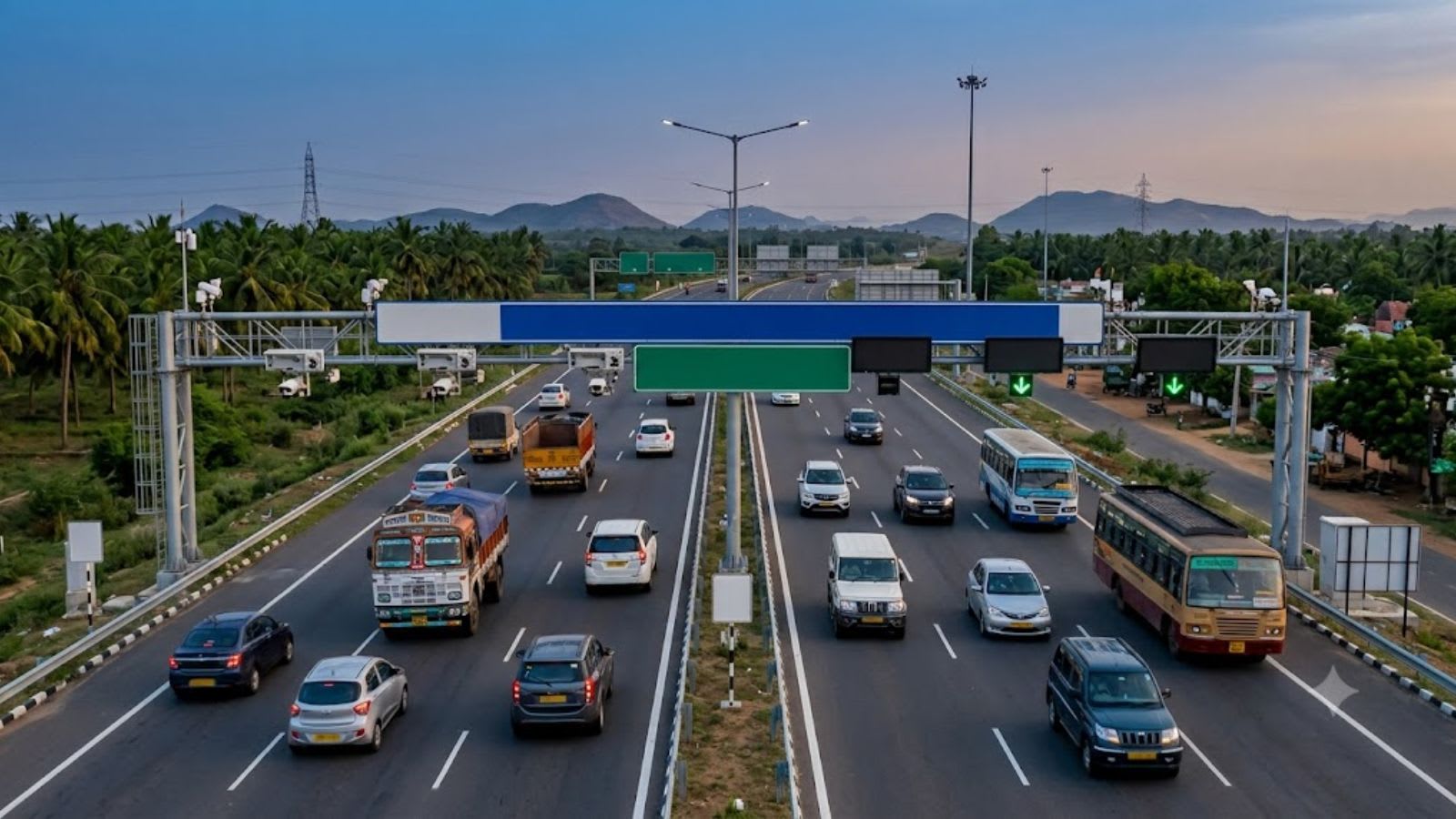
The NHAI has implemented Tamil Nadu's first Multi-Lane Free Flow (MLFF) tolling system at the Paranur Toll Plaza. This technology eliminates physical barriers, allowing vehicles to pass without stopping while automatically processing electronic toll payments.
Revolutionizing Road Transit: The MLFF Milestone in Tamil Nadu
The National Highways Authority of India (NHAI) has officially inaugurated Tamil Nadu’s first Multi-Lane Free Flow (MLFF) tolling system at the Paranur Toll Plaza. Situated on the critical Tambaram-Tindivanam section of NH-179B, this implementation represents a significant technological leap in India's infrastructure management. By transitioning away from traditional physical barriers, the NHAI is prioritizing efficiency and throughput on one of the state's busiest highway corridors.
How the Multi-Lane Free Flow System Operates
At its core, the MLFF system is engineered to eliminate the necessity for vehicles to decelerate or come to a complete halt at toll booths. Unlike legacy systems that rely on manual or semi-automated barrier gates, the MLFF utilizes advanced sensors and identification technology to detect vehicles as they transit through the tolling zone. This seamless integration ensures that toll collection happens in the background, significantly reducing the bottlenecking typically associated with high-traffic toll plazas.
Impact on Commuter Experience and Efficiency
The primary advantage of this deployment is the drastic reduction in travel time for commuters. By removing physical stopping points, the NHAI addresses the chronic issue of congestion that often plagues the Paranur Toll Plaza. This shift not only improves the daily experience for thousands of motorists but also contributes to fuel savings and a reduction in carbon emissions, as idling vehicles at toll booths are a major source of localized pollution.
Technological Integration and Future Scaling
This initiative marks a pivotal moment in the modernization of India’s highway network. The transition to barrier-free tolling is expected to serve as a pilot model for other high-density corridors across the country. As the NHAI continues to refine its electronic toll collection capabilities, the success of the Paranur installation will likely dictate the pace at which similar systems are rolled out in other parts of Tamil Nadu and beyond.
Strategic Broader Implications
Beyond the immediate benefits of convenience, the MLFF system is a key component in the broader digitization of India's logistics and transportation sectors. Efficient tolling correlates directly with faster logistics movement, which can lower the overall cost of goods transport across the state. By optimizing the flow of traffic, the NHAI is effectively increasing the capacity of existing road infrastructure without the need for immediate, costly physical lane expansion.
Conclusion: A Smarter Infrastructure Future
The launch of the MLFF system at Paranur is a testament to the NHAI’s commitment to adopting global best practices in highway management. By leveraging technology to remove the friction of toll payments, the authority is setting a new standard for road travel in India. As this system matures, it will undoubtedly become the blueprint for future highway projects, ensuring that the movement of people and commerce remains fluid and highly efficient.