Nike’s new air sole technology can mix soft and firm cushioning
Source Entity
Andrew Liszewski
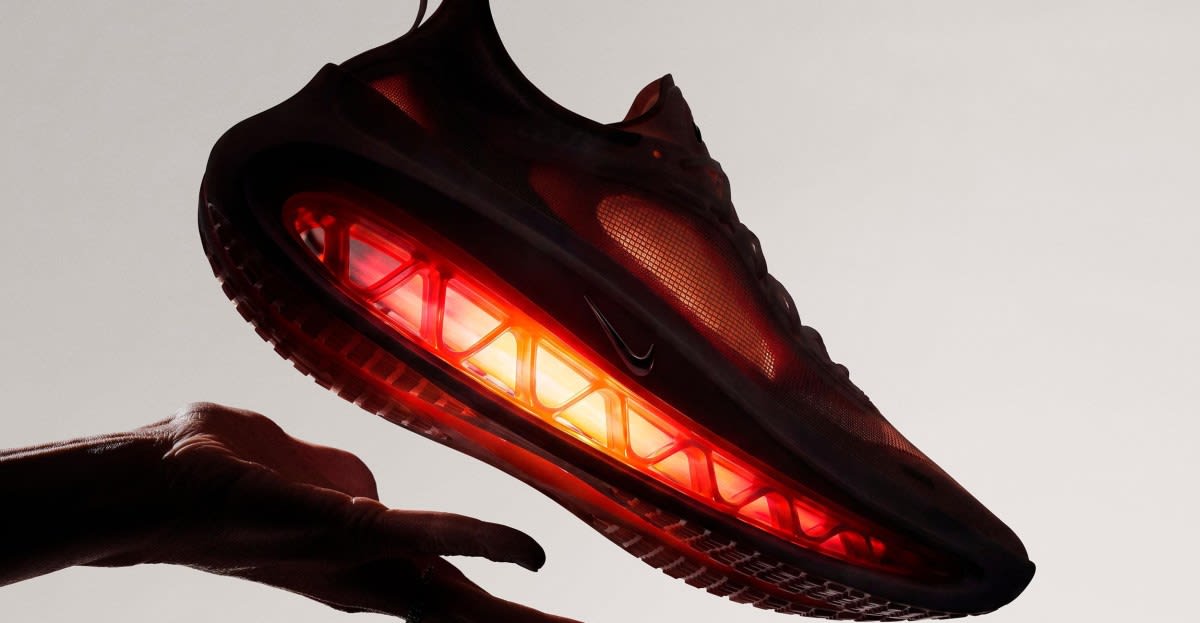
Nike is evolving its iconic air sole technology by introducing a new manufacturing process that allows for variable cushioning within a single unit. This innovation builds on the company's recent 3D-printing advancements seen in the Air Max 1000 to enhance comfort and performance.
The Evolution of Nike's Air Technology
Nike is currently undergoing a significant technological shift in footwear manufacturing, moving away from uniform cushioning toward highly specialized, variable support systems. Following the 2024 launch of the Air Max 1000, which utilized 3D-printing to achieve varying levels of flexibility within a single silhouette, the company is now applying similar design philosophies to its legendary air-filled soles. This transition represents a departure from the static, singular air chambers that have defined the brand for decades.
Breaking the Uniformity Barrier
For nearly 50 years, Nike’s air-filled soles have been a staple of comfort, yet they have historically been limited by their uniform structure. Previously, the air pressure and cushioning levels were consistent across the entire sole of the shoe. The introduction of the new Tuned Air technology changes this paradigm by enabling a manufacturing process capable of producing multiple air pockets with distinct levels of stability and cushioning within a single unit. This allows for a more tailored experience for the wearer, where different zones of the foot receive optimized support.
The 3D-Printing Influence
The technological foundation for this advancement stems from Nike’s recent experimentation with additive manufacturing. By successfully creating the Air Max 1000, Nike proved that complex, non-uniform structures could be mass-produced while maintaining a cohesive aesthetic. This success provided the blueprint for the current iteration of Tuned Air, demonstrating that modern manufacturing can now prioritize functional performance without sacrificing the iconic visual identity of the shoe.
Implications for Athletic Performance
The ability to mix soft and firm cushioning in a single sole has profound implications for athletic performance and ergonomics. By modulating the air pressure in specific areas—such as the heel for impact absorption or the forefoot for energy return—Nike can create shoes that respond dynamically to the wearer's movement. This level of precision, once reserved for high-end bespoke orthopedic solutions, is now becoming a standard feature of the brand's consumer-facing lineup.
Future Trends in Footwear Engineering
Looking ahead, this integration of variable air technology suggests a future where footwear is increasingly algorithmic and data-driven. As Nike continues to refine its manufacturing processes, we can expect to see even more granular control over shoe architecture. This shift indicates a broader industry trend where the 'smart' component of a shoe is not necessarily electronic, but rather mechanical and structural, designed to optimize the biomechanics of the human foot through advanced materials and precise engineering.
Conclusion
Nike’s latest technological leap represents a maturation of its most famous innovation. By evolving from uniform air pockets to a nuanced, variable system, the company is successfully bridging the gap between historical legacy and future-forward design. As these manufacturing techniques scale, they will likely set a new benchmark for comfort and performance in the competitive global footwear market.