'Flying buses soon': Nitin Gadkari has another big plan, cites 'plane that lands on water'
Source Entity
Latest News: Today's Latest News Headlines from India & World | Hindustan Times | Hindustan Times
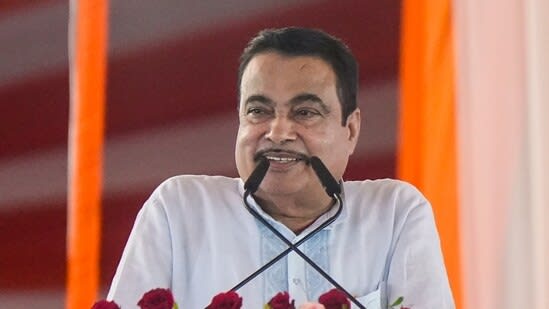
Union Minister Nitin Gadkari has proposed the introduction of 'flying buses' in India, referencing aircraft capable of landing on water, during the inauguration of the Lucknow-Kanpur Greenfield Expressway.
Visionary Transit: Nitin Gadkari's Proposal for 'Flying Buses'
During the high-profile inauguration of the Lucknow-Kanpur Greenfield Expressway, Union Minister for Road Transport and Highways, Nitin Gadkari, once again signaled his appetite for disruptive infrastructure. In a statement that has captured public imagination, Gadkari announced plans to introduce "flying buses," specifically citing the utility of aircraft that can land on water. This announcement underscores a strategic shift toward multi-modal connectivity, where the boundaries between road, air, and water transport are increasingly blurred to optimize travel efficiency in India's densely populated corridors.
Decoding the 'Flying Bus' Concept
While the term "flying bus" may sound futuristic, Gadkari's reference to "planes that land on water" suggests a focus on amphibious aircraft or seaplanes. In the context of Indian geography—characterized by vast river networks and coastal regions—the deployment of such craft could revolutionize regional connectivity. By utilizing water bodies as natural runways, the government could bypass the immense land acquisition challenges and high costs associated with building traditional airports, effectively creating a flexible transit network that complements the existing expressway infrastructure.
Integration with Greenfield Infrastructure
The timing of this announcement at the Lucknow-Kanpur Greenfield Expressway inauguration is significant. This expressway is designed to slash travel time between two of Uttar Pradesh's most critical economic hubs. By proposing flying buses alongside such projects, Gadkari is envisioning a hierarchical transport ecosystem: high-speed roads for bulk and medium-distance transit, and aerial/amphibious corridors for rapid, point-to-point transit. This integrated approach aims to alleviate the chronic congestion found in urban centers like Kanpur and Lucknow by moving a portion of the commuter load into the air.
Technological and Regulatory Hurdles
Despite the ambitious vision, the transition to flying buses will require a massive regulatory overhaul. The Directorate General of Civil Aviation (DGCA) would need to establish new safety protocols and air traffic management systems to handle a higher volume of low-altitude, short-haul flights. Furthermore, the development of "vertiports" or dedicated water-landing zones would be essential. The success of this initiative will likely depend on whether India adopts existing global eVTOL (electric Vertical Take-Off and Landing) technology or develops indigenous amphibious craft under the 'Make in India' initiative.
Broader Implications for Urban Mobility
If implemented, the concept of flying buses could serve as a blueprint for other Indian cities struggling with gridlock. The ability to utilize water bodies for transit is particularly relevant for cities like Mumbai, Kolkata, and Varanasi. By reducing the reliance on traditional road networks, India could significantly lower its carbon footprint—provided these flying buses utilize electric or hybrid propulsion—while simultaneously boosting economic productivity by reducing the man-hours lost to traffic congestion.
Conclusion: A Leap Toward Future Mobility
Nitin Gadkari's proposal for flying buses is more than just a provocative statement; it is a reflection of a broader ambition to modernize India's transit landscape. While the practical deployment of amphibious aerial buses remains a distant goal, the discourse it generates pushes the boundaries of traditional infrastructure planning. By linking the success of the Lucknow-Kanpur Greenfield Expressway with the potential of aerial transit, the government is signaling a future where mobility is seamless, multi-dimensional, and decoupled from the constraints of land-based traffic.
Verification Required?