Nitin Menon’s howler: Sri Lanka batter stares a hole through Indian umpire after atrocious decision brings back nightmare from the 90s
Source Entity
Latest News: Todays Latest News Headlines from India & World | Hindustan Times | Hindustan Times
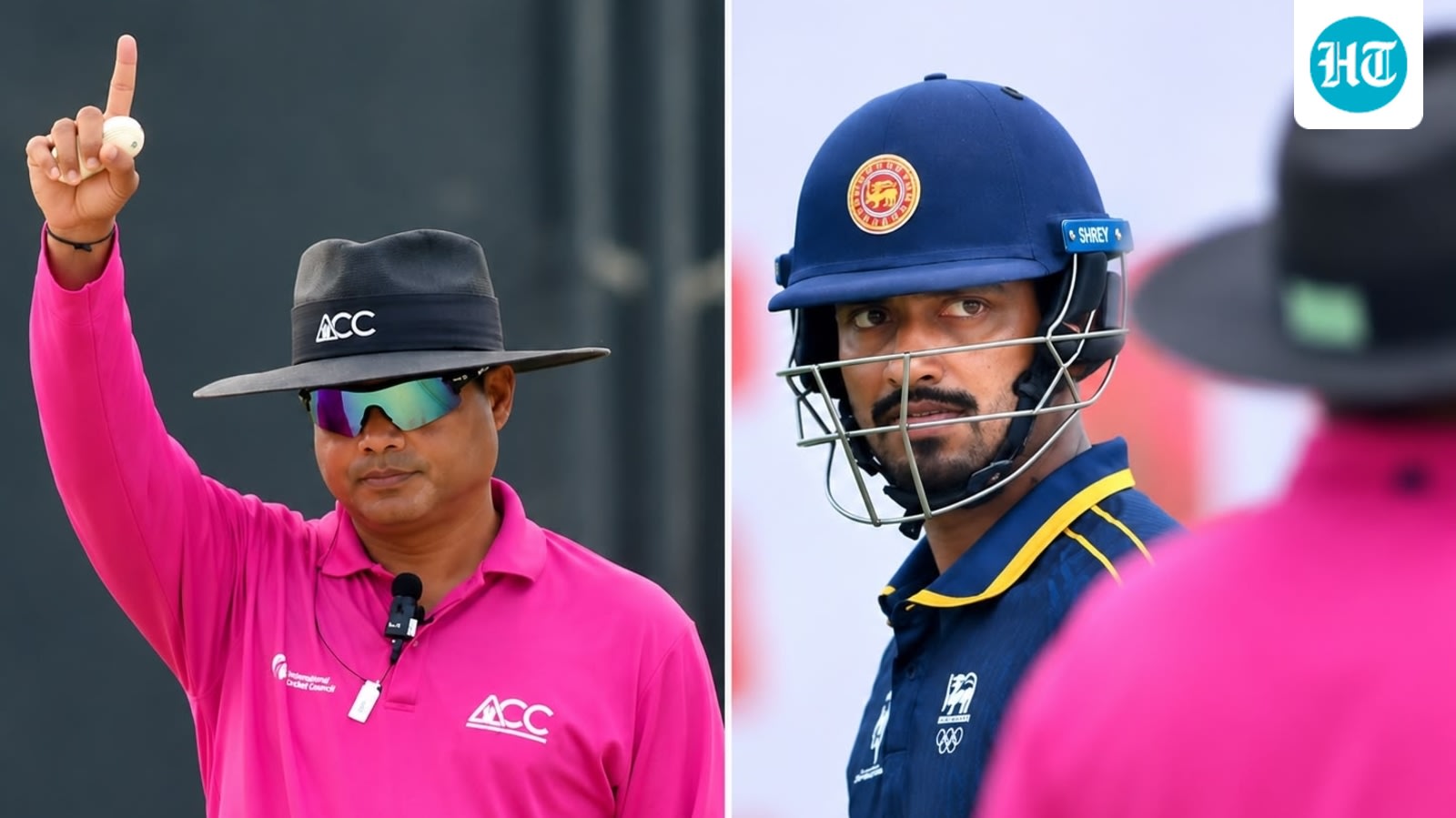
Indian umpire Nitin Menon faced intense scrutiny following an egregious decision during the Asian Games bronze medal match between Sri Lanka and Bangladesh. The absence of the Decision Review System (DRS) meant the controversial call could not be challenged, sparking debate over officiating standards.
The Asian Games Officiating Controversy
The recent bronze medal match at the Asian Games between Sri Lanka and Bangladesh was marred by a officiating blunder that has reignited long-standing debates regarding the consistency of cricket umpiring. Indian umpire Nitin Menon, a member of the ICC’s elite panel, found himself at the center of the storm after delivering a decision that critics have described as a 'howler.' The incident involved Sri Lankan batter Nuwanidu Fernando, who was dismissed in a manner that observers felt defied logic, given the clear gap between the bat and ball during his attempted shot through the covers.
The Impact of Missing Technology
A critical factor exacerbating this controversy is the lack of the Decision Review System (DRS) at this specific Asian Games event. In modern international cricket, DRS serves as an essential safety net, allowing players to challenge subjective or clearly incorrect decisions. Without this technological oversight, the error by Menon became final, leaving Fernando with no recourse to rectify the mistake. This highlights a significant disparity in the quality of tournament infrastructure, where elite-level players are expected to perform under high pressure while being subject to officiating standards that lack modern verification tools.
Historical Parallels and Institutional Memory
The reaction to this incident has been steeped in nostalgia for the pre-DRS era of the 1990s, a time often associated with 'umpiring howlers' and the lack of accountability in international cricket. By comparing Menon’s decision to the era of questionable officiating, critics are pointing to a regression in the perceived reliability of on-field decisions. For a younger generation of players like Fernando, who were not active during the 1990s, this event provided a stark, firsthand experience of how a single human error can fundamentally alter the trajectory of a major international match.
The Burden of Elite Status
Nitin Menon’s status as the sole Indian umpire on the ICC’s elite panel places his performance under a microscope. When a high-profile official makes an error of this magnitude, it inevitably sparks questions regarding the current training and evaluation protocols for elite umpires. While human error is an inherent part of any sport, the expectation for elite-tier officials is significantly higher, especially in high-stakes matches where a single decision can determine which nation walks away with a medal.
Broader Implications for Cricket Governance
This incident serves as a cautionary tale for organizers of multi-sport events like the Asian Games. As cricket continues to grow its global footprint and seeks inclusion in larger sporting frameworks, the standardization of officiating technology becomes paramount. The inability to overturn an obvious error not only affects the fairness of the game but also damages the credibility of the tournament itself. Moving forward, governing bodies will likely face increased pressure to ensure that high-stakes matches are supported by the full suite of officiating technology, regardless of the tournament's scale or location.
Conclusion
In summary, the incident involving Nitin Menon and Nuwanidu Fernando is a symptomatic case of the risks inherent in officiating when technology is absent. While the decision itself was a singular event, its resonance within the cricketing community underscores the necessity for better infrastructure and accountability. As the sport continues to evolve, the balance between human judgment and technological assistance will remain a defining challenge for cricket officials worldwide.
Verification Required?