40 years ago September 1, 1986: Fund to counter South Africa
Source Entity
The Indian Express
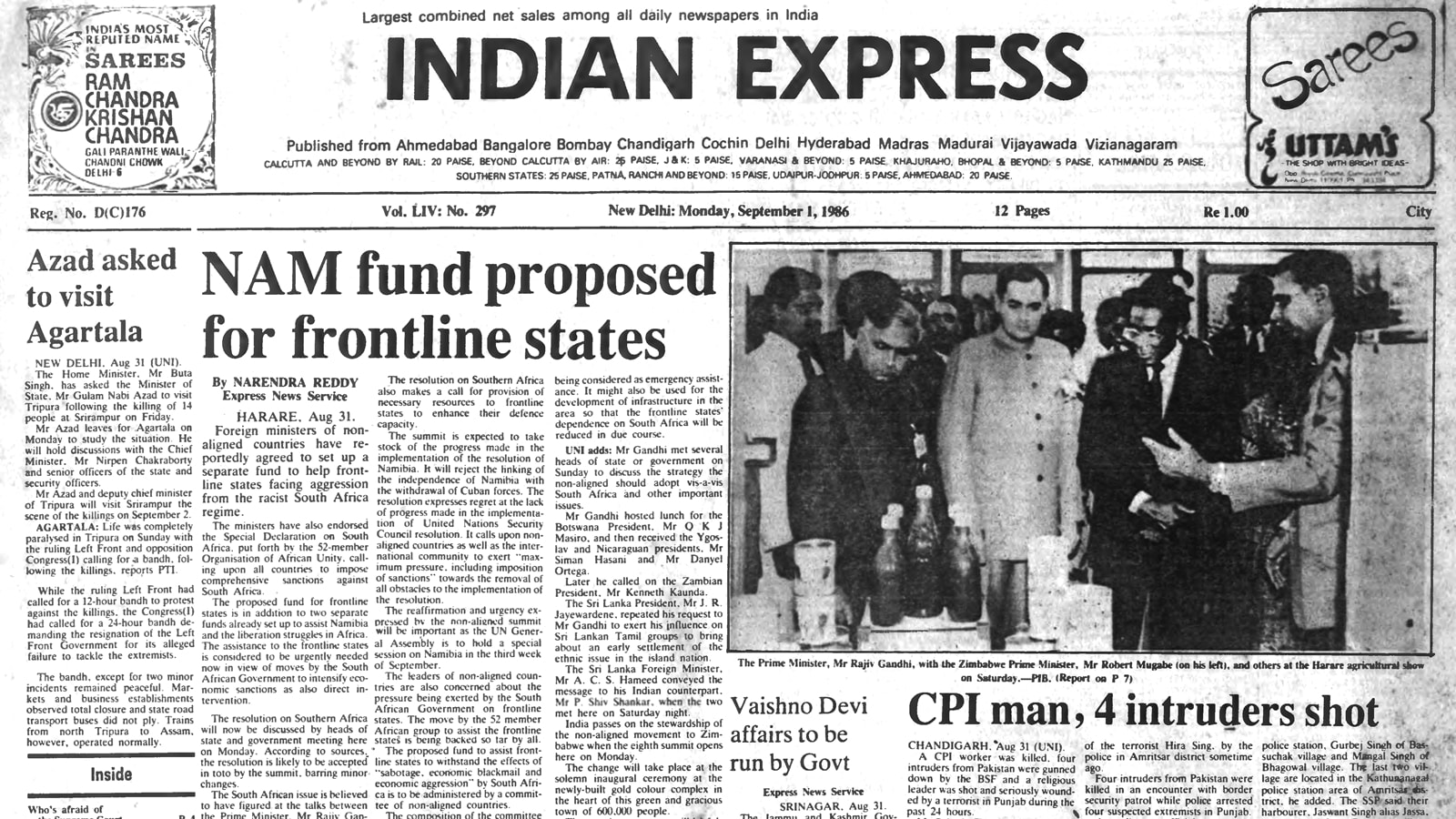
In 1986, non-aligned nations established a fund to support states resisting South African apartheid, while simultaneously pushing for global sanctions. Concurrent diplomatic efforts saw a potential summit between Indian Prime Minister Rajiv Gandhi and Pakistani President Zia-ul-Haq during the non-aligned summit in Harare.
The Non-Aligned Movement’s Strategic Stand Against Apartheid
In September 1986, the geopolitical landscape was defined by the intensifying struggle against the institutionalized racism of the South African apartheid regime. Foreign ministers representing the Non-Aligned Movement (NAM) convened to formalize a critical financial mechanism: a dedicated fund designed to provide economic and strategic relief to the 'frontline states.' These nations, which shared borders with South Africa, were frequently subjected to military and economic destabilization by the Pretoria government. By establishing this fund, the NAM aimed to fortify the economic resilience of these vulnerable neighbors, ensuring they could withstand the pressure of a regime determined to maintain its hold on power through regional intimidation.
The Call for Comprehensive Global Sanctions
Beyond financial aid, the movement signaled a shift toward more aggressive diplomatic isolation of the apartheid government. The ministers’ endorsement of the Organisation of African Unity’s (OAU) Special Declaration on South Africa marked a pivotal moment in international diplomacy. By calling for comprehensive, mandatory sanctions, the NAM sought to transcend rhetoric and force the international community to sever the economic lifelines that sustained the minority-rule government. This move was intended to create a unified front, pressuring global powers to recognize that the moral and political cost of maintaining ties with South Africa had become unsustainable.
The Harare Summit and Regional Diplomacy
While the NAM focused on global human rights issues, the summit in Harare also served as a venue for critical bilateral diplomacy between India and Pakistan. The potential for a meeting between Indian Prime Minister Rajiv Gandhi and Pakistani President Zia-ul-Haq underscored the persistent need for dialogue despite the historically volatile relationship between the two nations. President Zia’s attendance at the summit provided a rare diplomatic window for both leaders to address regional tensions, highlighting the dual function of the NAM as both a multilateral forum for global justice and a stage for managing localized geopolitical conflicts.
Historical Significance of the 1986 Summit
The 1986 summit occurred during a period of transition in international relations, characterized by the waning years of the Cold War and the mounting pressure for democratic reform across the African continent. The decision to establish the fund was not merely an act of charity; it was a calculated political move to prevent the South African regime from using economic strangulation to undermine the independence of newly liberated neighboring countries. This initiative reflected the broader historical objective of the Non-Aligned Movement: to protect the sovereignty of developing nations from the remnants of colonial-era oppression.
Legacy and Future Implications
The actions taken in Harare during this period illustrate the power of collective multilateralism in challenging state-sponsored discrimination. The synergy between the economic support for frontline states and the push for global sanctions created a pincer movement that ultimately contributed to the eventual dismantling of the apartheid system. Today, this historical precedent serves as a study in how diplomatic consensus can influence the trajectory of human rights, demonstrating that organized international pressure, when combined with tangible financial support, can effectively dismantle entrenched, regressive regimes.