Farm left without crops for 15 years turns into wildflower-rich meadow
Source Entity
TOI WORLD DESK
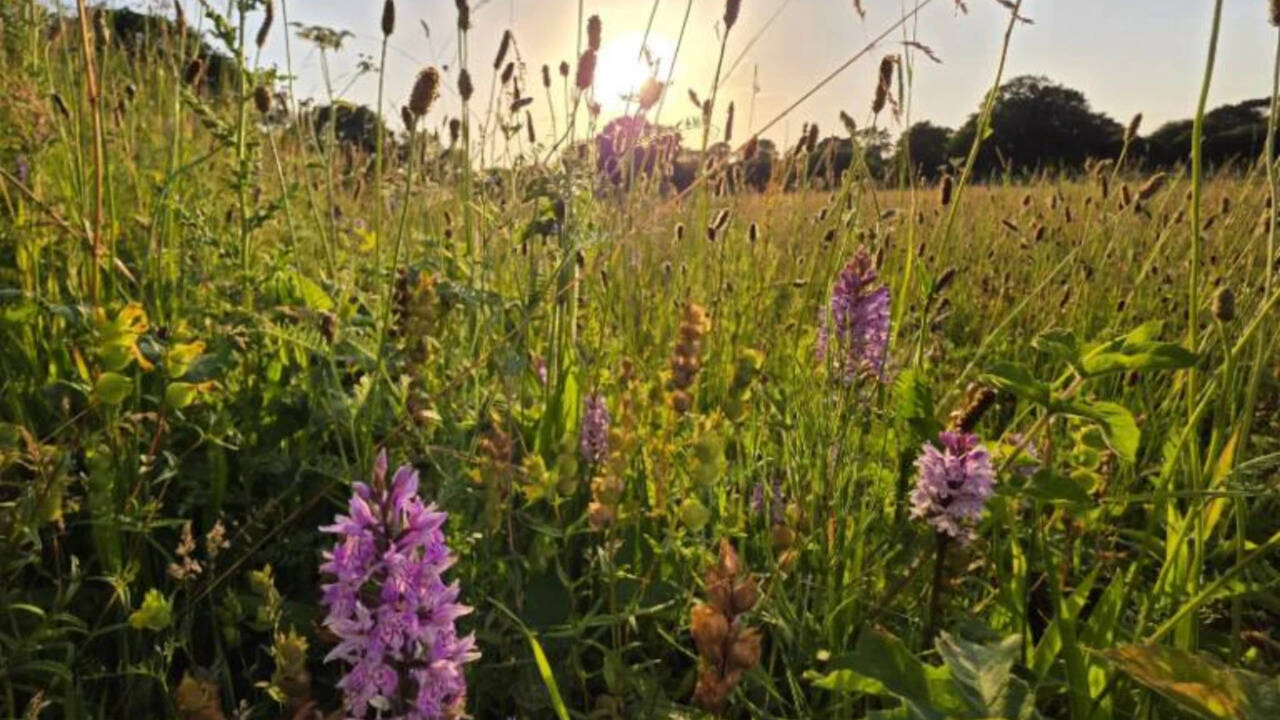
A farm field in Norfolk, left fallow for 15 years, has naturally transformed into a biodiverse wildflower meadow, proving that passive restoration can be more effective and cost-efficient than expensive commercial interventions.
The Power of Passive Restoration: Norfolk's Natural Transformation
In a compelling demonstration of ecological resilience, a farm field in Norfolk has undergone a complete metamorphosis over the course of fifteen years. After being abandoned by agricultural production, the land was not actively managed or seeded; instead, it was left to the whims of nature. Researchers monitoring the site discovered that the area transitioned from a monocultural agricultural state into a vibrant, wildflower-rich meadow. This event serves as a critical case study in the field of conservation biology, illustrating how nature can reclaim degraded landscapes when human interference is removed.
The Mechanics of Secondary Succession
The transformation of the Norfolk field is a textbook example of secondary succession. Unlike primary succession, which occurs on bare rock, secondary succession happens in areas where a community that previously existed has been removed. In this instance, the removal of crop cycles and chemical fertilizers allowed dormant seed banks in the soil to awaken and wind-borne seeds from neighboring habitats to take root. Initially, hardy pioneer species likely dominated the landscape, but over a decade, these were gradually replaced by a more complex assembly of perennial wildflowers. This natural progression ensures that the species which ultimately thrive are those best suited to the specific soil chemistry and microclimate of the Norfolk region.
Passive vs. Active Restoration Strategies
One of the most significant takeaways from this observation is the comparison between passive restoration (allowing natural recovery) and active restoration (commercial seeding and planting). Commercial methods often involve high costs, the transport of non-local seed mixes, and intensive soil preparation, which can sometimes introduce invasive species or fail due to a lack of site-specific adaptation. The Norfolk case suggests that patience—the core component of passive restoration—can yield a more authentic and resilient ecosystem. By allowing the land to dictate its own recovery, the resulting meadow is more likely to be genetically diverse and ecologically stable.
Implications for Pollinators and Local Biodiversity
The resurgence of wildflower species has profound implications for local fauna, particularly pollinators. In an era of "insect apocalypse" and declining bee populations, the creation of a wildflower-rich meadow provides essential foraging grounds and nesting sites. These meadows act as biological corridors, allowing insects and small mammals to move between fragmented patches of wilderness. The shift from a sterile crop field to a biodiverse meadow creates a ripple effect through the food chain, likely attracting a wider variety of birds and predatory insects that help regulate pests naturally, thereby benefiting surrounding active farms.
The Role of Rewilding in Modern Land Management
This event aligns with the broader global trend of rewilding, a conservation strategy that focuses on restoring natural processes and wilderness areas. In the United Kingdom, where agricultural land is heavily managed, the Norfolk example provides a blueprint for "low-intervention" land management. It suggests that policymakers and landowners could achieve significant environmental gains simply by designating certain marginal lands as fallow. This approach not only restores lost habitats but also contributes to carbon sequestration, as permanent meadows often hold more carbon in their root systems than annually tilled crop fields.
Economic Viability and Future Trends
From an economic perspective, the Norfolk discovery challenges the necessity of expensive environmental consultancy and commercial landscaping for habitat restoration. The "cost of patience" is significantly lower than the cost of active planting. As governments move toward paying farmers for "public goods"—such as biodiversity and carbon capture—rather than just food production, this evidence supports a shift toward passive restoration schemes. We can predict a trend where "abandonment" is no longer seen as a failure of farming, but as a strategic tool for environmental recovery.
Conclusion
The transformation of the Norfolk farm field is a poignant reminder that nature possesses an inherent capacity for healing. By stepping back and allowing a decade and a half of natural growth, the land evolved into a thriving ecosystem that outperforms costly human interventions. This case underscores the importance of ecological patience and provides a scalable model for restoring biodiversity across agricultural landscapes worldwide.