North Korea's Kim calls for nuclear arsenal expansion, says status 'will never change'
Source Entity
US Top News and Analysis
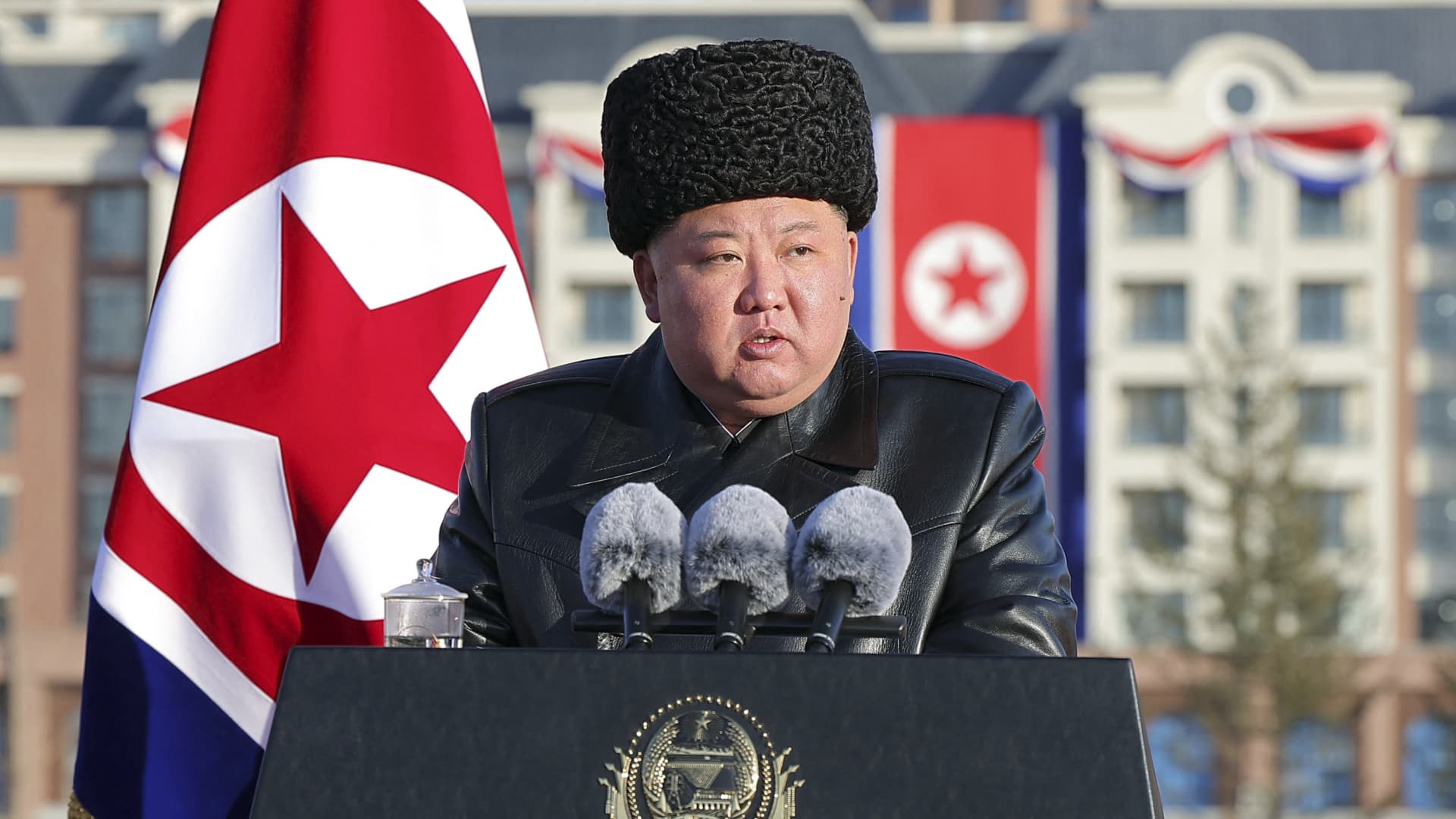
North Korean leader Kim Jong Un has announced plans to aggressively expand the nation's nuclear arsenal, specifically emphasizing tactical nuclear weapons. This directive rejects international denuclearization efforts and marks a significant hardening of Pyongyang's military posture.
The Escalation of North Korea's Nuclear Ambitions
North Korean leader Kim Jong Un has recently issued a definitive mandate calling for a massive expansion of the nation's nuclear arsenal. By explicitly advocating for the wider integration of tactical nuclear weapons across multiple military domains, Pyongyang is signaling a departure from previous strategic ambiguity. This policy shift underscores a hardened stance that prioritizes military capability over diplomatic engagement, effectively placing international denuclearization efforts in a state of suspended animation.
Rejecting Global Denuclearization Pressure
The declaration serves as a direct rebuttal to years of international pressure aimed at curbing North Korea's nuclear proliferation. By asserting that the nation’s nuclear status 'will never change,' Kim is signaling to regional powers and the global community that the path toward disarmament is no longer a viable diplomatic objective for his regime. This rhetoric suggests that North Korea views its nuclear stockpile as an existential necessity, rather than a bargaining chip for economic concessions or sanctions relief.
The Strategic Role of Tactical Nuclear Weapons
The shift toward tactical nuclear weapons—smaller, battlefield-ready warheads—represents a significant evolution in North Korean military doctrine. Unlike intercontinental ballistic missiles designed for long-range strategic deterrence, these tactical assets are intended for use in regional conflicts. By expanding these capabilities, Pyongyang aims to complicate the military planning of its adversaries, specifically South Korea and its allies, by creating a lower threshold for nuclear engagement in a potential theater of war.
Contextualizing the Pyongyang Announcement
This announcement coincided with public appearances by Kim Jong Un, including the inauguration of Saeppyol Street in Pyongyang. These domestic displays are often used to project strength and stability to the North Korean populace while simultaneously broadcasting defiance to the international community. The juxtaposition of civilian infrastructure development with high-level military threats is a hallmark of the regime’s dual-track approach to maintaining domestic loyalty and international leverage.
Future Implications for Regional Stability
Looking ahead, this expansion will likely trigger a reactive security cycle in Northeast Asia. Neighboring countries are expected to bolster their own defensive postures, potentially leading to increased naval and aerial exercises in the region. The hardening of North Korea's nuclear policy makes the prospect of renewed six-party talks or meaningful diplomatic de-escalation increasingly unlikely in the near term, as the regime commits further resources to cementing its status as a permanent nuclear-armed state.
Conclusion
In summary, Kim Jong Un’s latest directive represents a pivot toward a more aggressive and localized nuclear strategy. By rejecting external calls for denuclearization and doubling down on the versatility of his arsenal, the North Korean leader has signaled a long-term commitment to military confrontation. As the region navigates this heightened state of tension, the international community faces the challenge of managing a volatile security environment where nuclear deterrence has become the primary instrument of state policy.