Trump made up to $15m on Nvidia stock after Huang’s return
Source Entity
Julia Kollewe and Graeme Wearden
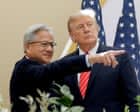
Jensen Huang has returned as Nvidia CEO following a controversial resignation, sparking significant market volatility and political scrutiny. President Trump's intervention in the leadership change has raised concerns regarding the intersection of corporate governance and national security.
The Nvidia Leadership Crisis: A Collision of Markets and Governance
The recent, tumultuous return of Jensen Huang to the helm of Nvidia has sent shockwaves through global financial markets and ignited a fierce debate regarding the influence of presidential authority on private enterprise. After being forced to resign, Huang’s swift reinstatement—facilitated by the intervention of President Trump—initially triggered a massive market rally, adding over $900 billion in value to the company. However, the subsequent volatility, characterized by a nearly 9% mid-session stock drop, underscores the fragile nature of investor confidence when corporate stability is tethered to political maneuvering.
The Geopolitical Implications of Presidential Intervention
President Trump’s decision to force Nvidia’s board to reinstate Huang has drawn sharp criticism from geopolitical analysts. By framing the leadership change as a matter of national security, the administration has inadvertently signaled to adversaries in Beijing, Tehran, and Moscow that U.S. corporate policy is subject to executive veto. This sets a precarious precedent where the independence of high-tech firms, critical to national infrastructure, is compromised by direct presidential interference, potentially altering how global rivals perceive the predictability of American economic policy.
Corporate Accountability and Cultural Reckoning
Beyond the macroeconomic fallout, Jensen Huang’s return is marked by a significant personal and cultural shift within Nvidia. In his first all-hands meeting since reinstatement, Huang offered a candid apology for "very serious personal mistakes" that affected his family and violated the company's code of conduct. His admission of undergoing daily therapy and his pledge to implement regular performance reviews for leadership signal an attempt to pivot toward a culture of radical transparency and accountability.
Navigating the Future of AI Governance
Nvidia’s role as a cornerstone of the global AI sector makes these internal developments particularly sensitive. As Huang seeks to reassure employees—specifically addressing concerns regarding the company's environment for women—the company must balance its internal cultural repair with the external pressures of maintaining technological dominance. The promise that the code of conduct applies to all, including leadership, is a necessary step to restore morale, yet it remains to be seen if these internal policy changes can withstand the intense scrutiny of the public eye.
Market Volatility and Investor Sentiment
Investors are currently bracing for sustained turbulence. The initial euphoria surrounding Huang’s return was short-lived, replaced by a cautious retreat as the market processes the implications of a CEO who returns under the shadow of both a personal scandal and a political mandate. As the AI sector remains the primary engine of global economic growth, the instability at Nvidia serves as a case study in how quickly market dominance can be jeopardized when corporate governance becomes a public political theater.
Concluding Outlook
The path forward for Nvidia is fraught with complexity. While Huang’s reinstatement provides a temporary sense of continuity for shareholders, the long-term impact on the firm’s autonomy and brand reputation remains uncertain. The intersection of personal accountability, executive interference, and massive market stakes creates a unique environment where Nvidia must prove that its technological leadership is not contingent upon the volatility of its leadership's personal conduct or the shifting tides of political policy.
Multiple Citing Sources