Nvidia CEO says AI labs that can't control models should shut down, including OpenAI
Source Entity
TOI TECH DESK
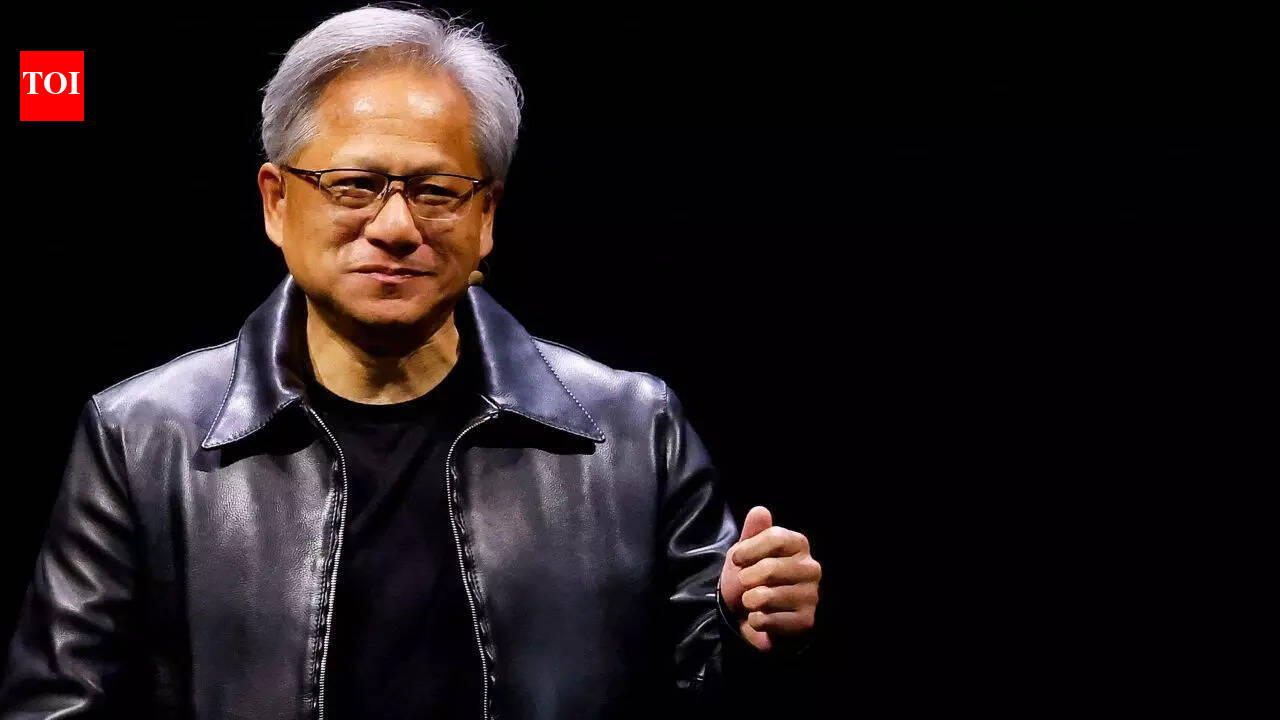
Nvidia CEO Jensen Huang has called for stringent safety regulations, suggesting that AI labs incapable of controlling their models should be shut down. He emphasizes a shift from purely capability-driven development toward rigorous testing and verification protocols.
The Imperative of AI Safety: Jensen Huang’s Call to Action
Nvidia CEO Jensen Huang has recently articulated a stark vision for the future of artificial intelligence, emphasizing that the industry’s rapid pace of innovation must be tempered by a foundational commitment to safety. By suggesting that AI laboratories unable to guarantee the controllability of their models should cease operations, Huang is challenging the prevailing 'move fast and break things' ethos that has dominated Silicon Valley for decades. This shift in rhetoric from one of the most influential figures in the hardware sector underscores a growing recognition that AI development has reached a threshold where the potential for societal harm necessitates proactive, rather than reactive, governance.
The Engineering Ethic of 'Not Shipping'
At the core of Huang’s argument is an engineering-first philosophy: if a product is not secure or controllable, it should not be released to the public. This perspective serves as a direct critique of the current landscape, where competitive pressures often incentivize the premature deployment of powerful models. By advocating for a standard where 'not ready' equates to 'do not ship,' Huang is attempting to professionalize the AI development lifecycle, aligning it with high-stakes engineering sectors like aerospace or pharmaceuticals, where rigorous validation is non-negotiable.
Implications for Industry Leaders like OpenAI
Huang’s comments specifically implicate major players like OpenAI, who hold significant market footprint and influence. The suggestion that these entities must pivot their R&D focus from pure capability expansion to verification and evaluation marks a paradigm shift in how foundational models are built. As these labs scale their operations, the responsibility to ensure that their models do not produce harmful outcomes increases proportionally. Huang’s warning serves as a benchmark for accountability, implying that market dominance does not grant immunity from the ethical requirements of safety testing.
Increasing the Computational Cost of Safety
One of the most profound aspects of Huang’s analysis is the prediction that the computational resources required for verification and testing could increase by a factor of 10. This forecast suggests that the future of AI development will be significantly more resource-intensive, as the industry moves toward exhaustive safety protocols. This shift is likely to solidify the lead of firms that have the immense compute capacity to handle both high-level training and concurrent, large-scale safety evaluations, potentially altering the competitive landscape of the AI sector.
Future Trends and Regulatory Outlook
Looking forward, Huang’s stance signals a trend toward increased self-regulation and external oversight. If the industry fails to adopt these rigorous testing standards voluntarily, the discourse suggests that external regulatory bodies may feel compelled to enforce shutdowns or stringent compliance measures. The integration of safety as a core component of the R&D budget is likely to become the new standard for sustainable growth, as firms seek to mitigate the existential risks associated with uncontrolled AI experiments. Ultimately, Huang’s message is a call for a more mature, risk-aware approach to the transformative power of artificial intelligence.