Trump’s Nvidia holdings rose up to $15 million after board reinstated Jensen Huang: Report
Source Entity
Latest News: Todays Latest News Headlines from India & World | Hindustan Times
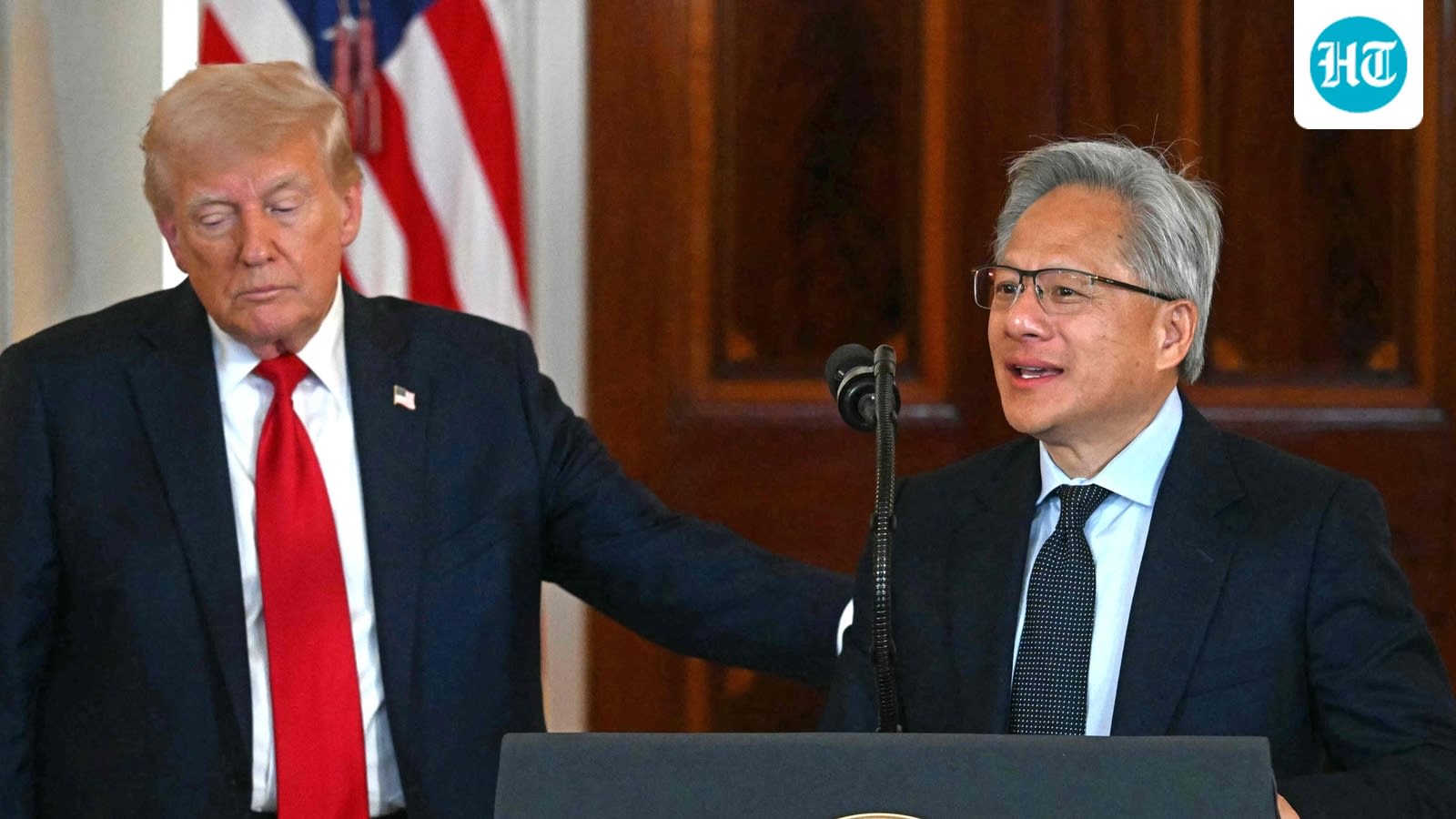
Nvidia CEO Jensen Huang has returned to his post following a brief resignation, sparking both market volatility and political debate. While his reinstatement initially surged stock prices, subsequent market cooling and internal leadership accountability measures reflect ongoing uncertainty in the AI sector.
The Volatile Intersection of Corporate Governance and National Security
The recent reinstatement of Jensen Huang as CEO of Nvidia has triggered a firestorm that transcends simple corporate reshuffling. After a brief resignation, Huang’s return sparked an immediate, massive market reaction, briefly adding over $900 billion in value to the company. However, this euphoria was short-lived, as investors quickly pivoted toward caution, leading to a significant mid-session sell-off of nearly 9% as the market began to process the implications of such rapid leadership turnover in the high-stakes AI sector.
Political Interference and National Security Implications
President Trump’s involvement in forcing the Nvidia board to reinstate Huang has drawn intense scrutiny. The administration’s intervention, framed by the President as a necessary step for national interest, has raised concerns about the precedents being set. Critics argue that by inserting the executive branch into the internal governance of a private entity, the U.S. risks signaling to global adversaries—specifically Beijing, Tehran, and Moscow—that American national security policy is subject to economic vetoes or external manipulation.
Market Instability in the AI Era
Nvidia serves as the backbone of the global artificial intelligence boom, making its leadership stability a matter of macroeconomic concern. The recent volatility highlights how fragile investor confidence has become. As the sector drives economic growth worldwide, the perception that political influence dictates the direction of a foundational tech firm creates a climate of uncertainty, potentially discouraging long-term capital investment and increasing systemic risk across the broader technology index.
Internal Accountability and Corporate Culture
Parallel to the geopolitical fallout, Huang faces the daunting task of stabilizing internal company culture. In a candid all-hands meeting, he apologized for "very serious personal mistakes" that violated the company’s code of conduct. By revealing that he is undergoing daily therapy and committing to regular performance reviews, Huang is attempting to rebuild trust with his workforce. His public commitment to transparency and equality serves as a critical test of whether a leader can survive a high-profile ethical lapse through institutional reform.
The Future of Leadership and Oversight
Looking forward, this episode sets a complicated precedent for future corporate-government relations. If leadership at critical technology firms is viewed as a revolving door governed by political fiat, the long-term impact on innovation and corporate autonomy could be severe. The market is now signaling a "wait and see" approach, as investors evaluate whether Huang’s promises of personal accountability and code-of-conduct adherence will be enough to insulate Nvidia from the political pressures that defined his return to power.
Conclusion
The saga of Jensen Huang’s return is a microcosm of the modern intersection between global technology dominance and political governance. While the immediate market shock has subsided into a period of cautious volatility, the long-term questions regarding executive conduct, the boundaries of presidential power, and the stability of the AI supply chain remain unanswered. For investors and policymakers alike, Nvidia’s path forward will be a bellwether for the health of the tech sector in an increasingly polarized world.
Multiple Citing Sources
Verification Required?