Odisha ITI trainee tops female candidates with 1,194 marks, earning national recognition
Source Entity
TOI LIFESTYLE DESK
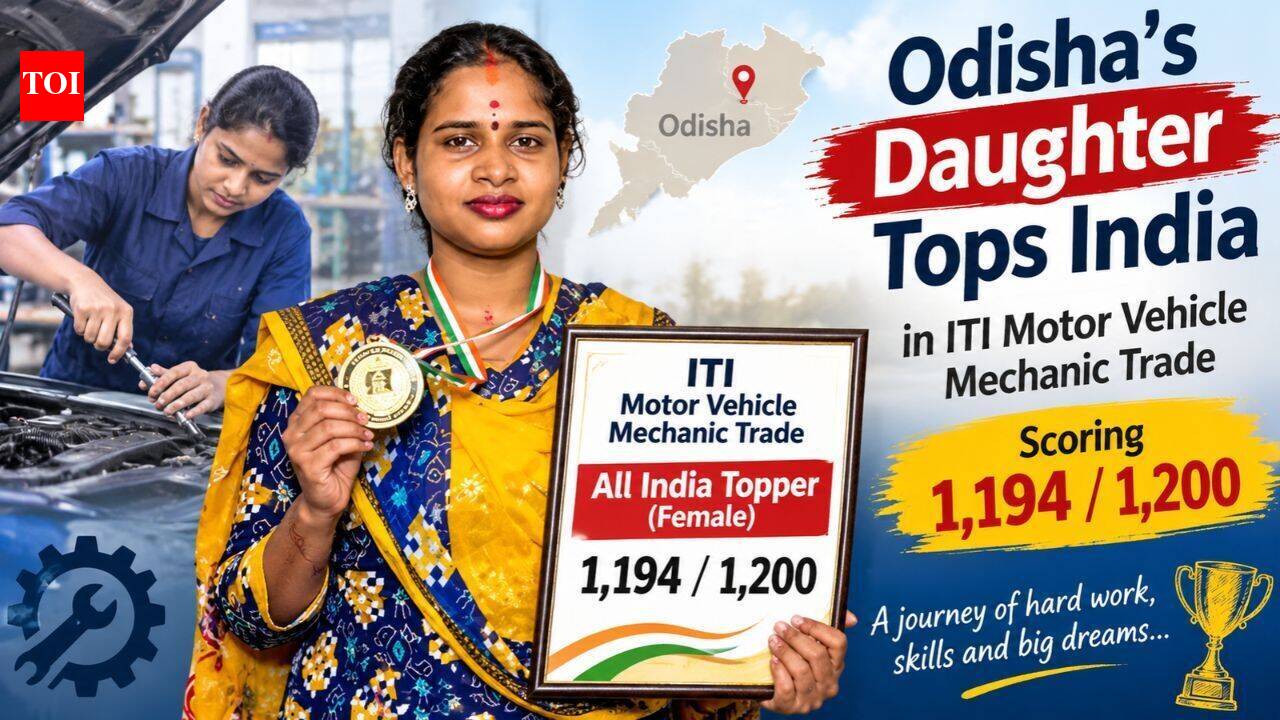
Supriti Mahapatra from Puri has achieved national recognition as the top female candidate in the Mechanic (Motor Vehicle) ITI exams. Her near-perfect score of 1,194 out of 1,200 marks a significant milestone for gender inclusivity in technical vocational fields.
A Milestone in Vocational Excellence: Supriti Mahapatra's Achievement
Supriti Mahapatra, a resident of Puri, Odisha, has shattered glass ceilings in the technical education sector by emerging as the national topper in the Mechanic (Motor Vehicle) field. Scoring an exceptional 1,194 out of 1,200 marks in her Industrial Training Institute (ITI) examinations, Mahapatra has not only proven her academic prowess but has also brought national attention to the capabilities of female students in traditionally male-dominated vocational trades.
Challenging Gender Norms in Technical Trades
The field of automotive mechanics has historically been dominated by men, often viewed through the lens of physical labor and technical specialization that excludes women. Mahapatra’s success serves as a powerful counter-narrative to these entrenched stereotypes. By excelling in such a rigorous technical discipline, she demonstrates that intellectual aptitude and mechanical proficiency are not gender-bound, paving the way for future generations of women to pursue careers in engineering and automotive repair without hesitation.
The Role of Vocational Education in India
This achievement underscores the critical importance of India's ITI framework in the nation's broader skill development ecosystem. Vocational education provides a direct pathway to employment, bridging the gap between theoretical knowledge and industrial application. Mahapatra’s near-perfect score is a testament to the quality of training provided and the potential for vocational institutes to act as catalysts for social mobility, especially for those venturing into non-traditional paths.
Family Support and Cultural Context
Behind every academic triumph, there is often a support system that fosters resilience. The Mahapatra family’s pride in their daughter’s success highlights the changing attitudes in regional India toward female participation in technical sectors. This familial backing is essential in environments where societal pressure might otherwise discourage women from entering trades characterized by manual labor and technical complexity.
National Recognition and Future Implications
In recognition of her stellar performance, Supriti Mahapatra is set to receive special acknowledgment from Prime Minister Narendra Modi at an upcoming national gathering. Such high-level recognition is vital; it validates the efforts of individual students and transforms them into national role models. This visibility is expected to inspire more young women across India to consider vocational training as a viable and prestigious career path.
Conclusion: A Path Toward Inclusive Growth
Ultimately, Mahapatra’s success is more than a personal milestone; it is a signal of progress in India’s labor force integration. By embracing technical roles, women are not only diversifying their career prospects but are also contributing to the nation’s industrial efficiency. As India continues to prioritize skill development, the visibility of success stories like that of Supriti Mahapatra will be instrumental in ensuring a more equitable and capable workforce for the future.