Odisha KG-to-PG free edu subject to 75% attendance, professional courses exempted
Source Entity
Latest News: Today's Latest News Headlines from India & World | Hindustan Times | Hindustan Times
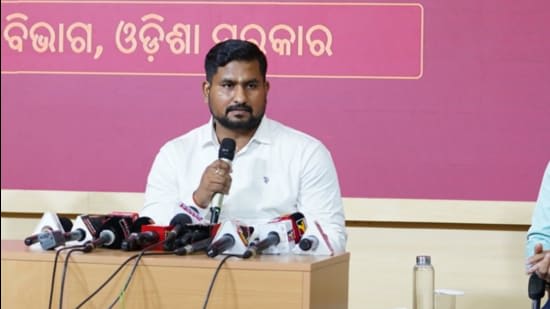
The Odisha government has introduced a free education scheme spanning from Kindergarten (KG) to Post-Graduate (PG) levels, mandating a 75% attendance record for students to qualify for fee waivers. The policy applies to state universities, government colleges, and private aided colleges, while explicitly exempting professional courses from the waiver.
Analysis of Odisha's KG-to-PG Free Education Initiative
The Odisha government has unveiled a significant educational reform aimed at democratizing access to learning through a comprehensive fee waiver scheme extending from Kindergarten (KG) to Post-Graduate (PG) levels. By removing financial barriers for students in state universities, government colleges, and private aided institutions, the state is attempting to create a seamless educational pipeline. This move reflects a strategic commitment to increasing the Gross Enrolment Ratio (GER) and ensuring that socio-economic constraints do not hinder a student's academic progression from early childhood through higher education.
The Attendance Mandate: Balancing Access with Accountability
A critical component of this policy is the mandatory 75% attendance requirement to qualify for the fee waiver. From an analytical perspective, this condition serves as a safeguard against the potential misuse of government subsidies. By linking financial aid to physical presence in the classroom, the state is emphasizing that 'free education' is not merely a handout but a social contract based on academic engagement. This requirement is likely intended to combat the issue of high dropout rates and 'ghost enrollments,' ensuring that state funds are utilized by students who are actively pursuing their degrees and utilizing the institutional infrastructure.
Scope of Eligibility and Strategic Exclusions
The decision to limit the fee waiver to state universities, government colleges, and private aided colleges suggests a targeted approach to public spending. By focusing on institutions that already receive government funding or oversight, the state can more easily monitor the implementation of the scheme and audit the attendance records. Furthermore, the explicit exemption of professional courses—such as Engineering, Medicine, or Law—indicates a tiered subsidy model. Professional courses typically involve higher operational costs and specialized infrastructure; by exempting them, the government avoids an unsustainable financial burden while still supporting general academic degrees that form the bedrock of a literate and skilled workforce.
Socio-Economic Implications for the Region
Historically, Odisha has faced challenges regarding rural poverty and educational disparities. This KG-to-PG initiative is poised to have a profound impact on marginalized communities, where the cost of higher education often forces students to terminate their studies after secondary school. By extending the waiver to the PG level, the government is encouraging the creation of a more highly qualified professional class within the state. This could lead to a long-term increase in local expertise and a reduction in the 'brain drain' where students migrate to other states for affordable higher education.
Potential Challenges and Future Trends
While the policy is ambitious, its success will depend heavily on the robustness of attendance tracking systems. In many government colleges, manual attendance logs are prone to manipulation; therefore, the state may need to invest in digital attendance monitoring to ensure the 75% threshold is genuinely met. Looking forward, if this model proves successful in increasing graduation rates without bankrupting the state treasury, it could serve as a blueprint for other Indian states. We may see a trend where education is viewed as a public utility, similar to healthcare, with funding tied to performance and participation metrics.
Conclusion
In summary, Odisha's KG-to-PG free education scheme is a bold step toward universalizing education. By integrating a strict attendance requirement and strategically excluding high-cost professional courses, the government is attempting to balance social welfare with fiscal responsibility. The success of this initiative will ultimately be measured by whether it translates into higher employability and a more educated citizenry, rather than simply increasing enrollment numbers on paper.
Verification Required?