Wildfires in Ontario make Toronto air quality worst in world
Source Entity
Leyland Cecco in Toronto
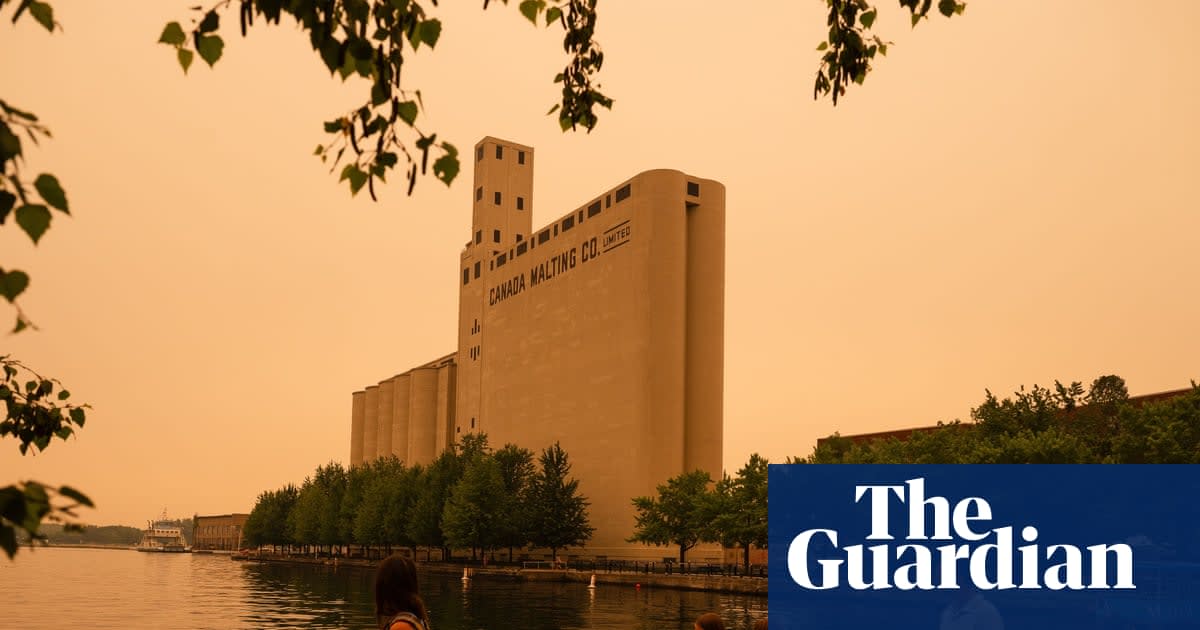
Smoke from over 100 active wildfires in northern Ontario has caused Toronto's air quality to be ranked as the worst in the world, prompting health warnings from Environment Canada and affecting air quality across the northeast United States.
Atmospheric Crisis: Ontario Wildfires Plunge Toronto's Air Quality to Global Low
Toronto, Canada's largest metropolitan hub, recently experienced a severe environmental crisis as smoke from over 100 active wildfires in northern Ontario drifted southward. This event culminated in a striking visual phenomenon where the city's sky turned a sickly yellow, a clear indicator of high concentrations of particulate matter. According to data from the Swiss technology firm IQAir, Toronto was ranked as having the worst air quality in the world on Wednesday, triggering immediate health warnings from Environment Canada to protect the public from hazardous inhalation.
The Mechanics of Boreal Smoke Transport
The severity of this event is rooted in the scale of the wildfires occurring in northern Ontario's vast boreal forests. When over 100 fires burn simultaneously, they create massive plumes of smoke that can be carried thousands of kilometers by atmospheric currents. In this instance, the smoke was pushed toward the Great Lakes region and the northeast United States. This transboundary pollution demonstrates how localized environmental disasters in remote northern regions can have immediate, acute impacts on densely populated urban centers, effectively turning a regional forestry issue into a public health emergency for millions.
Public Health Implications and PM2.5 Risks
Environment Canada's health warnings were a response to the dangerous levels of fine particulate matter, known as PM2.5. These microscopic particles are small enough to enter the bloodstream through the lungs, posing significant risks to individuals with asthma, COPD, and other cardiovascular conditions. The "yellow sky" described in reports is often the result of Mie scattering, where larger smoke particles scatter shorter wavelengths of light, leaving the longer orange and yellow wavelengths visible. For the residents of Toronto and the northeast US, this visual cue served as a warning of an invisible threat to respiratory health.
Historical Context and Climate Trends
While wildfires are a natural part of the Canadian ecosystem, the frequency and intensity of these events have escalated in recent years. This specific incident mirrors a growing trend of "megafires" that characterize the modern wildfire season. Historically, northern Ontario fires were managed within the forest, but increasing global temperatures and prolonged drought conditions have turned the boreal forest into a tinderbox. The fact that Toronto reached the absolute bottom of global air quality rankings highlights a shift where developed nations are now facing air quality crises previously associated primarily with industrial hubs in Asia.
Transboundary Environmental Impact
The reach of these wildfires extended far beyond Canadian borders, impacting cities across the northeast United States. This underscores the interconnectedness of North American air sheds. When smoke crosses international boundaries, it necessitates coordinated monitoring and communication between agencies like Environment Canada and the US Environmental Protection Agency (EPA). The widespread nature of the haze indicates that the atmospheric loading of carbon and particulates from these fires is substantial, contributing to a temporary but sharp increase in regional greenhouse gas concentrations.
Future Outlook and Mitigation
Looking forward, these events suggest that urban centers in North America must adapt to "smoke seasons" as a permanent fixture of their climate reality. Future trends likely include an increased reliance on high-efficiency air filtration systems in public buildings and more robust early-warning systems for air quality. Furthermore, this event places renewed pressure on forest management strategies and global climate initiatives to reduce the drying trends that fuel such catastrophic fire seasons. Without systemic intervention, the occurrence of cities like Toronto ranking as the world's most polluted due to natural disasters may become more frequent.
Summary
The intersection of northern Ontario's wildfires and Toronto's air quality represents a critical failure of atmospheric health. Driven by over 100 active fires, the resulting smoke not only created a visual spectacle of yellow skies but also posed a legitimate health risk to millions across Canada and the US. This event serves as a stark reminder of the cascading effects of climate-driven wildfires on urban populations.