I know why Mathematicians weep
Source Entity
Hacker News
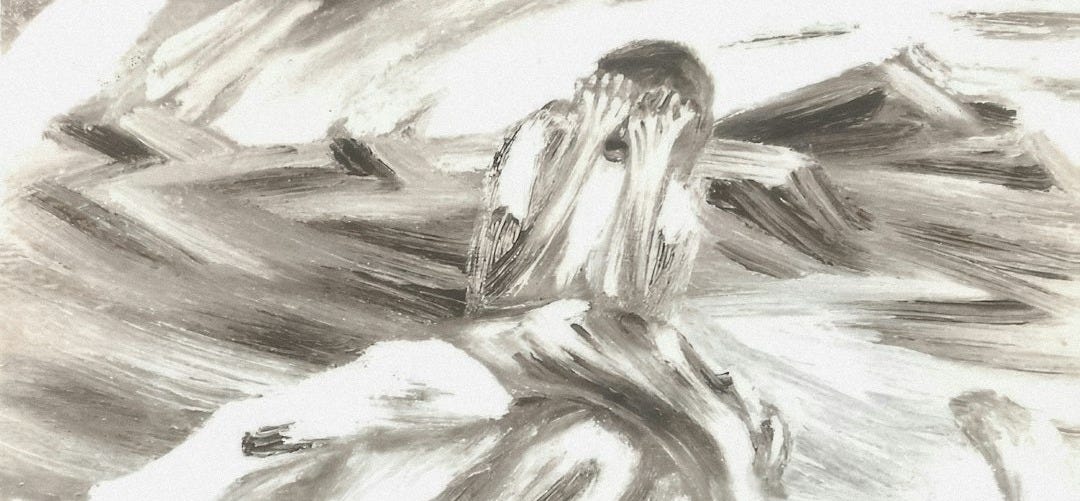
OpenAI has triggered a crisis in the mathematics community by publishing hundreds of complex proofs that solve decades-old challenges. Leading mathematicians express profound distress, fearing that AI-driven automation is effectively devaluing human intellectual labor in their field.
The Algorithmic Disruption of Pure Mathematics
A Paradigm Shift in Proof Generation
The recent publication of hundreds of mathematical findings by OpenAI has sent shockwaves through the global academic community. By successfully tackling problems in number theory, theoretical computer science, and logic—areas that have historically resisted human efforts for centuries—OpenAI has fundamentally altered the landscape of mathematical research. This event marks a transition from human-led discovery to machine-accelerated proof generation, challenging the traditional role of the mathematician as the sole architect of formal logic.
The Emotional Toll of Automation
The emotional response from prominent figures, such as Fields Medalist Hugo Duminil-Copin and Cornell’s Steven Strogatz, highlights the existential nature of this disruption. Duminil-Copin’s admission that the research felt "annihilated" reflects a deep-seated fear that the intrinsic value of human struggle in mathematics is being bypassed. When a machine can produce in months what human scholars have sought for generations, the psychological impact on the research community is profound, moving beyond mere professional rivalry into a sense of mourning for a discipline once thought exclusively human.
The "Strip-Mining" of Intellectual Territory
Critics within the field have utilized evocative metaphors such as "strip-mining" and "nuking the landscape" to describe the rapid pace of OpenAI’s progress. These terms suggest a concern that AI is extracting the "easy" or "low-hanging" formal proofs that underpin deep mathematical structures without engaging in the slow, reflective process of human intuition. This creates a tension between efficiency and the traditional academic value placed on the journey of discovery, rather than just the final output.
Broader Implications for Formal Logic
Beyond the emotional response, this development raises critical questions about the nature of mathematical truth. If AI can generate valid, complex proofs, the definition of "understanding" in mathematics may shift. The community must now grapple with whether a proof generated by an AI, even if verified as correct, holds the same status as one derived through human insight. This is not merely a technological hurdle but a philosophical one that will likely reshape how mathematics is taught and practiced in the coming decades.
Future Trends and the Human Element
Looking forward, the integration of AI into mathematics appears inevitable, yet it will likely force a re-evaluation of human specialization. While AI can handle the heavy lifting of formal verification and pattern recognition, the role of human mathematicians may shift toward high-level synthesis, conceptual framing, and the identification of new, non-algorithmic frontiers. The challenge for the future will be finding a way to harmonize machine-driven efficiency with the creative, intuitive spark that has historically defined human mathematical discovery.