Asaduddin Owaisi, Chandrashekhar Azad's Parties Form UP Poll Pact, Eye Dalit-Muslim Unity
Source Entity
NDTV News Search Records Found 1000
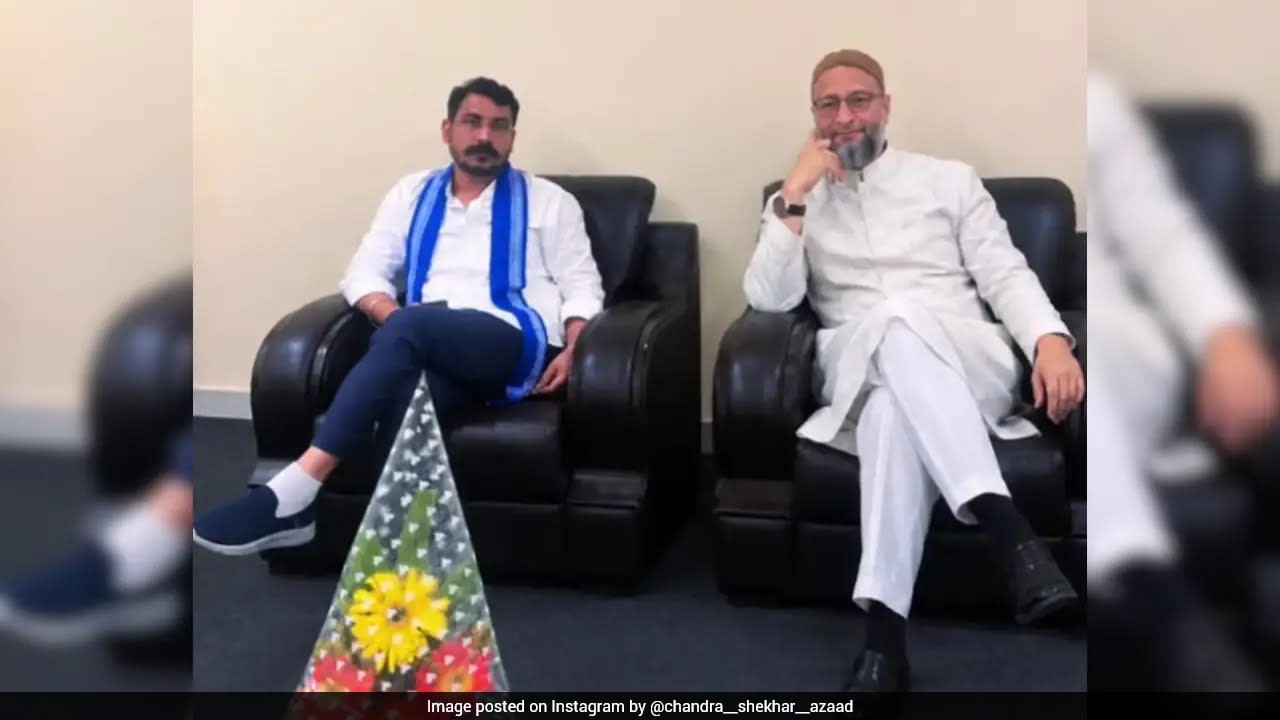
AIMIM leader Asaduddin Owaisi and Azad Samaj Party chief Chandrashekhar Azad are set to form a political alliance for the 2027 Uttar Pradesh Assembly elections. The partnership aims to consolidate Dalit and minority votes, potentially creating a significant third-front challenge against major established parties.
A New Political Equation in Uttar Pradesh
The political landscape of Uttar Pradesh is bracing for a significant shift as AIMIM president Asaduddin Owaisi and Azad Samaj Party (Kanshiram) chief Chandrashekhar Azad prepare to formalize an electoral alliance. Scheduled for a joint announcement in Lucknow on November 12, 2026, this pact represents a strategic attempt to bridge the gap between Dalit and minority voters ahead of the 2027 Assembly elections.
Strategic Consolidation of Voter Bases
At the core of this alliance is the ambitious goal of capturing the nearly 41% combined Dalit and minority vote share in India's most populous state. By joining forces, Owaisi and Azad are positioning themselves as a formidable third-front alternative to both the ruling Bharatiya Janata Party (BJP) and the primary opposition, the Samajwadi Party (SP). This demographic consolidation is designed to disrupt traditional voting patterns that have historically favored established state and national players.
The Failure of Past Negotiations
Both leaders have publicly acknowledged that their preference initially leaned toward forming alliances with the Samajwadi Party or the Congress. However, the lack of success in those negotiations appears to have catalyzed this new partnership. By pivoting to an independent alliance, both the AIMIM and the Azad Samaj Party are signaling a refusal to be sidelined by the mainstream opposition, asserting their own agency in the electoral arena.
Challenges to the Established Order
For the BJP, which is currently eyeing a historic electoral hat-trick in the state, the emergence of this alliance introduces a new variable in an already complex political environment. Conversely, the Samajwadi Party, which has been working to consolidate its own base to challenge the BJP, now faces a potential split in the anti-incumbency vote. This third-front dynamic could significantly alter the margin of victory in key constituencies.
Future Implications for 2027
While the specific terms of the pact remain under wraps, the political weight of Nagina MP Chandrashekhar Azad combined with the ideological reach of Asaduddin Owaisi suggests a well-calculated move to influence the 2027 polls. Whether this alliance can successfully translate into a consolidated vote bank remains to be seen, but it undoubtedly complicates the arithmetic for all major parties involved. As the state moves toward the 2027 cycle, this alliance will be closely watched as a litmus test for the viability of a non-BJP, non-Congress political block in Uttar Pradesh.
Multiple Citing Sources
Verification Required?