Akhilesh is the target of Aazad, Owaisi at their first joint rally
Source Entity
Lalmani Verma
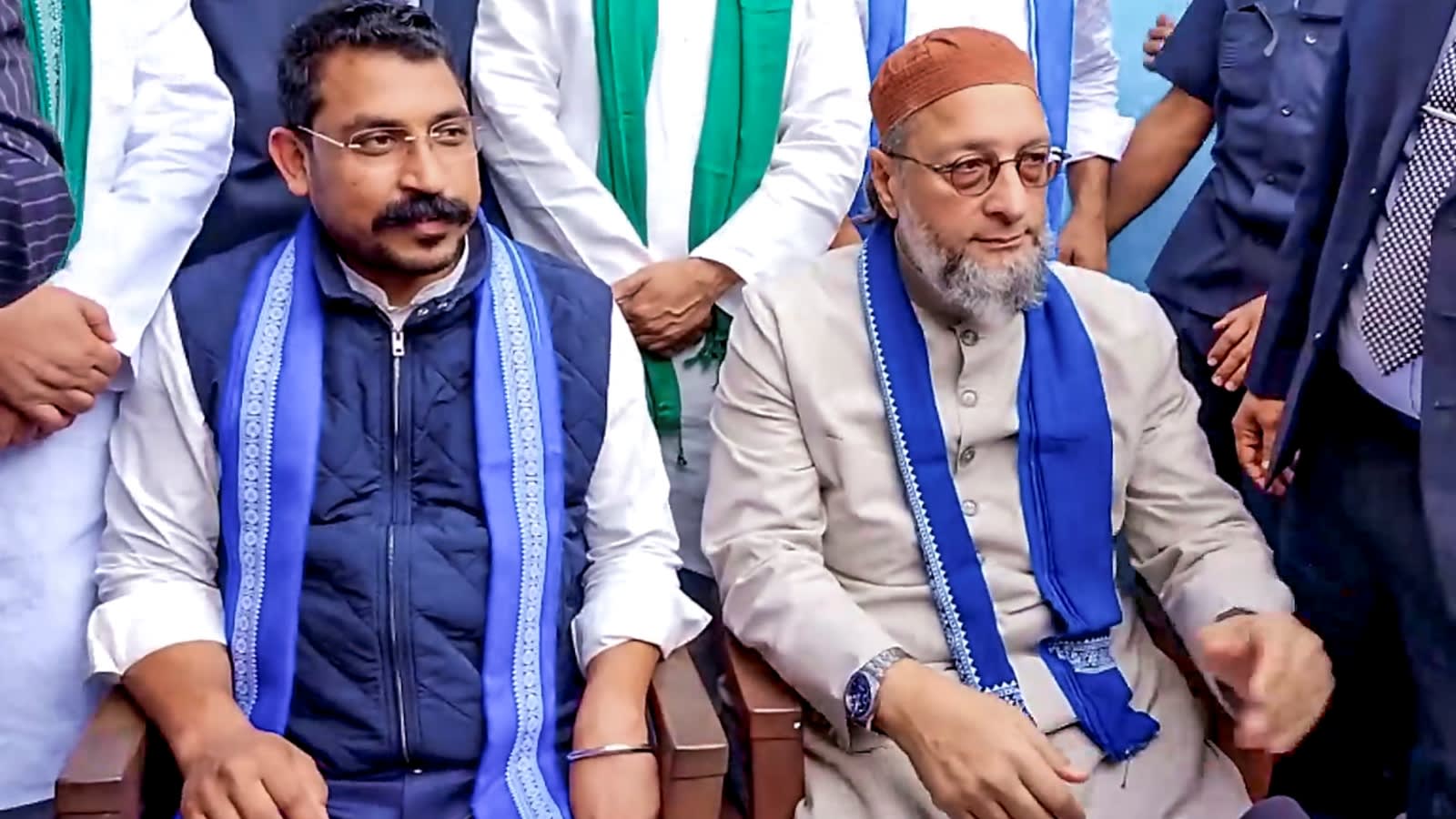
Asaduddin Owaisi and Chandrashekhar Azad have launched their 'Samajik Parivartan Morcha' alliance, targeting both the BJP and SP ahead of the 2027 UP elections. They specifically criticized Akhilesh Yadav for allegedly treating Muslims as a vote bank while ignoring Dalit and minority interests.
The Emergence of the Samajik Parivartan Morcha
In a significant political development ahead of the 2027 Uttar Pradesh assembly elections, AIMIM chief Asaduddin Owaisi and Azad Samaj Party leader Chandrashekhar Azad have officially solidified their partnership under the banner of the Samajik Parivartan Morcha. During a high-profile rally at Lucknow’s Ramabai Ambedkar Maidan on Constitution Day, the duo presented a unified front, signaling a strategic attempt to reshape the electoral landscape of India’s most populous state by positioning themselves as the primary alternative to both the ruling Bharatiya Janata Party (BJP) and the main opposition, the Samajwadi Party (SP).
Challenging the SP Hegemony
A core objective of this new alliance is to dismantle the traditional influence of the Samajwadi Party over the Muslim and Dalit vote banks. Owaisi and Azad utilized their joint platform to launch a sharp critique of SP leader Akhilesh Yadav. Owaisi alleged that Yadav has historically treated the Muslim community as a mere vote bank, securing their support only to deny them meaningful political representation. Furthermore, he took a personal jab at the political aesthetics and ideologies of his rivals, challenging the leadership styles of both Yogi Adityanath and Akhilesh Yadav.
Accusations of Betrayal and Ideological Drift
The narrative presented by the alliance centers on the theme of 'betrayal.' Chandrashekhar Azad, in particular, accused the SP of harboring an anti-Dalit mindset, arguing that the party has remained silent on atrocities committed against marginalized communities. Owaisi reinforced this by suggesting that Akhilesh Yadav is increasingly aligning himself with Hindutva ideology, effectively abandoning the core principles that his support base expects him to uphold. The alliance claims that the SP has exploited these segments to advance the political careers of their own family members rather than serving the community.
Strategic Implications for 2027
By framing the 2027 election as a contest for the dignity of 'Abdul' (a common reference to the Muslim community in UP politics), the Morcha is attempting to mobilize voters who feel disenfranchised by the existing binary of BJP versus SP. Their rhetoric suggests that the era of Muslims merely acting as passive supporters—or, as Azad put it, not being the ones to 'lay the carpet' for others—is coming to an end. This shift could have profound implications for vote splitting in constituencies with high minority and Dalit concentrations.
Future Trends and Political Realignment
The formation of this alliance marks a calculated risk. While the BJP continues to dominate the state machinery, the Owaisi-Azad coalition seeks to capture the vacuum left by perceived failures of the SP. The success of this movement will depend on their ability to sustain this momentum beyond rallies and into grassroots organization. As the 2027 polls approach, the focus will remain on whether this 'Samajik Parivartan' (Social Change) front can evolve from a vocal opposition into a viable governing alternative, or if it will primarily serve as a spoiler in a crowded political field.