At UNGA, Pakistan’s PM Shehbaz Sharif says Indus water diversion ‘will be treated as act of war’
Source Entity
The Indian Express
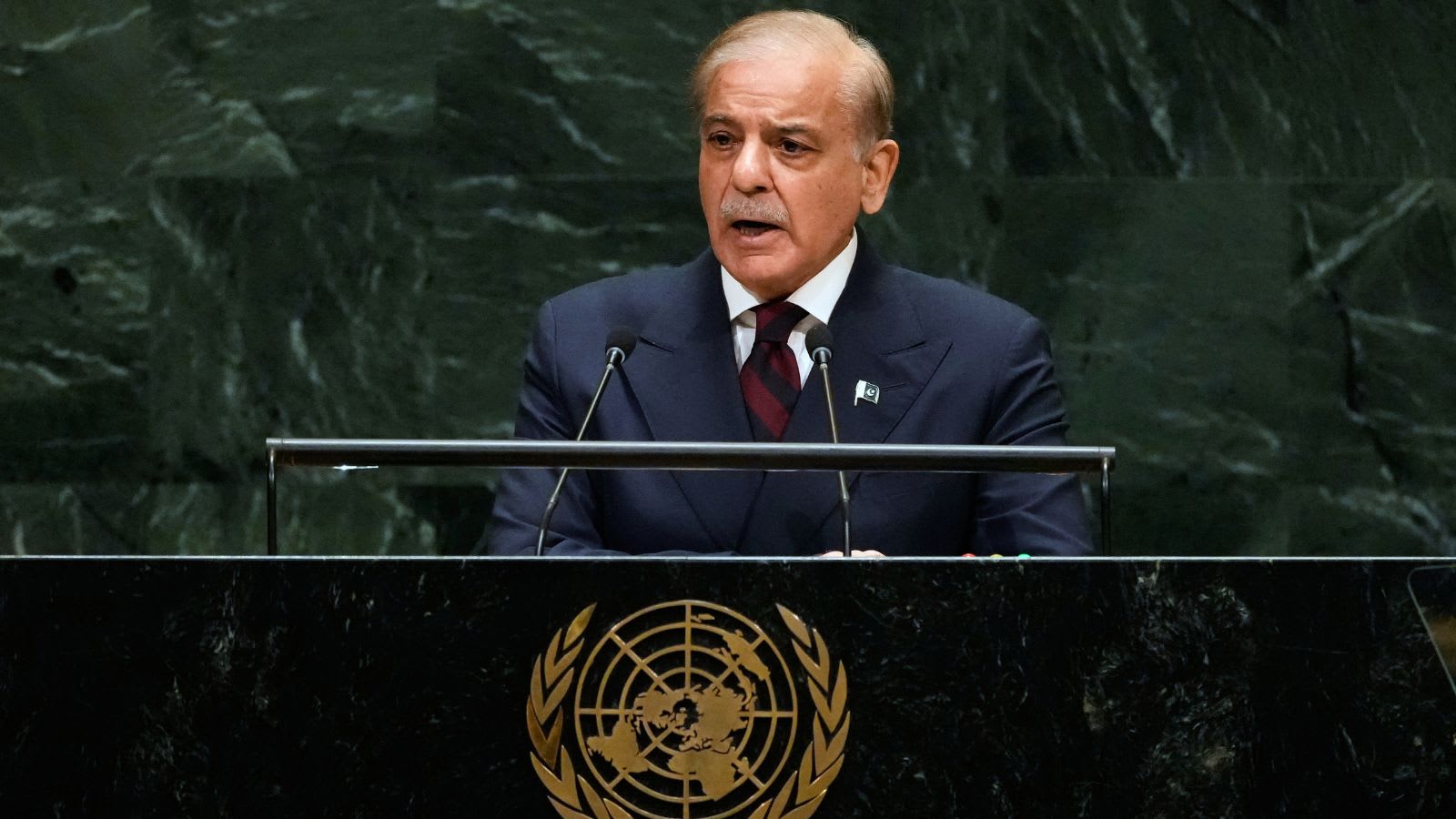
Pakistan's PM Shehbaz Sharif addressed the UNGA, thanking Donald Trump for intervening in the May 2025 India-Pakistan military clash. He simultaneously issued a stern warning that any interference with Indus River water rights would be considered an act of war.
Tensions Escalate at the 81st UNGA
During the 81st United Nations General Assembly, Pakistan Prime Minister Shehbaz Sharif delivered a high-stakes address that centered on regional stability and the existential threat of water scarcity. Central to his speech was the acknowledgment of former US President Donald Trump’s diplomatic intervention during the volatile four-day military confrontation between India and Pakistan in May 2025, an event triggered by India’s 'Operation Sindoor.' This public recognition highlights the fragile nature of nuclear deterrence in South Asia and the recurring reliance on external mediation to prevent full-scale conflict.
The Indus Waters Treaty: A New Flashpoint
The most significant portion of Sharif’s address focused on the Indus Waters Treaty. Relations between New Delhi and Islamabad have deteriorated significantly following India’s decision to place the treaty in abeyance in the wake of the Pahalgam terror attack. Pakistan views this unilateral move as having no legal basis, arguing that the treaty is the 'lifeblood' of its agricultural and economic survival. By explicitly labeling any future diversion or impediment of water flow as an 'act of war,' Sharif has elevated a technical dispute into a primary national security redline.
Historical Context and Operation Sindoor
'Operation Sindoor,' which occurred in May 2025, represents a major inflection point in the modern history of Indo-Pakistani relations. The conflict, which lasted four days, brought the two nations to the precipice of a larger engagement. The intervention mentioned by Sharif suggests that the international community, specifically the United States under Trump, played a critical back-channel role in de-escalating what could have been a catastrophic regional war. The persistence of these tensions suggests that the underlying issues, including the status of Kashmir and cross-border security, remain unresolved.
The Weaponization of Resources
Sharif’s warning against the 'weaponization' of water underscores a growing trend in international conflicts where essential resources are increasingly viewed through a strategic lens. As climate change exacerbates water stress, the Indus River system becomes a critical point of contention. Pakistan’s stance is that the river system is not merely a bilateral resource but a regional necessity. By bringing this concern to the UNGA, Pakistan is attempting to internationalize the water dispute, hoping to pressure India into restoring the status quo of the treaty.
Diplomatic Friction and Future Outlook
Despite the gravity of Sharif's remarks, the atmosphere at the UNGA remained charged with diplomatic skepticism. Reports of an Indian diplomat dismissing the Prime Minister's claims with a smile reflect the deep-seated mistrust that characterizes the current bilateral relationship. Looking ahead, the combination of unresolved border issues and the suspension of the Indus Waters Treaty suggests that the region remains prone to sudden escalations. The international community, and particularly major powers like the US, will likely remain under pressure to manage these recurring crises to prevent a collapse of regional security.
Multiple Citing Sources