First foreign astronaut on China’s Tiangong station will be from Pak
Source Entity
CHETHAN KUMAR
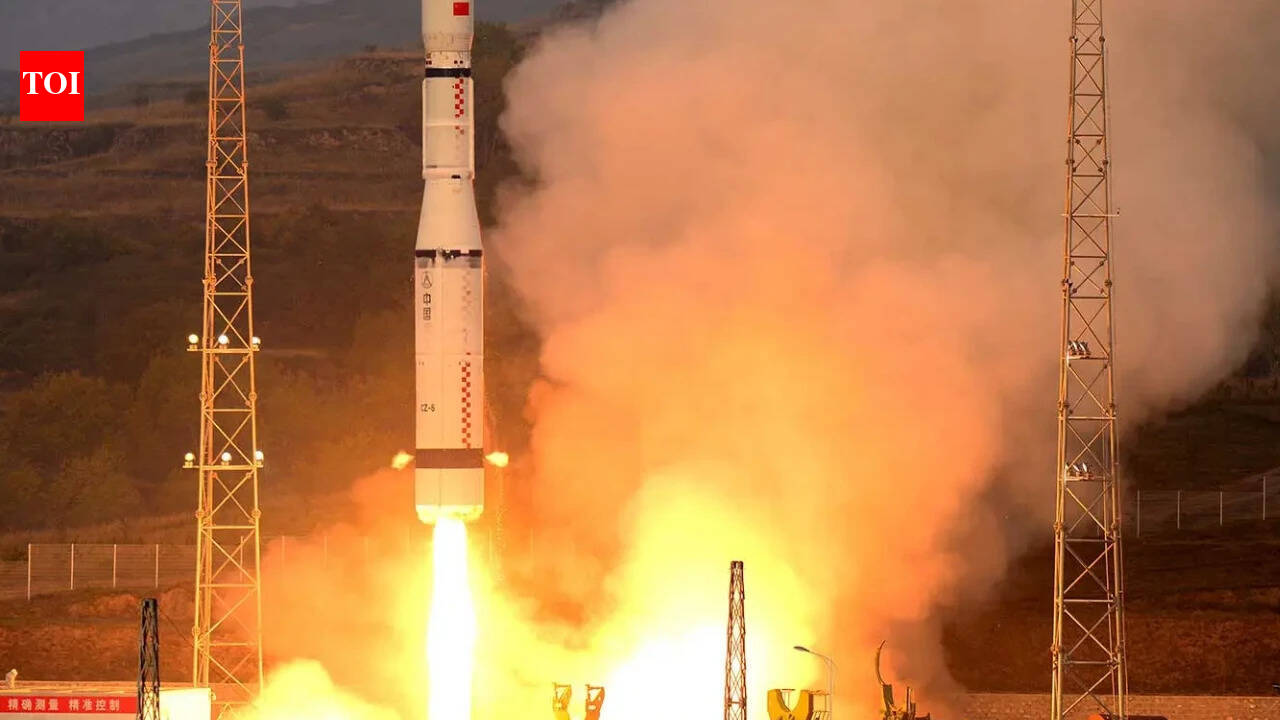
China has confirmed that a Pakistani astronaut will join the Shenzhou-24 mission, marking the first time a foreign national will board the Tiangong space station. The candidate will be selected from two trainees, Muhammad Zeeshan Ali and Khurram Daud, following rigorous training.
A New Era for China’s Space Ambitions
China has officially confirmed a historic milestone in its space exploration program: a Pakistani astronaut will become the first foreign national to board the Tiangong space station. This development, announced by the China Manned Space Agency (CMSA) on November 7, marks a significant shift in China’s approach to international cooperation in low-Earth orbit. By integrating a foreign payload specialist into the Shenzhou-24 mission, China is signaling its intent to transition from a purely nationalistic space program to one that invites strategic partners into its orbital laboratory.
The Selection Process and Training
The mission will feature one of two Pakistani candidates, Muhammad Zeeshan Ali or Khurram Daud. Both individuals have already completed months of specialized training within China’s rigorous aerospace ecosystem. This training is essential, as the Tiangong station operates under strict technical and safety protocols. Their inclusion as payload specialists indicates that the mission will not merely be symbolic but will involve specific scientific or technical objectives that require dedicated expertise in orbital operations.
Geopolitical Significance of the Partnership
The decision to include a Pakistani astronaut reflects the deep and enduring strategic partnership between Beijing and Islamabad. While space exploration is frequently framed as a scientific endeavor, it is inherently tied to geopolitical influence. By providing access to its station, China is strengthening its diplomatic ties and demonstrating that its space infrastructure can serve as a hub for its closest allies. This move effectively counters the exclusivity often associated with the International Space Station (ISS), positioning China as an alternative leader in human spaceflight.
Breaking Barriers in Human Spaceflight
For the history of China’s human spaceflight program, this mission represents a major breakthrough. Since the inception of the Shenzhou program, China has maintained a disciplined, nationally-focused crew structure. The Shenzhou-24 mission breaks this precedent, marking the first joint crewed flight involving a foreign national. This transition suggests that China is confident in the maturity of its station operations and is now prepared to manage the complexities of cross-national crew integration.
Future Trends and Orbital Cooperation
Looking forward, the success of this mission could serve as a blueprint for future international collaborations on the Tiangong station. As the ISS nears the end of its operational lifecycle, the global scientific community is looking for new platforms for research. China’s willingness to train and host foreign astronauts suggests that the Tiangong station may become a focal point for international research in the coming decade. Whether this will remain restricted to close strategic allies or expand to a broader range of global partners remains a key question for international space policy.
Conclusion
The integration of a Pakistani astronaut into the Shenzhou-24 mission is a landmark event that bridges the gap between China’s domestic space achievements and its international diplomatic goals. By formalizing this partnership, China has ensured that the Tiangong station is viewed as a collaborative facility. As the world watches the final selection of the payload specialist, the mission stands as a testament to the evolving landscape of space exploration, where partnerships are becoming as critical as the technology required to reach the stars.