Coconut-breaking ritual at Paris Ganesh procession goes viral, sparks debate
Source Entity
The Indian Express
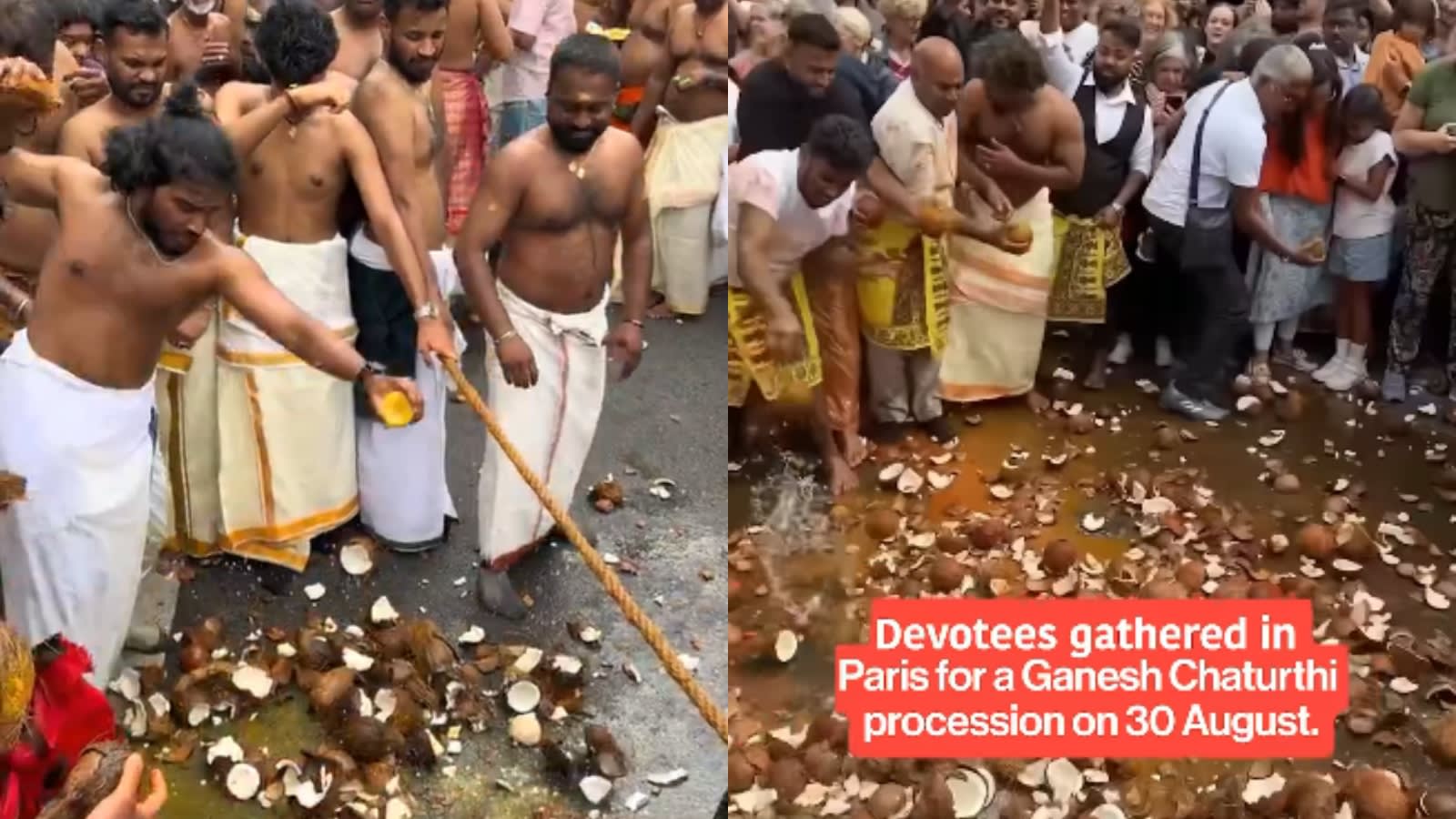
A traditional Ganesh Chaturthi procession in Paris has ignited an online debate regarding the public performance of religious rituals. The event, hosted by the Sri Manicka Vinayakar Alayam temple, highlights the visibility of Hindu traditions in European urban spaces.
The Intersection of Tradition and Public Space in Paris
The annual Ganesh Chaturthi procession, organized by the Sri Manicka Vinayakar Alayam temple in the La Chapelle neighborhood of Paris, has recently become the focal point of a significant cultural debate. As hundreds of devotees gathered to celebrate the festival, videos capturing the traditional ritual of breaking coconuts on the streets circulated rapidly across social media platforms. This act, while deeply symbolic within Hindu theology as a representation of breaking the ego before the divine, has sparked a polarized discussion regarding the visibility and integration of religious practices within the secular public sphere of France.
The Significance of the Sri Manicka Vinayakar Alayam
The Sri Manicka Vinayakar Alayam serves as a vital cultural anchor for the large South Asian community residing in the La Chapelle area. Recognized by the Paris Tourist Office as the largest Hindu temple in France, its role extends beyond mere worship; it acts as a hub for cultural preservation and communal identity. The scale of this year's procession underscores the growing demographic and cultural footprint of the Indian diaspora in European capitals, transforming historically French urban landscapes into spaces of multicultural expression.
Analyzing the Online Discourse
The viral nature of the coconut-breaking ritual highlights the tensions inherent in a modern, globalized society. While supporters view the procession as a vibrant display of cultural diversity and religious freedom, critics often frame such public rituals through the lens of secularism, or laïcité, which is a foundational principle of French governance. The debate reflects a broader societal struggle to balance the accommodation of diverse religious expressions with the norms of public conduct in historically secular European cities.
Historical Context and Cultural Integration
Religious processions have long been a part of the European urban fabric, though traditionally associated with Christian traditions. The introduction of large-scale Hindu festivals like Ganesh Chaturthi challenges existing perceptions of what constitutes 'public' behavior. This development is not isolated; it is a manifestation of the ongoing evolution of European demographics. As diaspora communities grow, their traditional rites of passage and public celebrations become more visible, necessitating a nuanced dialogue between tradition-bearers and the wider public.
Future Trends in Multicultural Urbanism
Looking forward, the integration of such festivals suggests that European city planning and social policy will increasingly need to navigate the complexities of multiculturalism. The debate sparked by the Paris procession is likely to persist as different communities seek to express their identity in the public square. This event serves as a case study for how global cities adapt to the presence of diverse religious practices, indicating that the future of urban centers will be defined by their ability to foster dialogue between traditional heritage and modern secular values.