Why Fender’s 35-minute ton from 1920 remains unbeaten after 106 years
Source Entity
HIJAM RAJU SINGH
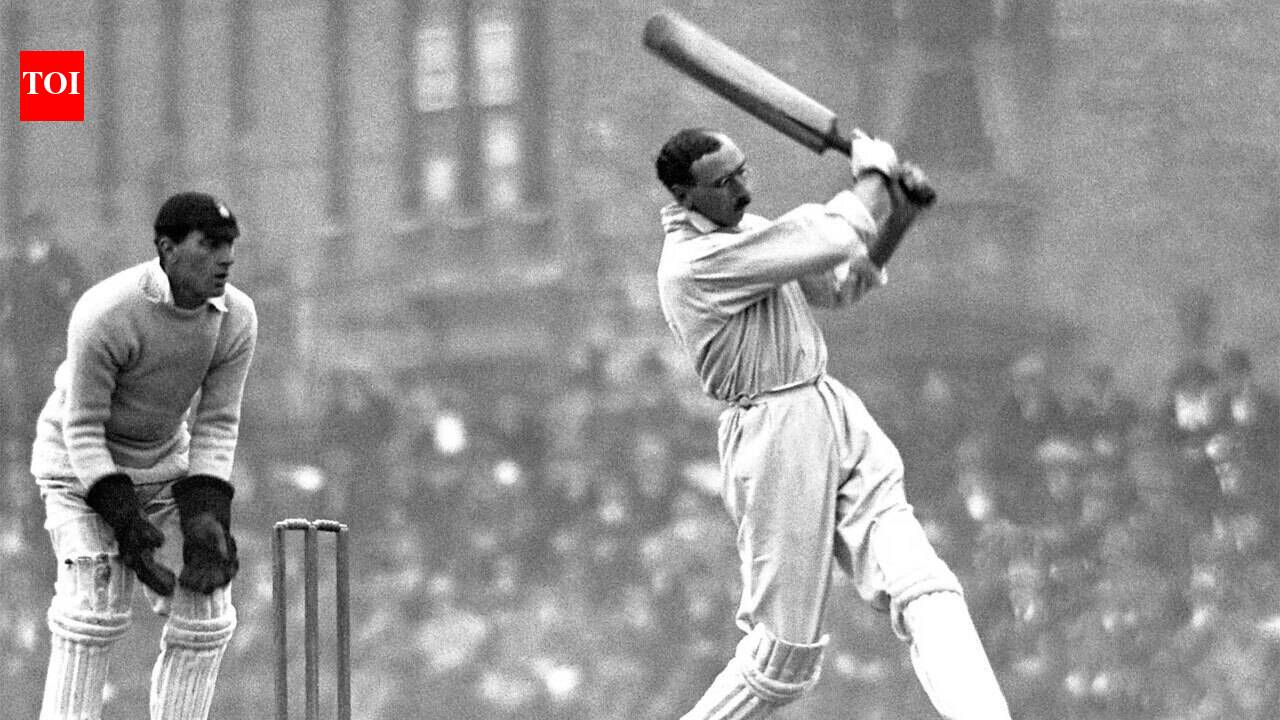
Percy Fender’s 1920 record of a 35-minute first-class century remains the sport's benchmark for speed. Despite subsequent attempts, none have met the rigorous competitive standards required to officially surpass his historic achievement.
The Timeless Legacy of Percy Fender’s 1920 Masterclass
In the annals of cricket history, few records possess the longevity and mystique of Percy Fender’s 1920 century. On August 26, 1920, while representing Surrey against Northamptonshire, Fender achieved the unthinkable: a first-class century in just 35 minutes. Over a century later, this feat remains the gold standard for batting speed, standing as a testament to an era where aggressive, high-risk cricket redefined the possibilities of the sport.
The Context of Competitive Authenticity
What distinguishes Fender’s record from later attempts is the rigorous definition of 'genuine' competitive spirit. While cricket has seen various rapid centuries in the decades since, many have been dismissed by historians and statisticians for failing to meet the standards of authentic, high-stakes first-class play. Fender’s innings was not merely a display of power hitting; it occurred within the traditional framework of a competitive match, ensuring its place as the definitive benchmark.
The Debate Over Measurement
One of the primary reasons Fender’s record has remained unbeaten for 106 years lies in the subjectivity of measurement. The sport of cricket has evolved significantly since 1920, with changes in pitch conditions, equipment technology, and defensive strategies. Determining what qualifies as the 'fastest' century often leads to debates regarding time spent at the crease versus ball-by-ball analysis. Because Fender’s performance was documented under specific, verifiable conditions, it continues to hold its position against modern contenders who often lack the same historical validation.
Why Subsequent Records Fall Short
Throughout the 20th and 21st centuries, there have been several instances where players appeared to match or eclipse Fender’s timing. A notable example occurred in 1983, where a century was completed in a timeframe that theoretically rivaled Fender’s; however, it was ultimately excluded from official record-keeping. These exclusions highlight the importance of the 'competitive spirit' clause, which acts as a barrier against exhibitions or matches that lack the intensity of a true first-class contest.
Historical Implications for Modern Cricket
Fender’s achievement serves as a vital link to the early professionalization of cricket. By analyzing his 113-run innings—completed in just 42 minutes total—we gain insight into the tactical landscape of the post-WWI era. His ability to dismantle the Northamptonshire attack with such clinical efficiency remains a masterclass in aggressive batting, influencing how modern analysts view the evolution of the game’s tempo.
A Future Perspective on Batting Records
As we look to the future, it is unlikely that Fender’s 35-minute record will be officially challenged. The modern game is governed by stringent match-day protocols that make such unchecked aggression difficult to replicate in a first-class setting. Consequently, Fender’s legacy is preserved not just by the clock, but by the complex intersection of sports integrity, historical record-keeping, and the unique competitive environment of 1920s English cricket.