BRICS Business Forum: On women-led businesses, Iran and UAE are on the same page
Source Entity
Divya A
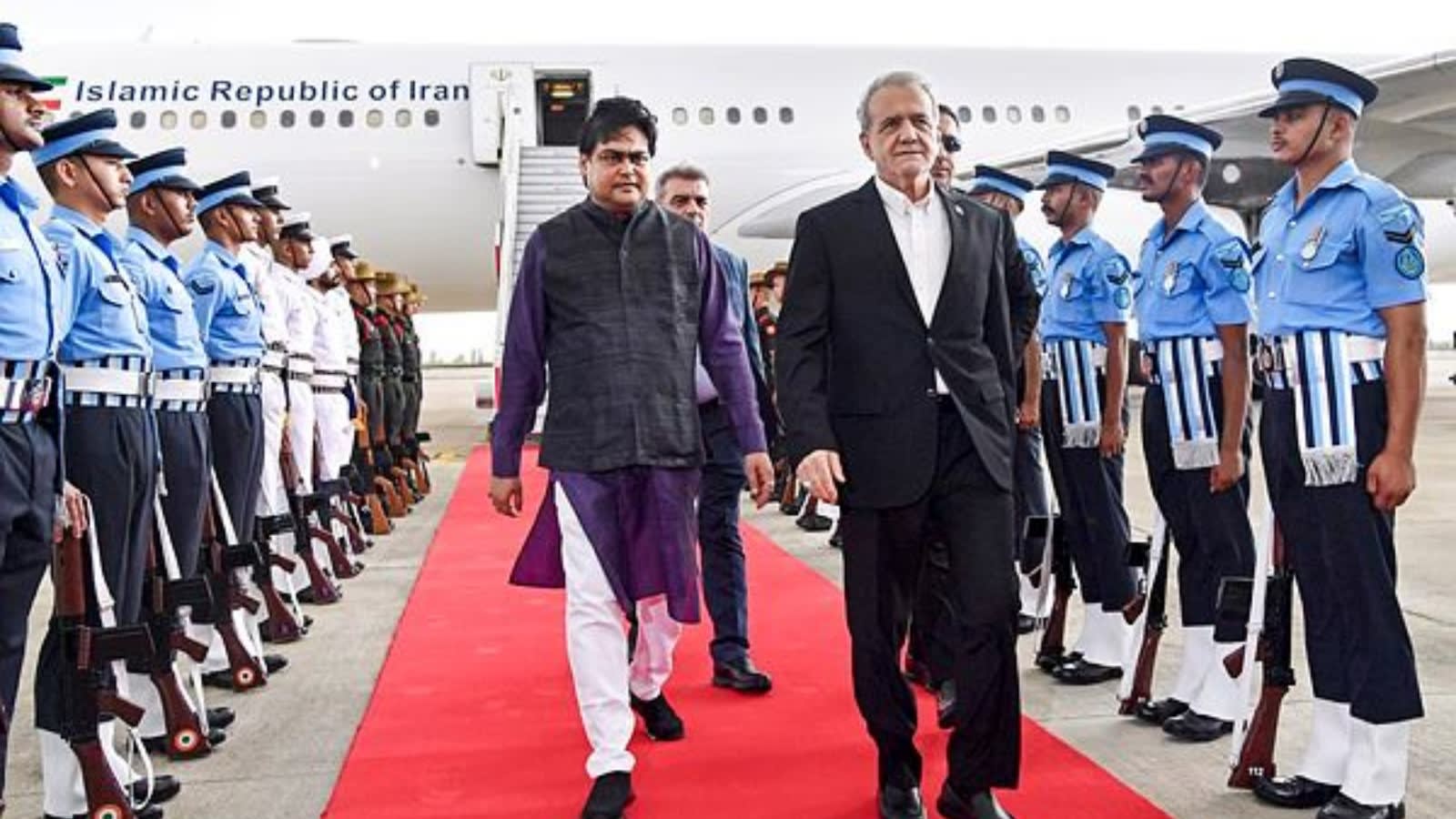
Iranian President Masoud Pezeshkian visited New Delhi for the 18th BRICS summit, highlighting the severe economic and security impact of recent US-Israel aggression. Prime Minister Modi urged for de-escalation via diplomacy, emphasizing the critical need for maritime security in the Strait of Hormuz.
Escalating Geopolitical Tensions: The BRICS Summit and the Iran-West Crisis
Iranian President Masoud Pezeshkian’s arrival in New Delhi for the 18th BRICS summit arrives at a critical juncture in global diplomacy. As he addresses the Leaders' Session of the BRICS Business Forum, the primary focus remains on the severe economic and security ramifications of what Tehran describes as 'active aggression' by the United States and Israel. This visit underscores the deepening rift between Iran and the Western coalition, particularly following the events of February 28, which have fundamentally altered the regional stability of West Asia.
The Economic Toll of Sanctions and Conflict
President Pezeshkian has articulated that the current phase of economic pressure on Iran is significantly more dangerous than past iterations of sanctions. By framing economic security as an inseparable component of national and regional stability, he highlights how the 'extensive' punitive measures have hampered Iran’s ability to participate in the global economy. For Iran, these pressures are not merely financial but are viewed as a direct challenge to national sovereignty, prompting the President to characterize the actions of the U.S. and Israel as acts of bullying that the nation refuses to accept.
Maritime Security and the Strait of Hormuz
Central to the discussions in New Delhi is the precarious state of global energy supply chains. Prime Minister Narendra Modi, in his meeting with President Pezeshkian, emphasized the necessity of ensuring freedom of navigation through the Strait of Hormuz. This vital maritime artery has been in a 'chokehold' since the coalition attacks earlier this year, threatening the flow of energy resources that are essential for global economic health. The disruption of these sea lanes serves as a stark reminder of how localized military conflict in West Asia can create immediate, worldwide ripple effects.
India’s Diplomatic Balancing Act
Prime Minister Modi’s call for 'dialogue and diplomacy' reflects India’s position as a bridge-builder in a polarized world. By hosting the BRICS summit, India is attempting to facilitate a platform where nations can address deep-seated conflicts without resorting to further military escalation. For India, maintaining strong commercial and energy ties with Iran while navigating the sensitivities of its relationships with the U.S. and Israel remains a complex diplomatic challenge, yet it is one that is essential for regional stability.
Future Implications and Regional Stability
Looking ahead, the rhetoric coming out of the BRICS summit suggests that the tensions in West Asia are unlikely to dissipate in the short term. As the U.S. continues to apply new economic measures, the polarization within the international community may deepen. The reliance on forums like BRICS to discuss these issues highlights a shift toward alternative diplomatic spaces where nations affected by Western-led sanctions seek to solidify their own trade and security cooperation. The coming months will be decisive in determining whether the call for diplomacy can override the momentum of military confrontation.
Multiple Citing Sources