BRICS negotiators work late into evening to find consensus for ‘Delhi Declaration’
Source Entity
India Latest News: Top National Headlines Today & Breaking News | The Hindu
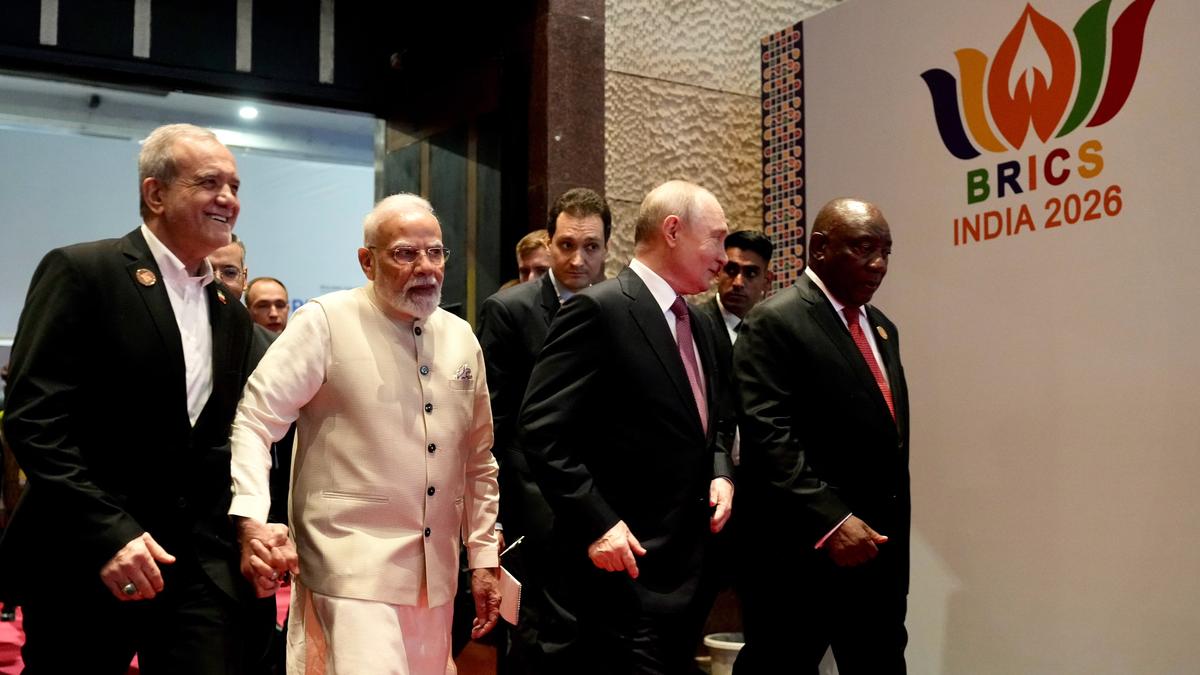
Iranian President Masoud Pezeshkian is in New Delhi for the 18th BRICS summit, where he criticized US and Israeli economic aggression. Prime Minister Modi urged for diplomatic resolutions to regional conflicts to protect critical energy supply chains and maritime security.
Tensions Escalate: Pezeshkian at BRICS Summit in New Delhi
Iranian President Masoud Pezeshkian’s arrival in New Delhi for the 18th BRICS summit marks a critical juncture in global diplomacy. As geopolitical friction intensifies, the Iranian leader has utilized the platform to voice strong opposition to what he describes as a 'dangerous phase' of economic and military aggression by the United States and Israel. This visit, occurring on September 11 and 12, 2026, highlights the growing divide between Western-led sanctions and the strategic interests of the BRICS nations.
The Economic-Security Nexus
During the Leaders' Session of the BRICS Business Forum, President Pezeshkian emphasized a fundamental principle of his administration: the inextricable link between economic stability and national sovereignty. He argued that the extensive sanctions imposed by the U.S. have moved beyond traditional financial pressure, evolving into a form of active aggression. By framing these sanctions as a direct threat, Iran is attempting to consolidate support among BRICS members who have historically favored a multipolar world order that reduces reliance on Western financial systems.
Maritime Security and the Strait of Hormuz
A pivotal point of the bilateral discussions between Prime Minister Narendra Modi and President Pezeshkian was the stability of global energy supply chains. Since the coalition-led actions against Iran on February 28, the Strait of Hormuz—a vital artery for global oil transit—has faced significant disruption. Prime Minister Modi’s call for 'freedom of navigation' underscores the anxiety felt by energy-importing nations like India, who are caught in the crossfire of this escalating regional conflict.
The Path of Diplomacy vs. Confrontation
Prime Minister Modi has consistently advocated for 'dialogue and diplomacy' as the only viable pathway to resolving the West Asian crisis. This position reflects India's delicate balancing act, as it seeks to maintain its strategic energy partnerships with Iran while simultaneously fostering strong security and economic ties with the United States and Israel. However, Pezeshkian’s rhetoric—labeling the U.S. and Israel as 'bullies'—suggests that Tehran remains defiant, casting doubt on the immediate success of de-escalation efforts.
Implications for Future Trends
Looking ahead, the rhetoric coming out of the New Delhi summit suggests that the conflict in West Asia will likely continue to disrupt global trade routes and complicate international energy markets. If the U.S.-led economic measures continue to intensify, we can expect Iran to lean more heavily into the BRICS framework, potentially seeking alternative payment mechanisms to bypass the dollar-dominated global financial system. The coming months will be a test of whether diplomatic interventions by neutral powers like India can mitigate the risk of a broader, more volatile regional confrontation.
Multiple Citing Sources
Verification Required?