Phyllotaxis: An audio-reactive LED display
Source Entity
Hacker News
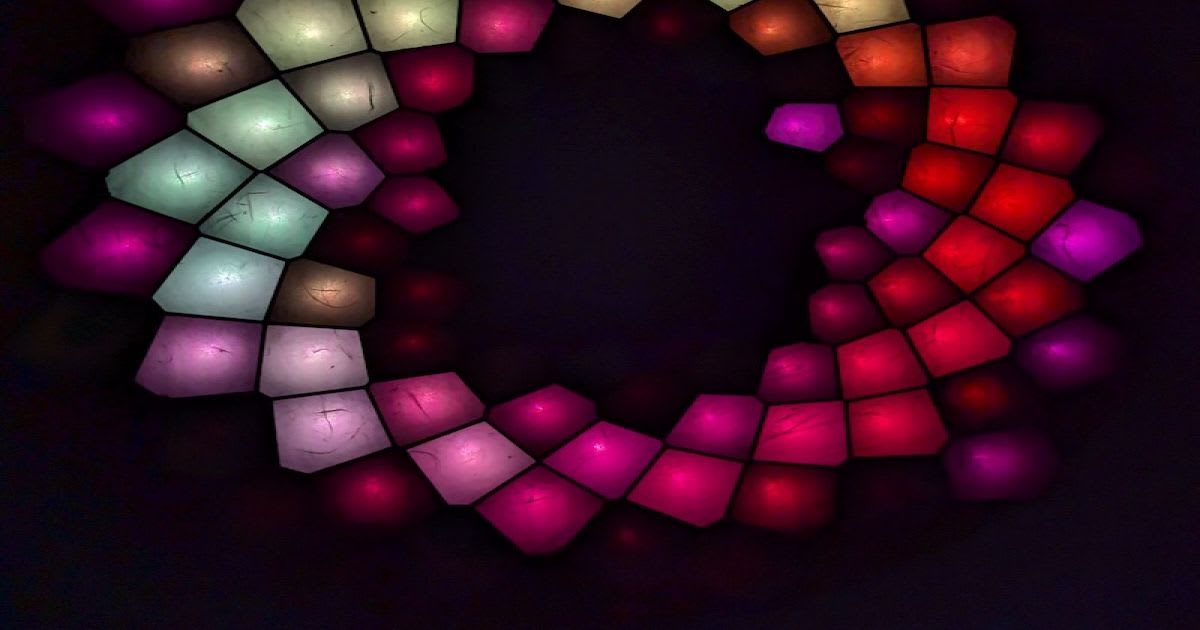
An innovative project uses code to replicate natural phyllotaxis patterns in an audio-reactive LED display. By utilizing mathematical constants like the golden ratio, the system creates dynamic, organic visualizations.
Exploring the Intersection of Nature and Code
The project titled 'Phyllotaxis: An audio-reactive LED display' represents a fascinating intersection between organic botanical structures and digital signal processing. By leveraging code to simulate natural phenomena, the creator taps into the concept of emergent patterns—the idea that complex, beautiful structures can arise from very simple, repeating mathematical rules. This specific project focuses on phyllotaxis, the botanical arrangement of leaves, seeds, or flowers in a spiral pattern, which is a hallmark of efficiency and aesthetic harmony in nature.
The Mathematics of the Sunflower
At the core of this project is the biological reality of the phyllotaxis spiral, most commonly observed in the center of sunflowers and succulent plants. The code provided utilizes the golden ratio—represented by the constant 1.6180339887—to determine the angular placement of each point. This is not merely a stylistic choice; it is a direct reflection of how plants optimize space for seeds or leaves. By multiplying the index of each 'cell' by this constant, the display mimics the way plants minimize overlap, ensuring maximum exposure to resources like sunlight.
Technical Implementation and Dynamic Visualization
The technical implementation relies on a coordinate system that translates these mathematical spirals into a visual format suitable for an LED array. By calculating x and y coordinates using sine and cosine functions against an expanding distance variable, the code generates a double-spiral structure. The inclusion of an audio-reactive component suggests that these static mathematical constants are being perturbed in real-time by external sound data, effectively turning a static biological model into a dynamic, rhythmic light performance.
Implications for Generative Art
This project serves as a prime example of generative art, where the artist defines a system of rules rather than a static final image. By utilizing 'throw-away' variables for spacing, the programmer demonstrates an understanding of how to manipulate data structures to achieve specific visual density. This approach allows for a fluid interaction between the observer, the environment (via audio), and the underlying mathematical beauty of the universe.
Future Trends in Digital Nature
As computational power becomes more accessible to artists, we are likely to see an increase in projects that bridge the gap between biological simulation and interactive hardware. The ability to map complex, nature-inspired algorithms onto physical LED displays allows for installations that feel 'alive.' This project is a testament to the fact that our understanding of natural laws, when translated through code, provides a powerful toolkit for creating immersive, responsive environments that feel both technologically advanced and deeply organic.