Beyond saturation fire: Pinaka's precision leap reshapes India's deterrence
Source Entity
RAJEEV SINGH
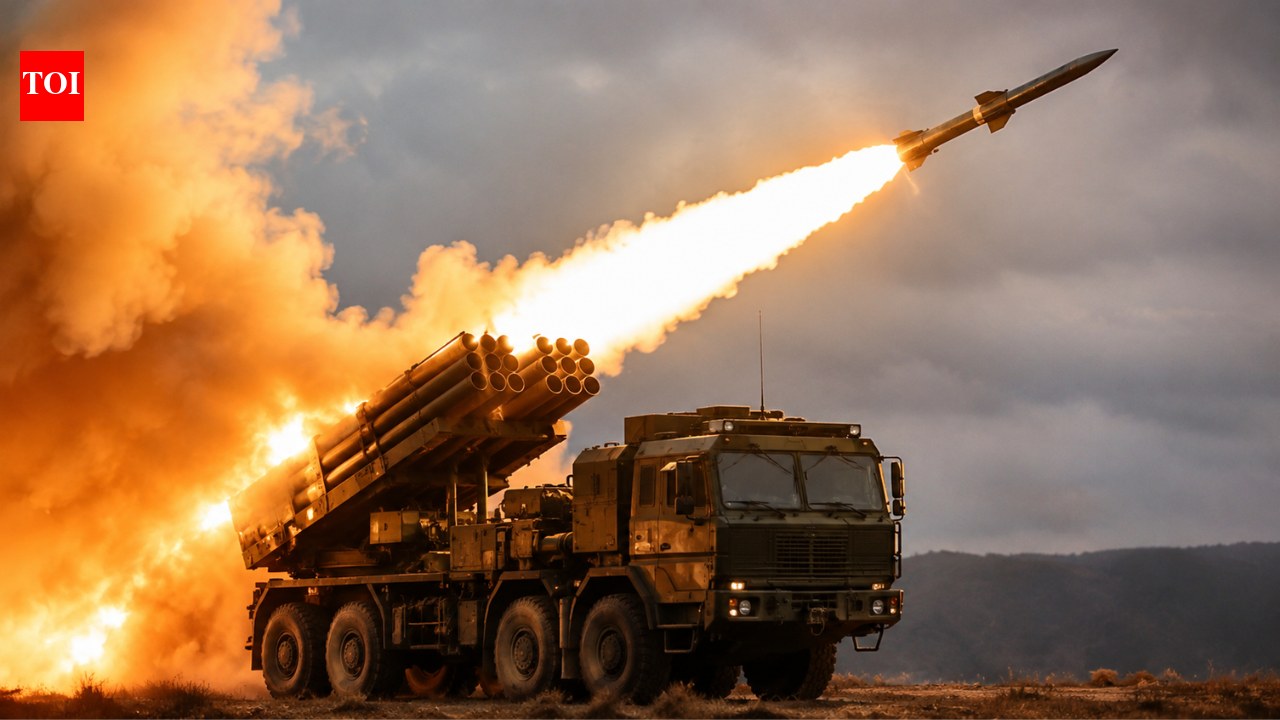
Over the years, the system has evolved from an area-saturation rocket launcher into a progressively more accurate and longer-range strike platform, reflecting India's growing emphasis on indigenous precision firepower. That evolution now appears to have reached a defining milestone with the successful flight-test of the Long-Range Guided Rocket (LRGR), which pushes Pinaka into a new category altogether.
The Evolution of Pinaka: From Saturation to Precision
The successful flight-test of the Long-Range Guided Rocket (LRGR) represents a paradigm shift for India's artillery capabilities. For years, the Pinaka Multi-Barrel Rocket Launcher (MBRL) has been a cornerstone of the Indian Army's firepower, providing essential support during conflicts. However, the transition to guided munitions marks a departure from traditional rocket artillery, elevating the system to a precision-strike asset. This evolution is not merely a technical upgrade but a strategic realignment of how India intends to project power and ensure deterrence along its borders.
Moving Beyond Area Saturation
Historically, the Pinaka system operated on the principle of "area-saturation." In military terms, saturation fire involves launching a large volume of rockets to blanket a wide target area, ensuring that the enemy is suppressed or destroyed through sheer mass and probability. While highly effective for infantry support and suppressing enemy troop concentrations, saturation fire is resource-intensive and lacks the surgical precision required for modern, high-value targeting. By introducing the LRGR, India is transitioning toward "precision-guided munitions" (PGMs), which allow a single rocket to achieve the destructive effect that previously required a full salvo. This shift minimizes collateral damage and maximizes the lethality and efficiency of each single launch.
The Technical Leap of the LRGR
The "Guided" aspect of the LRGR is the core of this technological leap. Unlike unguided rockets that follow a fixed ballistic trajectory determined at the moment of launch, guided rockets utilize onboard navigation systems—integrating India's indigenous NavIC (Navigation with Indian Constellation) or GPS—to correct their flight path in real-time. This capability allows the rocket to adjust for environmental variables such as wind and atmospheric pressure, as well as target movement, drastically reducing the Circular Error Probable (CEP). This technical achievement places the Pinaka in the same league as advanced global systems like the US HIMARS, providing the Indian military with a sophisticated tool for deep-strike operations.
Strategic Deterrence and Indigenous Capability
This milestone is a critical testament to India's push for indigenous defense production under the "Atmanirbhar Bharat" initiative. By developing the LRGR domestically, India reduces its reliance on expensive foreign imports and ensures that its strategic assets are not subject to external diplomatic pressures or supply chain disruptions. The development of such high-precision technology domestically fosters a robust aerospace and defense ecosystem, encouraging deeper collaboration between the DRDO and private industry. This ensures that the entire lifecycle of the weapon system, from maintenance to future software upgrades, remains under sovereign national control.
Operational Implications and Tactical Advantage
In terms of deterrence, the LRGR fundamentally alters the risk calculus for adversaries. The ability to strike high-value targets—such as command-and-control centers, ammunition depots, and communication hubs—with high precision from a long distance creates a "credible threat" that can discourage aggression. The precision leap ensures that India can conduct surgical strikes with a minimal operational footprint, allowing for a more nuanced escalation ladder. This capability ensures that the Indian Army can neutralize specific, high-priority threats without necessarily escalating to a full-scale artillery duel, thereby providing commanders with greater tactical flexibility.
Future Trends in Precision Firepower
Looking forward, the integration of LRGR into the Pinaka system is likely the first step toward a fully networked artillery environment. Future iterations will likely see these launchers integrated with real-time drone surveillance and satellite intelligence, creating a "sensor-to-shooter" loop that reduces the time between target detection and impact to mere minutes. As AI and machine learning are integrated into fire-control systems, the precision of the Pinaka will only increase, potentially leading to swarm-rocket capabilities or autonomous target acquisition. This trajectory suggests a future where the Indian Army can maintain total dominance over the battlefield through data-driven, precision-led strikes.
Conclusion
In summary, the successful test of the Long-Range Guided Rocket is a defining moment in the evolution of the Pinaka system. By moving beyond saturation fire to precision strikes, India has significantly enhanced its tactical flexibility and strategic deterrence. This leap not only strengthens the nation's border security but also signals India's emergence as a leader in indigenous precision-firepower technology, ensuring a more secure and self-reliant defense posture.