September 2026: The world today, as seen by one Polish guy
Source Entity
Hacker News
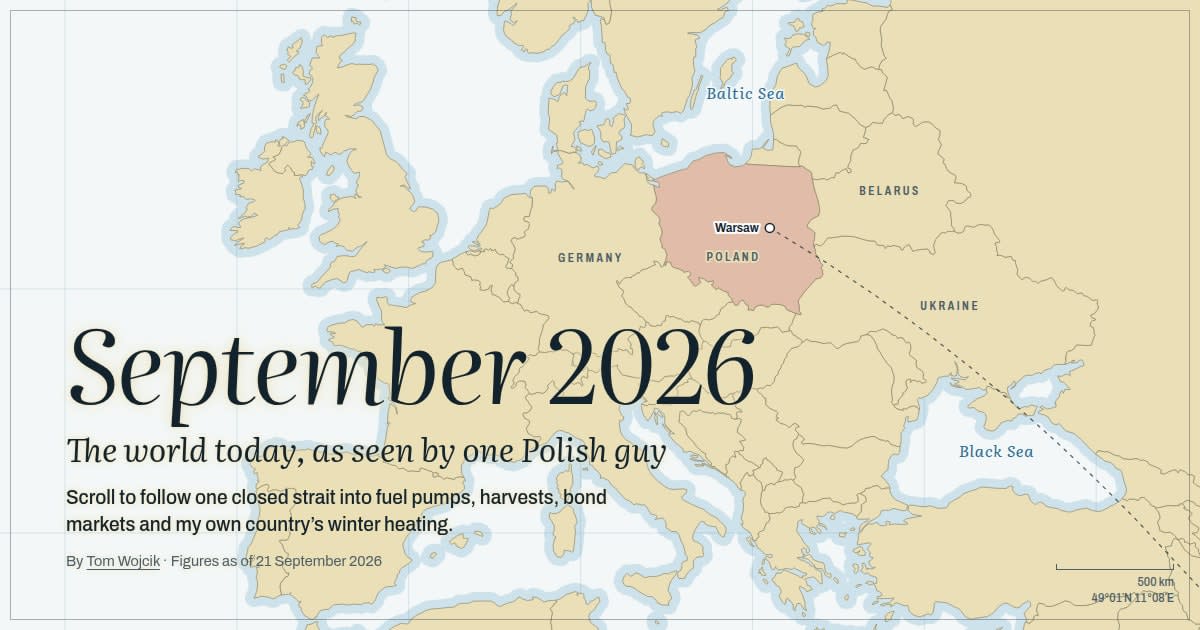
As of September 2026, Polish authorities have issued voluntary household safety guidelines advising citizens to be prepared for 72-hour self-sufficiency. While officials maintain there is no immediate security threat, these measures reflect a pragmatic approach to potential short-term infrastructure or supply chain disruptions.
Preparedness in an Uncertain Climate: The Polish Perspective
As of September 2026, the discourse surrounding national security and household resilience in Poland has entered a pragmatic phase. The Polish government has released a voluntary Safety Guide, encouraging households to maintain the capability to function independently for at least 72 hours. This initiative, while framed by the government as a precautionary measure rather than a response to an escalating threat, highlights a growing emphasis on civil preparedness in the face of modern geopolitical and logistical volatility.
The Official Stance and Public Interpretation
Official communications provide a dual framework for understanding these guidelines. The European Commission has explicitly stated that there are no immediate concerns regarding the security of energy supply for the upcoming 2026–2027 winter season. Simultaneously, the Polish government insists that the safety guide is strictly voluntary. These statements serve to de-escalate potential public anxiety, framing the guidance as a standard exercise in civic responsibility rather than a reactionary measure to an impending crisis.
Anticipating the 'Boring' Crisis
Expert analysis suggests that the most rational approach to these guidelines is to prepare for the 'boring' version of potential disruptions. Rather than anticipating catastrophic, long-term societal collapse, the focus is on mitigating the impact of localized, short-term inconveniences. This includes preparing for intermittent power outages lasting hours rather than months, or managing temporary price spikes and supply queues. This perspective acknowledges that modern infrastructure is resilient but susceptible to transient volatility.
Learning from Historical Precedents
Historical context regarding maritime and logistics transit—such as the recent reopening of strategic straits earlier this year—serves as a reminder of the cyclical nature of supply chain crises. Because global trade routes have demonstrated a capacity for recovery, the current emphasis on 72-hour self-sufficiency acts as a hedge against unpredictability. It is a strategy of risk management that accounts for both the possibility of quick resolution and the necessity of personal autonomy during temporary systemic friction.
Future Trends in Civil Resilience
Looking forward, the shift toward household-level preparedness is likely to become a more permanent feature of European civil defense strategy. By decentralizing the ability to handle minor crises, states can reduce the burden on emergency services during periods of high demand. As Poland and other nations navigate the winter of 2026–27, the success of these programs will depend on public adherence and the ability of the state to distinguish between genuine emergency messaging and routine contingency planning.
Conclusion
Ultimately, the Polish Safety Guide represents a shift toward a more mature understanding of modern risk. By encouraging citizens to be self-sufficient for a 72-hour window, the government is not signaling an alarm, but rather fostering a culture of resilience. Whether the coming months bring stability or temporary disruptions, the emphasis remains on quiet, methodical preparedness for the most likely, rather than the most dramatic, scenarios.