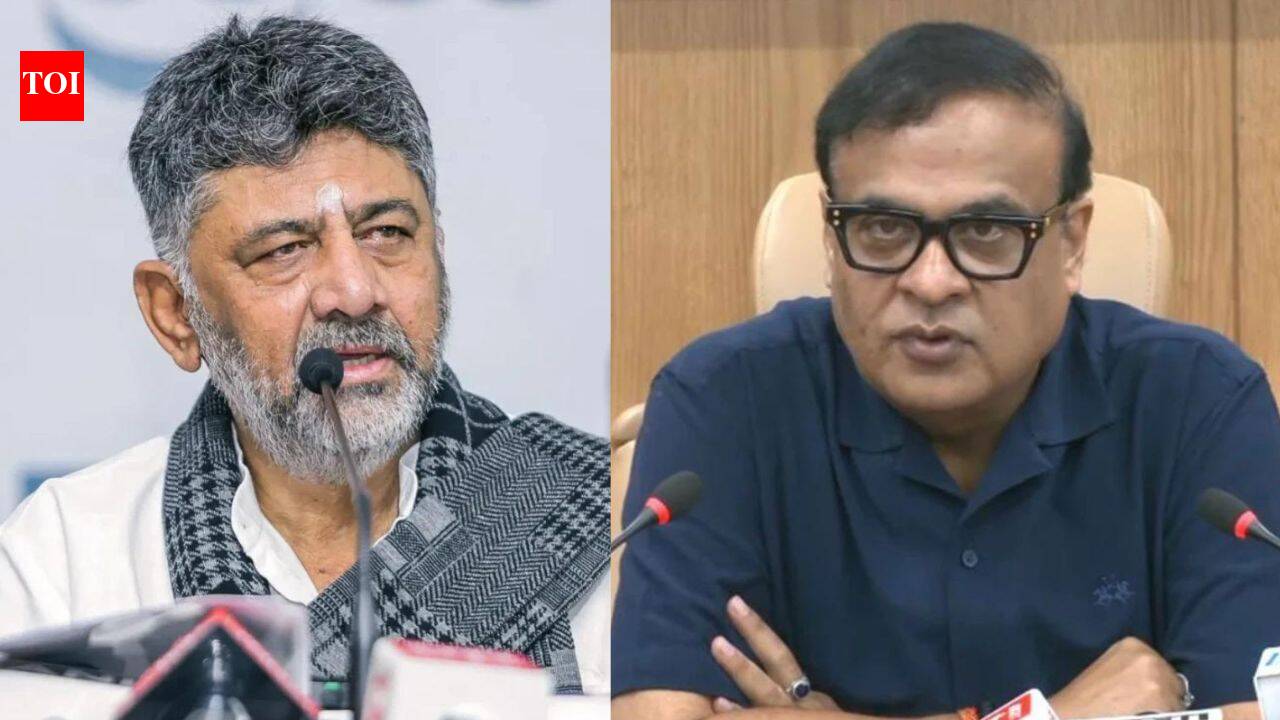
DKS backs Rahul over 'collar-pull' row; Himanta recalls 2015 'humiliation'
Source Entity
SUBHADRA SRIVASTAVA
Indian political discourse is currently dominated by debates over electoral accountability, the regulation of protest sites, and the shifting relationship between legal institutions and political figures. Leaders from both the BJP and Congress are actively engaging in public narratives regarding the Election Commission, the Supreme Court, and democratic rights.
The Interplay of Political Accountability and Judicial Oversight in India
The Debate on Electoral Accountability
Recent political commentary has highlighted a sharp divide regarding the causes of electoral defeat. Shivraj Chouhan, a senior leader of the Bharatiya Janata Party (BJP), has publicly attributed the recurring electoral failures of the Indian National Congress to "directionless leadership" rather than systemic issues within the Election Commission (EC). This rhetoric reinforces a narrative that shifts the focus from institutional critique to internal party management, suggesting that the BJP views the current electoral framework as robust and the opposition's struggles as self-inflicted.
Contesting the Spaces of Dissent
Beyond electoral performance, the conversation has expanded to the physical and legal geography of protest. The reaction from the Citizens for Justice and Peace (CJP) regarding the relocation of designated protest sites—specifically the outcry that "Ab poora desh Jantar Mantar banega!" (The entire country will become Jantar Mantar)—reflects deep-seated anxieties regarding the shrinking space for civil society activism. By challenging the state’s decision to move protest sites, activists are signaling that the restriction of dissent in traditional hubs will only lead to the decentralization and proliferation of protests across the nation.
The Judiciary as a Stabilizing Force
Parallel to these developments, the role of the Supreme Court of India remains a focal point for political actors. Kapil Sibal’s recent remarks, noting that the "SC restored people's faith" just a day after expressing frustration, underscore the volatile and complex relationship between legal institutions and political figures. This sentiment highlights the reliance of political entities on judicial intervention to validate their grievances and provide a sense of equilibrium in an otherwise polarized environment.
Broader Implications for Democracy
These disparate events—the critique of opposition leadership, the struggle over protest venues, and the fluctuating perception of the judiciary—collectively illustrate the current state of Indian democracy. The friction between political parties, the state’s management of public dissent, and the judiciary’s role as an arbiter creates a dynamic where institutional faith is constantly tested. The push for accountability in elections versus the push for the right to protest suggests a struggle to define the boundaries of democratic expression in the modern era.
Future Trends and Concluding Thoughts
Moving forward, it is likely that the rhetoric surrounding the Election Commission and the Supreme Court will remain a staple of political discourse. As political parties continue to navigate the challenges of electoral competition, the reliance on legal channels to resolve socio-political conflicts will likely increase. The tension between government-regulated protest spaces and the public’s insistence on the right to dissent will continue to serve as a litmus test for the health of India's democratic institutions. Ultimately, the synthesis of these events points to a political landscape where judicial outcomes and internal party dynamics are inextricably linked to the broader public perception of democratic integrity.
Multiple Citing Sources