Pune court allows Jamadar family permanent possession of Jaystambh land
Source Entity
Chandan Haygunde
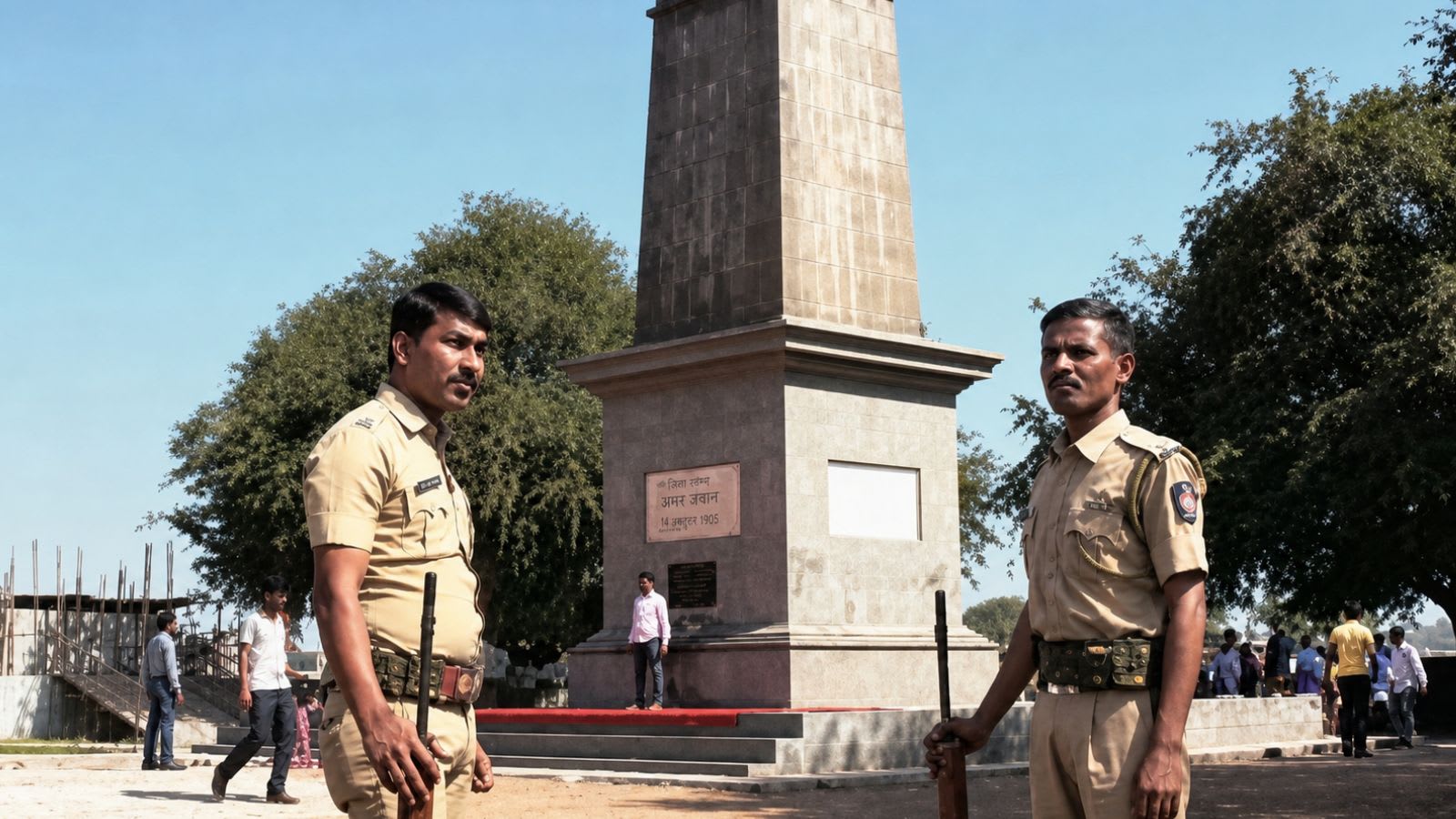
A Pune court has granted the Jamadar-Malvadkar family permanent possession of the historic Jaystambh monument and its surrounding land in Perne. This ruling upholds a long-standing historical mandate dating back to the 1824 British appointment of Kandojibin Gajoji Jamadar as the site's custodian.
Legal Recognition of the Jaystambh Custodianship
In a significant judicial development, a Pune court has formally confirmed the Jamadar-Malvadkar family’s permanent possession of the Jaystambh and its surrounding 9.25-acre plot in Perne village. Presided over by Joint Civil Judge (Senior Division) Amol Shinde, the order reinforces the legal standing of the family as the traditional custodians of a site that holds profound historical and symbolic weight in the region. This ruling settles questions regarding the management of the land situated along the Pune-Ahilyanagar highway.
Historical Significance of the Battle of Koregaon Bhima
The Jaystambh serves as a military monument, erected by the British colonial government in 1822. Its purpose was to commemorate the soldiers who fought on the side of the British against the Peshwa forces during the Battle of Koregaon Bhima on January 1, 1818. The site has evolved over the centuries from a colonial military memorial into a focal point of socio-political importance, representing complex historical narratives regarding caste, colonial history, and military valor.
The Legacy of Kandojibin Gajoji Jamadar
The legal basis for the family's possession traces back to the aftermath of the 1818 battle. Kandojibin Gajoji Jamadar, a soldier who sustained injuries during the conflict, was officially appointed as the custodian of the Jaystambh by the British administration on December 13, 1824. This appointment was formalized through a 'sanad,' a historical legal document that granted the family the right to oversee the monument and the adjoining lands, effectively establishing a hereditary line of guardianship that persists to this day.
Implications of the Court Order
By validating the 'sanad' and the subsequent continuity of the Jamadar-Malvadkar family’s presence, the court has provided a clear legal framework for the site's future. This decision is crucial for the administrative management of the 9.25-acre expanse, ensuring that the custody of the monument remains aligned with historical precedents. The order effectively bridges the gap between colonial-era administrative decrees and modern Indian property law.
Future Trends and Cultural Stewardship
Moving forward, this judgment is likely to stabilize the management of the Jaystambh, particularly as the site attracts large numbers of visitors annually. By confirming the family's rights, the court provides a stable platform for the ongoing preservation of the monument. This recognition not only honors the historical role of the Jamadar family but also ensures that the physical integrity of the site is maintained under a recognized, legitimate, and historical authority.
Conclusion
The Pune court’s decision is a landmark event that upholds the sanctity of historical documentation in modern land disputes. By acknowledging the validity of the 19th-century 'sanad,' the judiciary has demonstrated a commitment to historical continuity. This ensures that the Jaystambh remains under the care of the descendants of those originally entrusted with its protection, preserving both the physical monument and the legacy of the soldiers it commemorates.