40 years ago September 11, 1986: Punjab Police nab 13 terrorists
Source Entity
The Indian Express
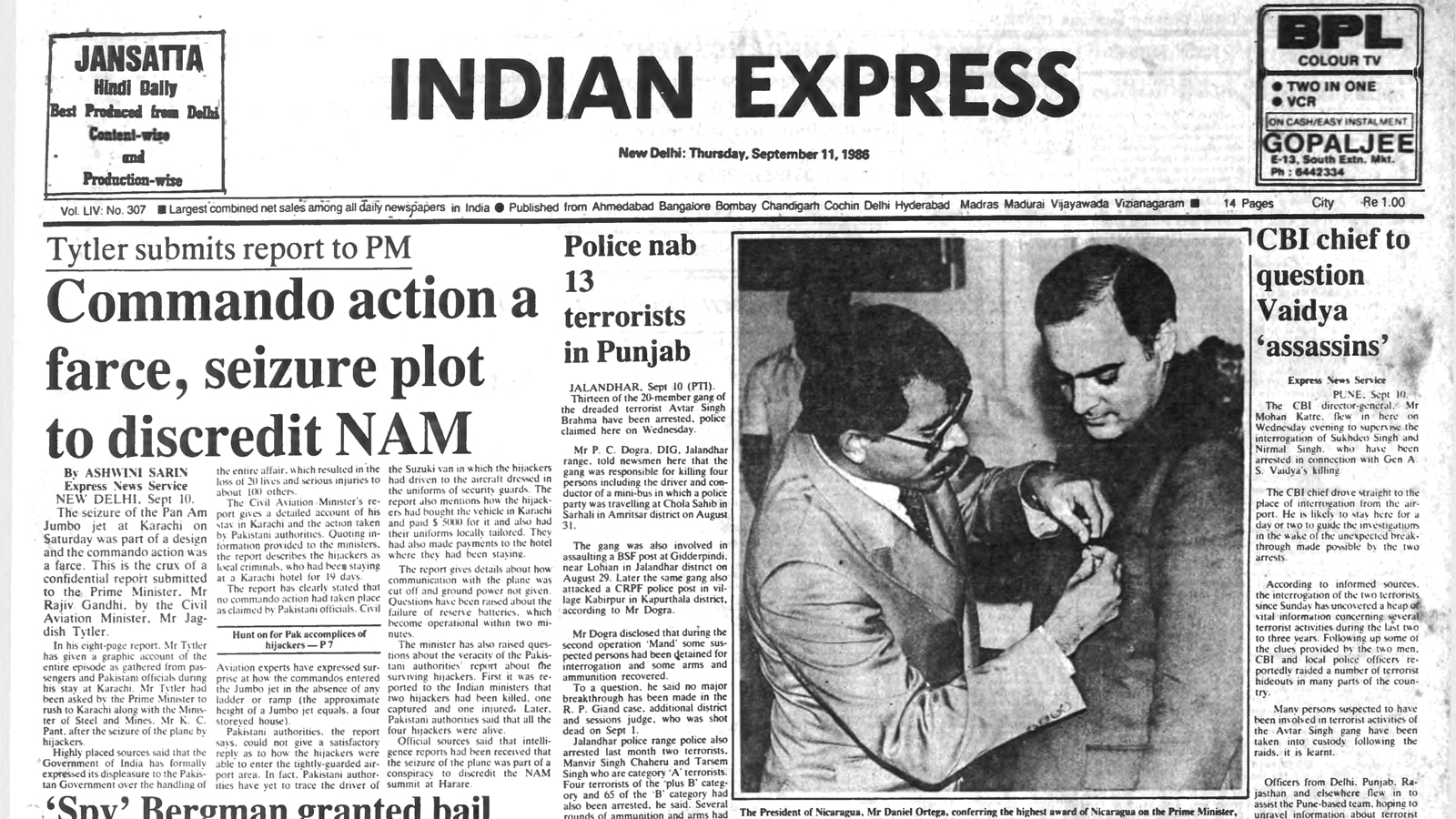
In September 1986, Punjab law enforcement achieved a significant breakthrough by arresting members of Avtar Singh Brahma's terrorist gang. Simultaneously, high-level investigations into the assassination of General A.S. Vaidya proceeded alongside the release of prominent political figures Parkash Singh Badal and Gurcharan Singh Tohra.
The Security Landscape of 1986 Punjab
In September 1986, the state of Punjab was navigating a period of profound instability marked by violent insurgency and political upheaval. The arrest of thirteen members of the twenty-member gang led by the dreaded terrorist Avtar Singh Brahma, as announced by DIG P.C. Dogra in Jalandhar, represented a significant tactical success for the Punjab Police. The gang had been held responsible for the brutal killing of four individuals at Chola Sahib in the Sarhali region of Amritsar district on August 31, a crime that epitomized the climate of fear permeating the region at the time.
The Investigation into General A.S. Vaidya’s Assassination
Concurrent with the crackdown on local insurgency groups, the national security apparatus was deeply focused on the assassination of General A.S. Vaidya. CBI Director-General Mohan Katre’s arrival in Pune to personally supervise the interrogation of Sukhdeo Singh and Nirmal Singh underscored the gravity of the case. These arrests were considered a pivotal breakthrough, prompting federal oversight to ensure that the investigation into the former Army Chief’s death was conducted with the highest level of scrutiny and guidance.
Political Realignments and Legal Developments
Amidst the security operations, the political landscape remained volatile. The release of Parkash Singh Badal, president of the breakaway faction of the Akali Dal(L), and former SGPC president Gurcharan Singh Tohra from custody marked a sensitive moment in Punjab’s political history. The legal status of these leaders often fluctuated during this decade as the state attempted to balance the need for public order with the complexities of regional political representation.
Broader Implications of the 1986 Crisis
The events of September 1986 reflect the dual-track strategy employed by the Indian government: a rigorous pursuit of militant factions through police action and high-stakes intelligence investigations, coupled with the ongoing legal challenges involving key political figures. The violence in Amritsar and the assassination of a high-ranking military official forced the state to confront multiple fronts of instability simultaneously.
Historical Context and Future Trends
Looking back at these events, they serve as a case study in the challenges of maintaining domestic security during periods of intense ethnic and political friction. The breakthroughs achieved in 1986 regarding the gang of Avtar Singh Brahma and the Vaidya assassination investigation were essential in stabilizing the region, though they also highlighted the deep-seated tensions that would persist for years to come. By analyzing these occurrences, one gains a clearer understanding of the evolution of counter-terrorism strategies and the cyclical nature of political reconciliation in Punjab.