Fighter jets as gifts, Razia Sultan’s tale: Textbooks smash gender biases in Punjab
Source Entity
Divya Goyal
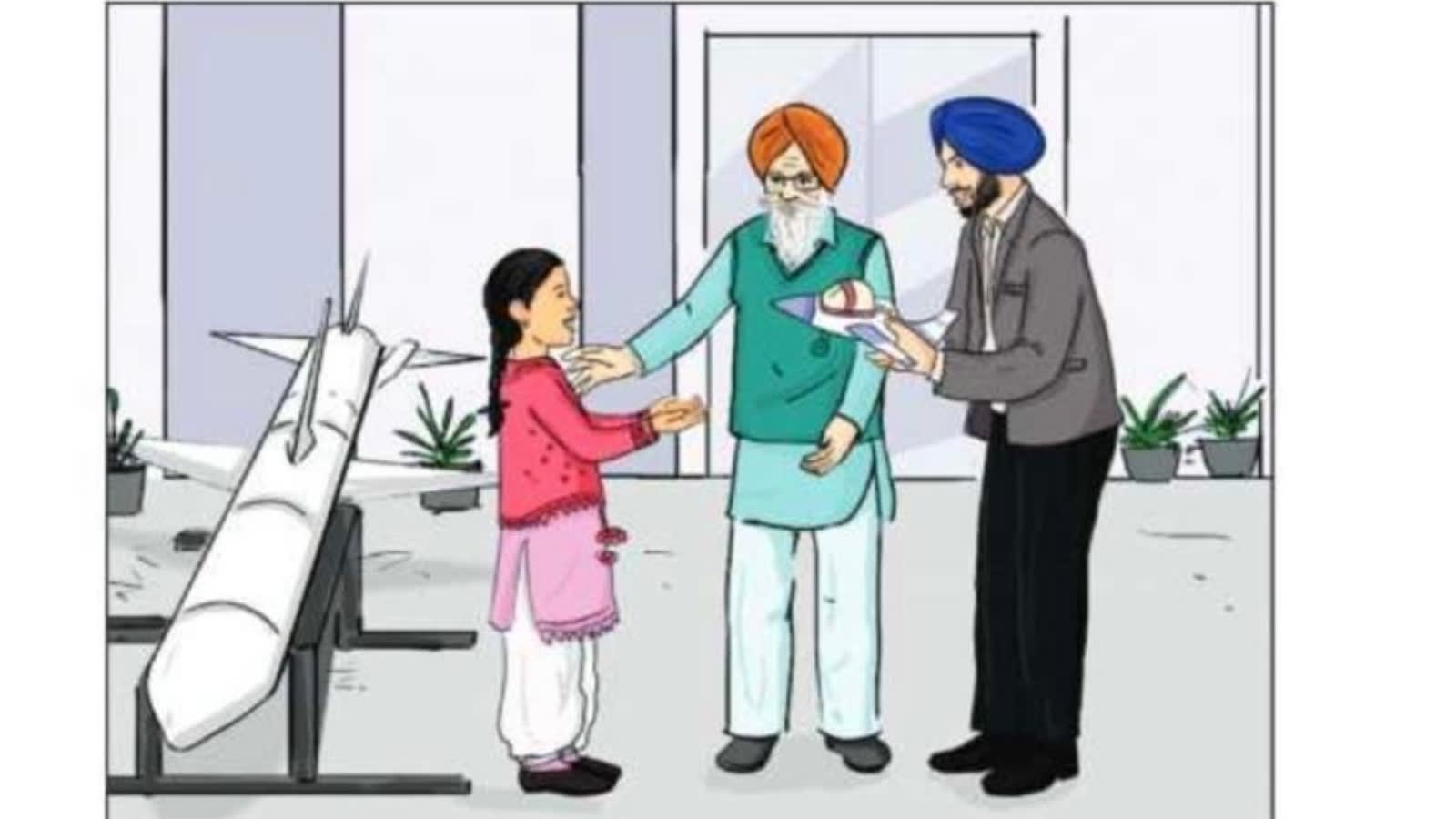
Punjab's school curriculum is actively challenging traditional gender roles by introducing stories like 'A Gift for Sidhak'. These narratives encourage young students to pursue unconventional careers and interests by breaking down domestic stereotypes.
Redefining Gender Norms in Punjab's Classrooms
The Punjab Education Department has taken a progressive step in its academic curriculum by integrating narratives designed to dismantle deep-seated gender biases. Through stories such as 'A Gift for Sidhak', which is featured in the Class 7 syllabus, the state is actively attempting to reshape the societal perceptions of young students regarding what they can achieve and how they should participate in the workforce and home life.
The Power of Narrative Representation
The story of Sidhak serves as a poignant pedagogical tool. By transitioning the protagonist’s interest from a traditional kitchen set to the aspirations of becoming a fighter pilot, the curriculum challenges the 'hidden curriculum'—the set of informal lessons that often reinforce domestic roles for girls. By centering the story around the Republic Day parade and a woman fighter pilot, the text provides a tangible, high-status alternative to domestic play, effectively broadening the scope of what young girls perceive as accessible career paths.
Challenging Generational Stereotypes
Central to the narrative is the role of the grandfather, or 'Daarji', who is depicted cooking, and who encourages Sidhak to broaden her horizons. This deliberate role-reversal—where the elder male figure performs domestic labor while simultaneously acting as a mentor for non-traditional ambition—serves to normalize shared household responsibilities. It suggests that gender equality is not just about professional achievements but also about the equitable distribution of domestic labor within the family structure.
Strategic Educational Reform
This initiative is part of a broader five-year campaign by the Punjab Education Department to modernize educational materials. By embedding these themes into state-run school textbooks, the government is ensuring that egalitarian values are not merely discussed as abstract concepts but are woven into the foundational literacy of the next generation. This strategy recognizes that early exposure to diverse roles is critical for long-term social change.
Broader Societal Implications
When state education systems prioritize the inclusion of stories that challenge traditional gender binaries, they perform a crucial public service. By normalizing women in fields like aviation and defense, Punjab is fostering a future workforce that is less constrained by archaic limitations. This move has the potential to influence not just the students, but the families who engage with these textbooks, creating a ripple effect that touches household dynamics across the state.
Conclusion: A Foundation for Equality
The integration of narratives like 'A Gift for Sidhak' represents a significant commitment to social engineering through education. By replacing outdated tropes with images of agency and ambition, Punjab is setting a precedent for how public schooling can be used to foster a more equitable society. If these efforts continue, the long-term result will likely be a generation of students who view gender as a non-factor in their professional and personal aspirations.