From Manila, Quad signal to China: 'Peace by strength'
Source Entity
SACHIN PARASHAR
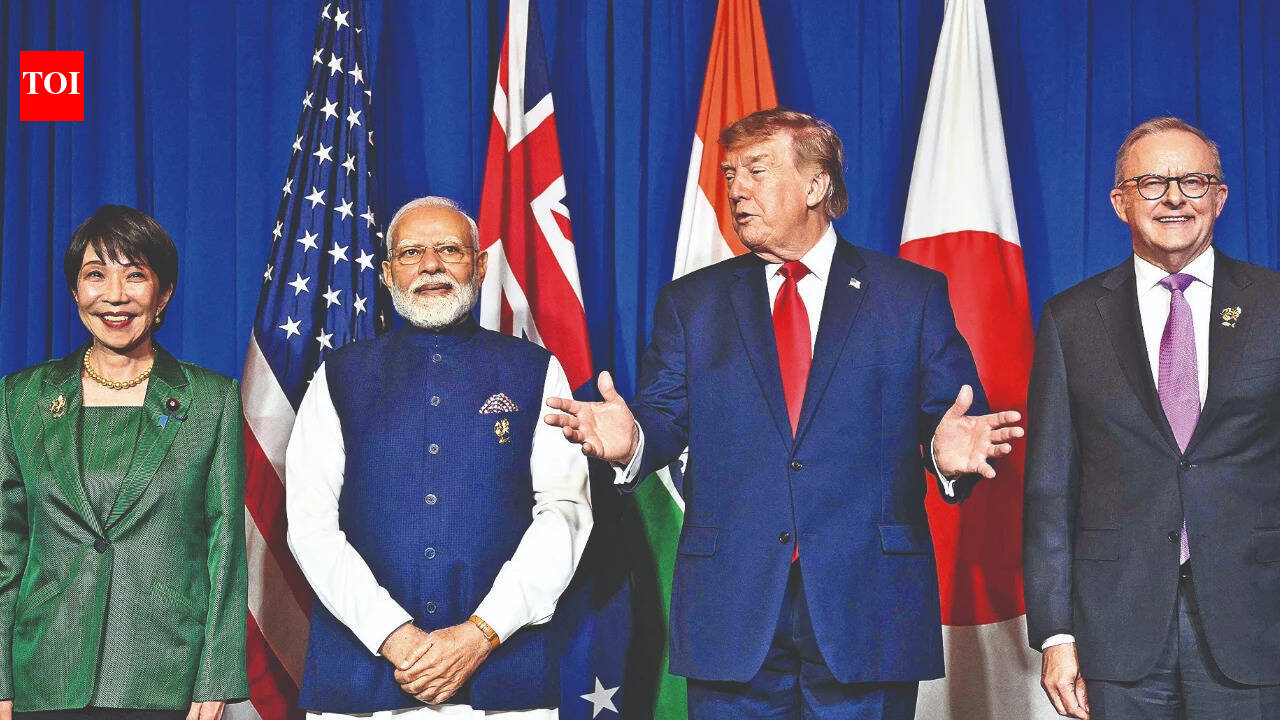
The Quad grouping has signaled a renewed focus on Indo-Pacific security during a meeting in Manila. Simultaneously, leaders from the US, China, and Russia are preparing for an unprecedented trilateral summit in Shenzhen to discuss global conflicts and emerging technologies.
The Resurgence of the Quad and the New Trilateral Diplomacy
The geopolitical landscape is undergoing a profound transformation, highlighted by two significant diplomatic developments: the reactivation of the Quad grouping in Manila and the announcement of a historic trilateral summit between the United States, China, and Russia. These events reflect a complex balancing act as major powers navigate the competing pressures of alliance-building and direct high-level engagement.
The Quad: Reasserting Indo-Pacific Stability
After a two-year hiatus of leader-level summits, the Quad—comprising India, Australia, Japan, and the United States—has reconvened on the sidelines of the ASEAN Summit. The meeting, attended by PM Narendra Modi, PM Anthony Albanese, PM Sanae Takaichi, and President Donald Trump, serves as a critical signal of intent. By explicitly opposing unilateral military action and economic coercion, the Quad is positioning itself as a foundational pillar for maintaining a rules-based order in the Indo-Pacific, a region increasingly defined by great power competition.
Bridging Diverse Interests
Since its 2017 revival, the Quad has faced skepticism regarding its long-term viability, often hampered by the diverse strategic interests of its members and inconsistent signals from Washington. However, this meeting suggests a renewed commitment to cohesion. For India, this participation reinforces its policy of multi-alignment, allowing it to leverage its position within the Quad to balance against regional hegemony while maintaining its strategic autonomy in a volatile global order.
The Shenzhen Trilateral: A Diplomatic Milestone
Parallel to the Quad’s efforts, the global focus shifts to the unprecedented trilateral meeting between President Xi Jinping, President Vladimir Putin, and President Donald Trump. Scheduled for November 19 in Shenzhen during the APEC summit, this meeting represents a rare convergence of the world’s most influential nuclear powers. The confirmation of this summit by the Kremlin and the White House underscores the gravity of the upcoming dialogue.
The Agenda: Conflicts, AI, and Security
With global tensions at a zenith, the trilateral summit is expected to address critical issues including active international conflicts, the governance of artificial intelligence, and nuclear arms reduction. The inclusion of AI and nuclear policy on the agenda signals an attempt to establish guardrails for the most disruptive technologies and existential threats currently facing the international community.
Conclusion: A Dual-Track Future
These simultaneous diplomatic maneuvers suggest that global leaders are pursuing a dual-track strategy. While groups like the Quad provide a framework for regional security and collective interests, the trilateral summit recognizes the necessity of direct engagement between the US, China, and Russia to prevent global instability. As these processes unfold, the world will be watching to see if these high-level discussions can translate into tangible policy shifts, particularly regarding the mitigation of unilateral military aggression and the management of emerging technological risks.
Multiple Citing Sources