Five men arrested in RAF Fairford incident released on police bail
Source Entity
BBC News
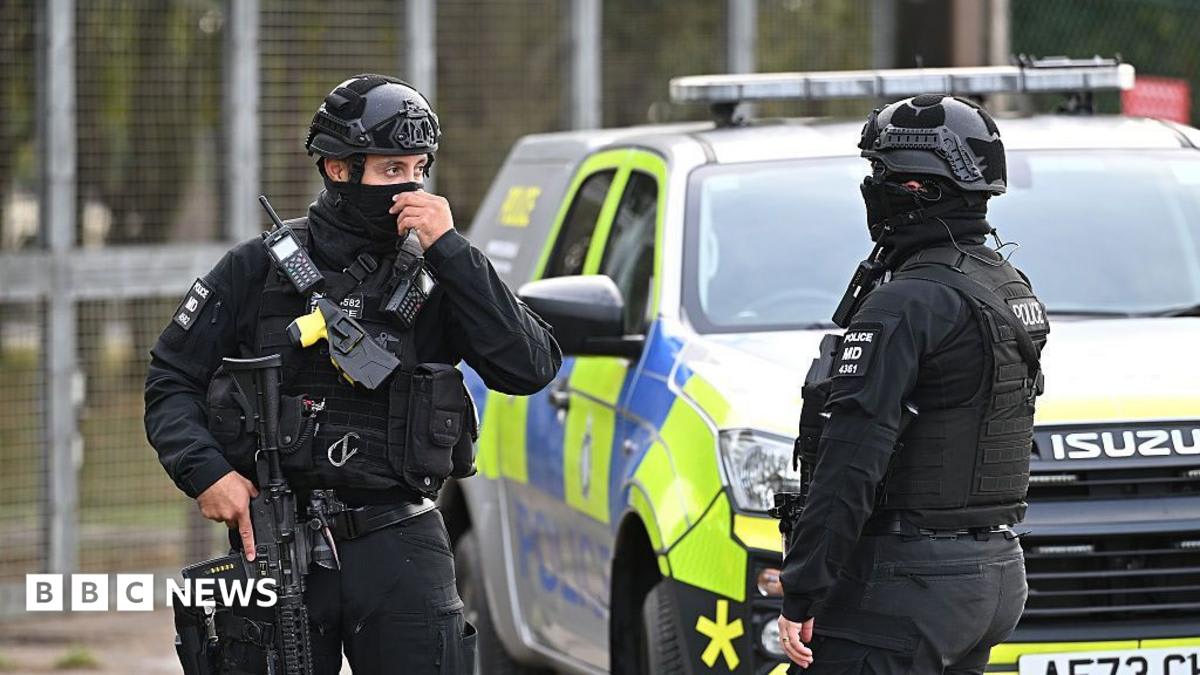
Five UK nationals arrested near the US-operated RAF Fairford airbase have been released on bail as police investigate potential state-backed terrorism links. The case has drawn international attention, including criticism from Donald Trump regarding the bail decision.
Investigation into RAF Fairford Security Breach
The Incident at RAF Fairford
On Sunday, a security alert was triggered near RAF Fairford in western England, a facility utilized by the United States military for strategic operations. The incident began when a local farmer reported seeing three large white vans accompanied by a group of hooded and masked men entering a nearby field. This report led to the arrest of five men, all UK nationals in their 20s residing in London, under the Explosives Act and on suspicion of preparing a terrorist act. The presence of individuals with suspected explosive materials near a base known for supporting operations in West Asia has elevated the incident to a high-priority national security concern.
Bail and Ongoing Investigations
Following their arrest, the five suspects were released on bail, a decision that has sparked significant public and political debate. Assistant Commissioner Laurence Taylor of UK counter-terrorism policing confirmed that while the initial arrests were made, the investigation remains active. Authorities are currently exploring multiple lines of inquiry, including the possibility that the suspects may have acted as proxies for foreign states. The complexity of the investigation lies in determining the intent behind the presence of these individuals and whether the alleged plot was a coordinated effort or an isolated event.
Geopolitical Implications and Foreign State Links
Investigators are currently probing potential connections to Russia, Iran, and various non-state-backed militant groups. The sensitivity of the site—which serves as a hub for US military operations—makes the prospect of foreign state interference particularly concerning. While investigators have yet to confirm a definitive link to any specific nation, the nature of the security breach suggests a level of planning that intelligence agencies are treating with extreme caution, balancing the need for public safety with the requirements of international intelligence cooperation.
Political Reactions and US Involvement
Former US President Donald Trump publicly criticized the UK’s decision to release the suspects on bail, stating that he would not have authorized their release. Trump further suggested a potential link between the suspects and Iran, though he did not provide evidence to support this claim, asserting that he had specific knowledge he preferred not to disclose. This intervention highlights the high-stakes nature of the security relationship between the UK and the US, where any threat to shared military infrastructure is viewed through the lens of broader geopolitical tensions.
The Role of Prior Intelligence
Adding to the complexity of the narrative, UK Defence Secretary Wes Streeting has suggested that security services possessed prior knowledge regarding the group of men arrested. This indicates that the individuals may have been on the radar of law enforcement before the incident at the airbase occurred. The revelation of prior intelligence raises questions about the efficacy of monitoring individuals suspected of extremist activities and the threshold at which state intervention becomes necessary to prevent potential attacks.
Future Trends in Counter-Terrorism
This incident underscores the evolving nature of domestic threats, where the intersection of local actors and international state interests complicates traditional security protocols. As authorities continue their investigation, the focus will likely remain on digital forensics and tracking the financial or ideological ties of the suspects. The case serves as a reminder of the persistent vulnerability of military installations and the necessity for robust intelligence-sharing frameworks to mitigate risks from both domestic threats and foreign-sponsored clandestine operations.
Multiple Citing Sources