Russia's jet drones challenge Ukraine, India builds its own answer
Source Entity
DHRUV YADAV
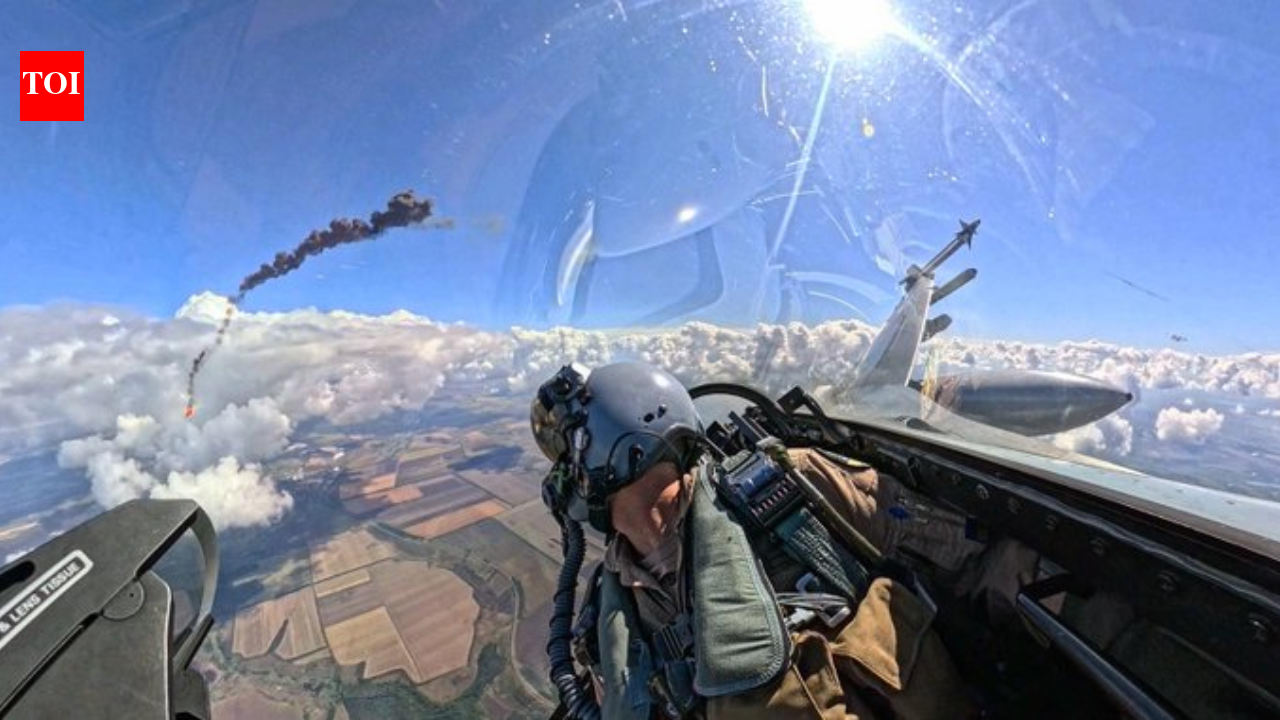
Russia's deployment of high-speed Geran-4 and Geran-5 jet drones is forcing Ukraine to adapt its air defense tactics. Simultaneously, India is bolstering its autonomous strike capabilities with new turbojet-powered loitering munitions.
The Evolution of Aerial Warfare: Jet-Powered Drones
The landscape of modern conflict is undergoing a radical shift as Russia introduces the Geran-4 and Geran-5 jet-powered drones. These systems represent a significant technological leap from the propeller-driven Shahed-136 models that previously dominated the theater. By operating at speeds of 450 to 500 kilometers per hour and reaching altitudes of up to eight kilometers, these drones have effectively bypassed legacy interception methods, placing immense strain on Ukrainian air defense networks.
Tactical Challenges for Ukraine
The increased performance of the Geran-4 is not merely an incremental upgrade; it is a structural redesign. Unlike older airframes that would disintegrate under the aerodynamic stress of high-velocity flight, the Geran-4 features a reinforced structure and a specialized blended air intake. This allows the drone to operate in a high-speed flight envelope that forces Ukraine to pivot toward more advanced countermeasures, including the deployment of F-16 fighters and specialized high-altitude interceptors to mitigate the threat of these fast-moving projectiles.
India's Strategic Response and Indigenous Development
While Ukraine struggles to contain these aerial threats, India is positioning itself as a leader in autonomous strike technology. The Defence Research and Development Organisation (DRDO) has successfully developed a domestic turbojet engine, signaling a move away from reliance on foreign propulsion systems. This development is crucial for India’s military sovereignty, as it provides the necessary core technology for next-generation loitering munitions capable of deep-strike operations.
The Rise of Agniveg Loitering Munitions
The unveiling of the Agniveg loitering munitions serves as a direct testament to India's growing capacity to neutralize high-value targets with surgical precision. By integrating its indigenous turbojet technology into these platforms, India is creating a deterrent capable of navigating complex modern battlefields. This shift highlights a broader global trend where nations are prioritizing localized production of high-speed, autonomous weapon systems to avoid supply chain vulnerabilities during prolonged conflicts.
Broader Geopolitical Implications
The proliferation of jet-powered drone technology marks the end of an era where cheap, slow-moving loitering munitions were the primary concern for air defense commanders. As nations like Russia push the envelope on drone speed and altitude, the disparity between offensive aerial capabilities and defensive interception capabilities is widening. This race forces countries to invest heavily in integrated air and missile defense (IAMD) systems that are increasingly reliant on artificial intelligence and high-speed interceptors.
Future Trends in Autonomous Warfare
Looking forward, the integration of turbojet engines into smaller, expendable drone platforms will likely become the standard for major military powers. This trend suggests that future conflicts will be defined by 'swarms' of high-speed autonomous systems that can saturate air defenses through sheer velocity and altitude. India’s proactive development of the Agniveg and its engine suite places it in a strong position to influence this technological trajectory, ensuring that its military remains competitive in an increasingly automated and high-speed global threat environment.