Lathi can stop a crowd, but not a question: Rahul Gandhi
Source Entity
TNN
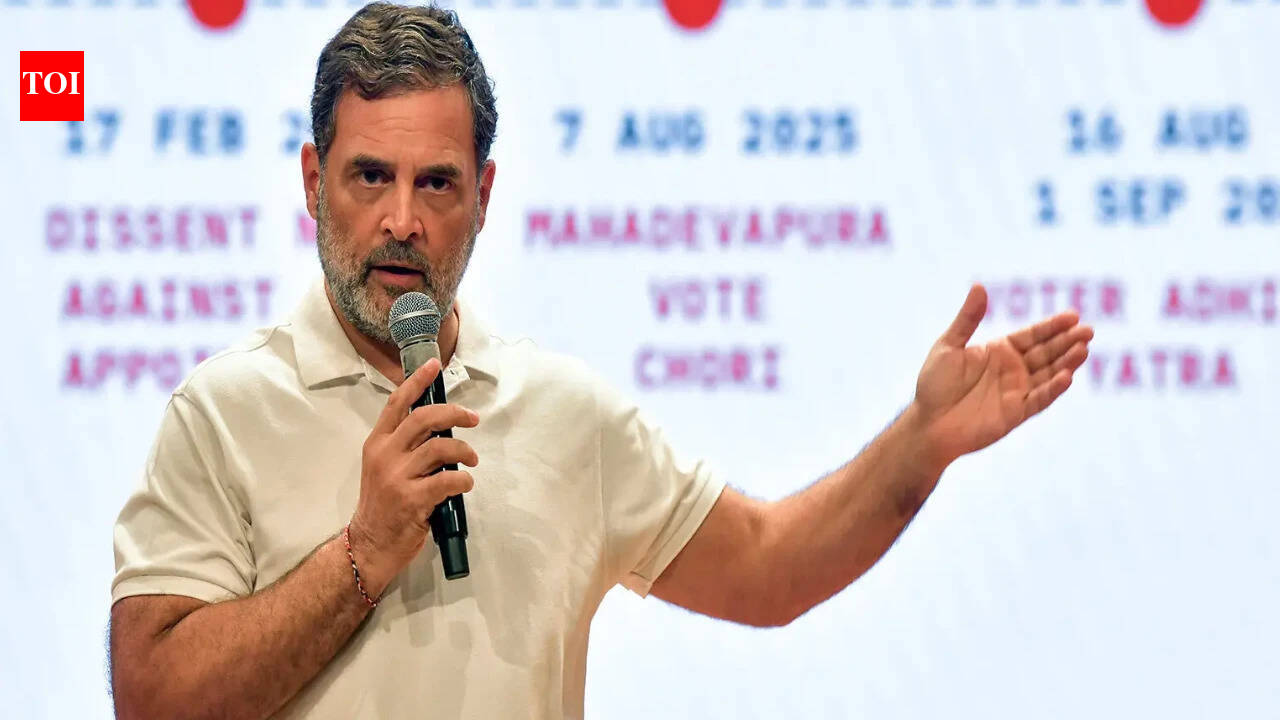
Rahul Gandhi has criticized the police crackdown on peaceful protesters demonstrating against the resignation of CEC Gyanesh Kumar. He has also launched a 'Satyagraha' website to consolidate information regarding ongoing protests across India.
The Confrontation Over Democratic Integrity
Congress Lok Sabha MP and Leader of the Opposition, Rahul Gandhi, has launched a scathing critique against the government following the detention of protesters in New Delhi. The demonstrations, which took place on Gandhi Jayanti, were organized to voice dissent against the resignation of Chief Election Commissioner (CEC) Gyanesh Kumar and broader allegations of 'vote chori' (theft of votes). Gandhi’s assertion that "a lathi can stop a crowd, but not a question" serves as a symbolic rebuke of the state’s use of force against peaceful assembly.
The Role of Police Action and Civil Disobedience
The incident highlights a growing tension between state security apparatuses and student-led protest movements. By characterizing the police response as dragging peaceful protesters through the streets, Gandhi has framed the current political climate as one where democratic dissent is met with institutional suppression. This narrative aligns with his broader political strategy of positioning the Congress party as the primary defender of constitutional norms against what he terms the 'Modi-Shah government.'
The 'Satyagraha' Digital Strategy
In a move to modernize the protest movement, Rahul Gandhi has launched a dedicated 'Satyagraha' website. By utilizing digital infrastructure to aggregate information on current protests, Gandhi is attempting to bypass traditional media channels, which he implies may be restricted or biased. The use of the term 'Satyagraha'—a Gandhian concept of non-violent resistance—is a deliberate rhetorical choice to frame these protests within India’s historical struggle for independence and democratic accountability.
Institutional Scrutiny and Future Implications
The resignation of CEC Gyanesh Kumar has become a flashpoint for the opposition, serving as a catalyst for questioning the neutrality of the Election Commission of India. Gandhi’s declaration that "he will go, as would be the system that appointed him" suggests that the opposition intends to keep the focus on the transparency of the electoral appointment process. This indicates a long-term strategy of challenging the legitimacy of current institutional appointments rather than just individual actions.
Conclusion: The Path Ahead
As the political discourse intensifies, the combination of physical street protests and digital mobilization platforms like the 'Satyagraha' website suggests that the opposition is preparing for a sustained campaign. The core of this conflict remains the fundamental question of whether the current democratic framework can withstand the pressure of public scrutiny. The outcome of these protests will likely hinge on the opposition's ability to maintain public momentum while the government balances the maintenance of law and order with the democratic right to dissent.