Trump-Xi-Putin trilateral: Compromised PM can never sit at this table, says Rahul Gandhi
Source Entity
India Latest News: Top National Headlines Today & Breaking News | The Hindu
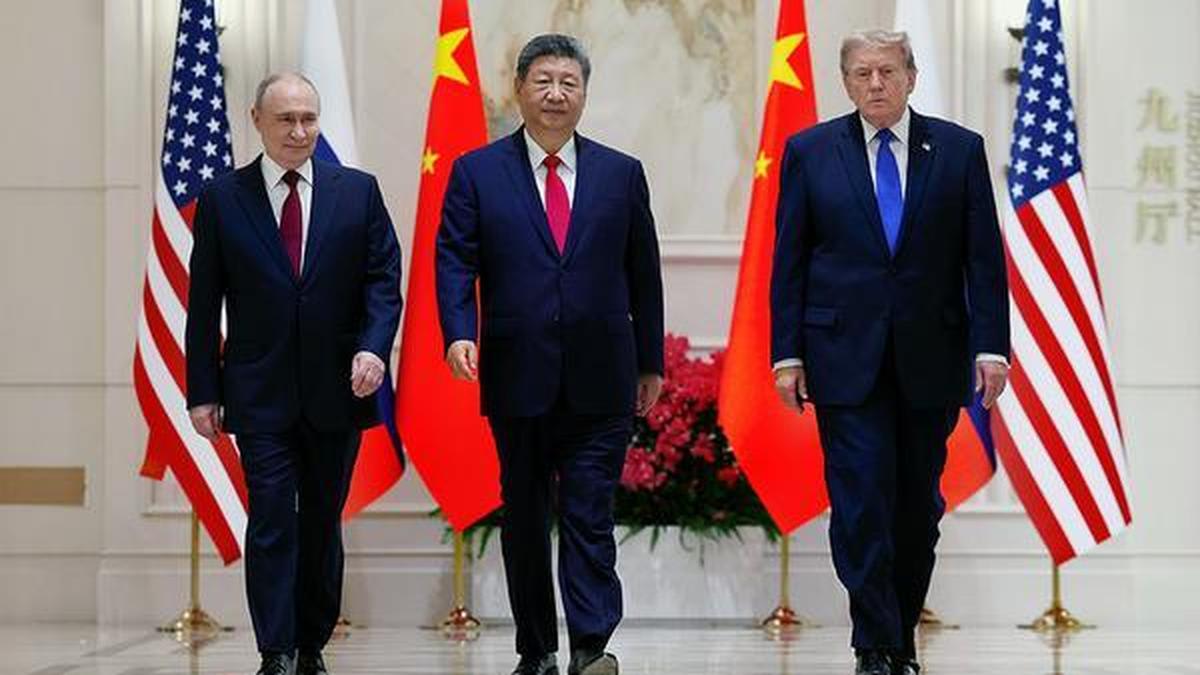
Rahul Gandhi's recent remarks in the U.S. regarding India's democratic process and geopolitical standing have sparked intense backlash from the BJP. The ruling party has labeled his comments as shameful and suggested replacing the leader with AI, while Gandhi continues to critique the Prime Minister's global influence.
The Diplomatic Firestorm: Rahul Gandhi's U.S. Tour and BJP Backlash
In a series of events spanning from November 18 to November 20, 2026, Leader of the Opposition Rahul Gandhi engaged in a high-profile tour of the United States that has ignited a fierce political confrontation with the Bharatiya Janata Party (BJP). Gandhi’s interactions, ranging from academic settings at the University of Chicago to public commentary on social media, have placed India’s domestic electoral integrity and its role in global geopolitics at the center of a heated national debate.
The Debate Over Democratic Integrity
During his interaction at the University of Chicago, Gandhi described Indian democracy as "sacred" while simultaneously asserting that the electoral system has been "completely demolished." He argued that the Congress party would persist in facing electoral defeats until the public recognizes the systemic failures he alleges. This narrative of a compromised democratic process has become a recurring theme in his international discourse, leading to accusations from the BJP that he is making "Hawai" (baseless) allegations that undermine India's global image.
Geopolitical Positioning: A "Side Player"?
Perhaps the most contentious aspect of Gandhi's visit was his assessment of India’s current geopolitical influence. Citing the role of Pakistan in mediating between the United States and Iran, Gandhi suggested that India has transitioned into a "side player" on the world stage. This assertion was met with immediate, sharp rebuttals from the BJP, which labeled the comments as "false and objectionable." The ruling party emphasized that such rhetoric, voiced on foreign soil, is "highly shameful" and inconsistent with the patriotic duty of a national leader.
The "Compromised PM" Narrative
As the discourse intensified, Gandhi escalated his critique by referencing a trilateral meeting involving Donald Trump, Xi Jinping, and Vladimir Putin. By sharing an image of this rare diplomatic gathering, Gandhi claimed that a "compromised PM" could never hold a seat at such a table, implying that his own leadership would have ensured India’s presence at this high-level summit. This direct challenge to the Prime Minister’s stature serves as a cornerstone of his strategy to portray the current government as ineffective in global diplomacy.
The BJP's Strategic Counter-Response
In response to these persistent critiques, the BJP has adopted a strategy of ridicule and characterization. By suggesting that the Congress should replace their leader with an "AI-generated version" due to the repetitive nature of his speeches, the BJP aims to diminish the political weight of Gandhi’s statements. This move reflects a broader trend in Indian politics where the battle for narrative control is increasingly mediated through social media mockery and the questioning of a leader's commitment to national interests.
Implications and Future Trends
This ongoing clash highlights the deepening polarization between the ruling party and the opposition. As political rhetoric increasingly crosses borders, the trend of discussing domestic electoral processes on international platforms is likely to continue. The BJP’s insistence that such behavior is detrimental to national pride suggests that future electoral campaigns will place even greater emphasis on the projection of India’s global image, while the Congress seems committed to maintaining its critique of the current democratic and geopolitical architecture as central to its political identity.
Multiple Citing Sources
Verification Required?