‘Inspired by Bangladesh’: Rajnath Singh on Opposition, CJP stir
Source Entity
The Indian Express
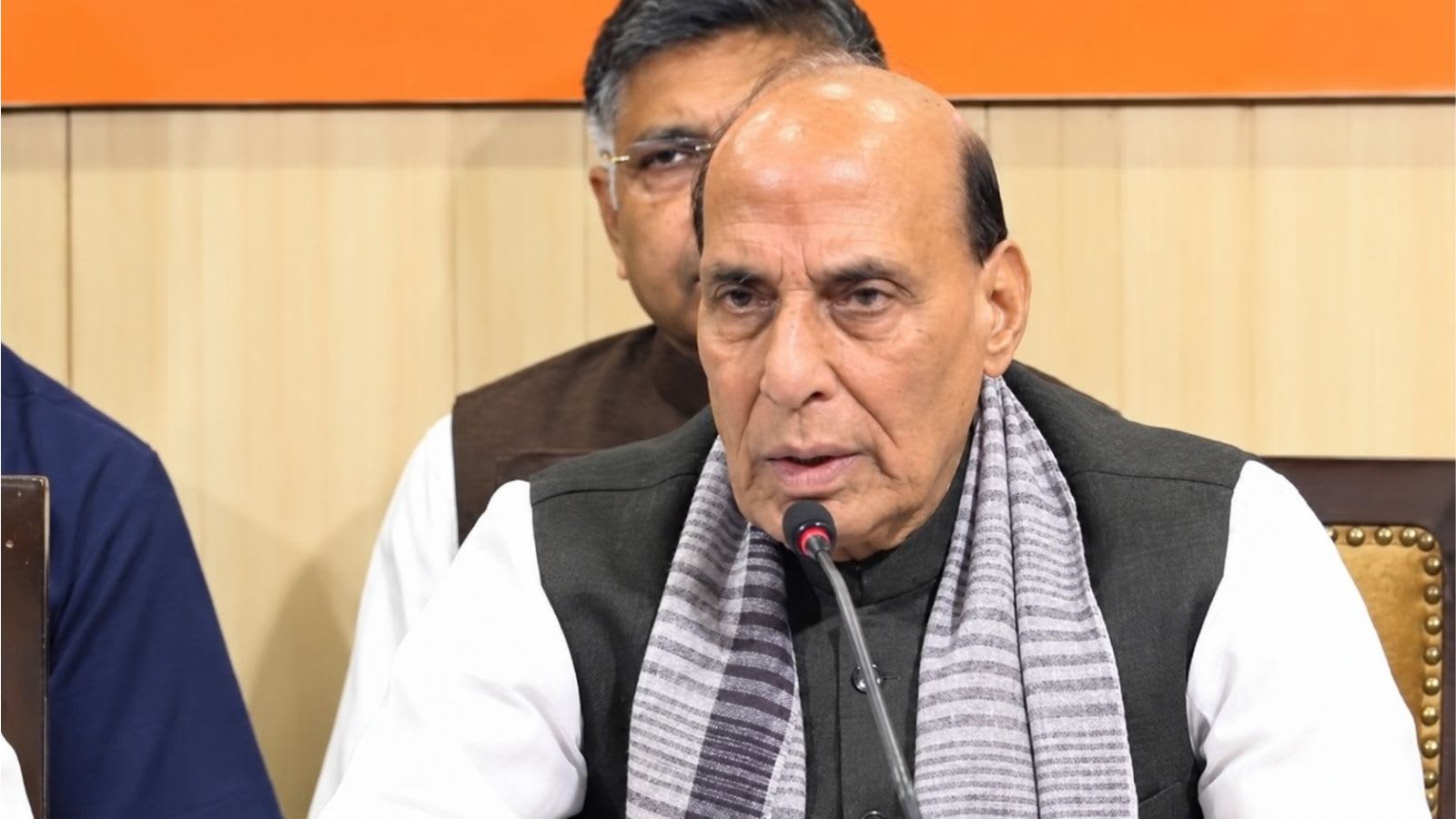
Defence Minister Rajnath Singh has accused the Congress party and its allies of inciting Bangladesh-style civil unrest to achieve regime change. The Opposition has dismissed these claims, asserting that their goal is to secure political power strictly through the democratic electoral process.
Political Tensions Escalate: The Bangladesh Parallel
Union Defence Minister Rajnath Singh recently launched a scathing critique against the Congress party and its allies, alleging that ongoing protests in the national capital are part of a calculated effort to force a regime change. Speaking in Lucknow, Singh explicitly linked the current agitation—which includes protests against the Chief Election Commissioner and the Special Intensive Revision (SIR) process—to the recent socio-political upheaval seen in Bangladesh. By framing these demonstrations as 'anarchic,' the government is positioning the Opposition's actions as a direct threat to the stability of India’s constitutional institutions.
The 'Anarchy' Narrative
At the heart of Singh’s argument is the claim that the Opposition is weaponizing the country’s youth to facilitate political confrontation. According to the Defence Minister, these youth are being turned into 'pawns' of a larger, destabilizing agenda. This rhetoric suggests a belief within the ruling party that the protests are not genuine grievances regarding electoral transparency, but rather a coordinated attempt to bypass democratic processes. Singh emphasized that while democracy permits dissent, it does not provide a license to undermine the credibility of statutory bodies like the Election Commission.
Opposition Response and Counter-Narrative
The Congress party, through spokesperson Pawan Khera, has categorically rejected the Minister’s framing, dismissing the allegations as a diversionary tactic. The Opposition maintains that their objective is to secure a government transition through the ballot box, not through civil disobedience or 'regime change' tactics reminiscent of international crises. By mocking the accusations, the Congress is attempting to frame the government’s alarmist rhetoric as a 'Jagga Jasoos' (detective) style conspiracy theory, intended to distract from the substantive issues raised by the protesters regarding the electoral revision process.
Institutional Integrity and Public Trust
The conflict highlights a growing divide regarding the perceived neutrality of constitutional institutions in India. The protests against the Chief Election Commissioner and the SIR process suggest a lack of confidence from the Opposition in the mechanisms governing Indian elections. When the ruling government equates these protests with foreign-inspired anarchy, it deepens the polarization, making the path to reconciliation or institutional reform increasingly difficult to navigate.
Future Implications for Democratic Discourse
As the political climate intensifies, the use of 'Bangladesh-style' as a political metaphor is likely to become a recurring theme in Indian electoral discourse. This framing serves a dual purpose: it allows the ruling party to mobilize its base around the defense of national stability while simultaneously delegitimizing the protesters' demands. As both sides dig in—one emphasizing national security and institutional respect, the other focusing on electoral accountability—the discourse suggests a volatile period ahead where every protest will be filtered through the lens of national security and the preservation of the existing order.
Conclusion
The standoff between Rajnath Singh and the Congress party reflects a fundamental disagreement over the boundaries of democratic protest. While the government views the current unrest as a dangerous deviation from constitutional norms, the Opposition defends its actions as a necessary check on power. Until there is a bridge between these two disparate interpretations of the current protests, the political environment in India will likely remain characterized by high tension and conflicting narratives regarding the health of its democratic institutions.