Education that merely provides degree without developing character has little value: Rajnath Singh
Source Entity
India Latest News: Top National Headlines Today & Breaking News | The Hindu
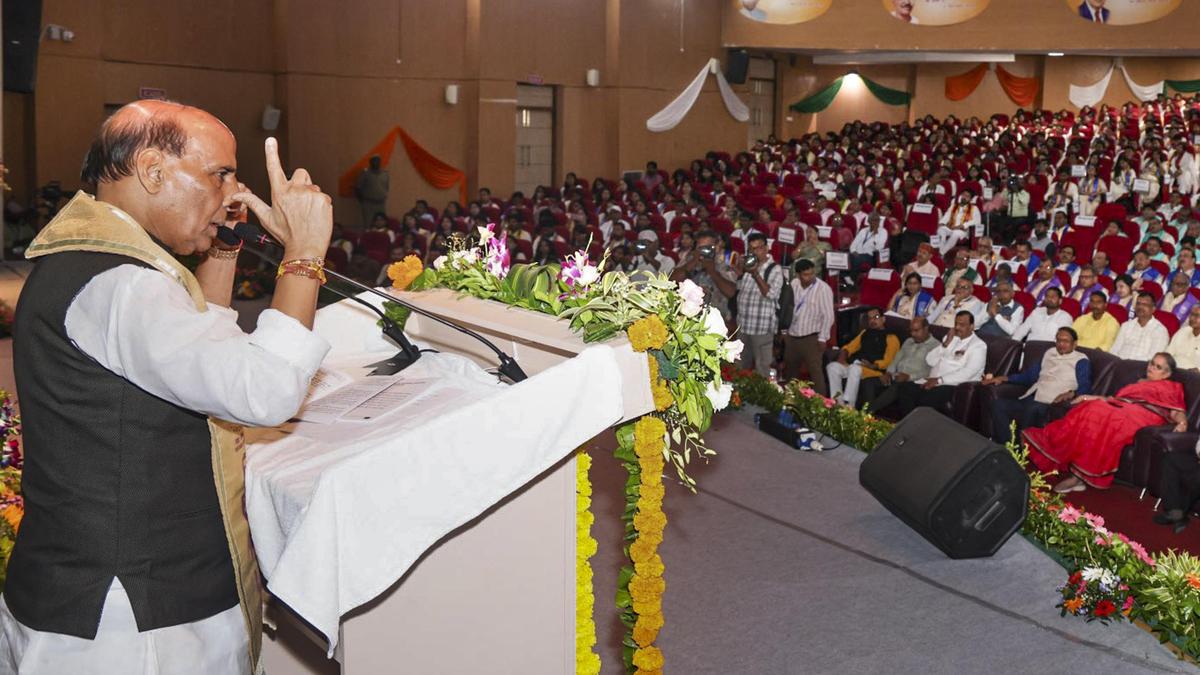
Defence Minister Rajnath Singh emphasized that education is incomplete without character development during his address at Babasaheb Bhimrao Ambedkar University. He urged graduates to prioritize broad-mindedness and values over mere degree attainment for true personal fulfillment.
The Intersection of Pedagogy and Ethics: A Ministerial Perspective
At the 11th convocation ceremony of the Babasaheb Bhimrao Ambedkar University in Lucknow, Defence Minister Rajnath Singh articulated a philosophy that challenges the modern obsession with credentialism. By asserting that education is essentially incomplete when it prioritizes degrees over character, Singh highlighted a critical gap in contemporary academic discourse. This perspective shifts the focus from purely economic utility to the holistic development of the individual, suggesting that professional certification is insufficient if not supported by an ethical framework.
Character as the Foundation of Achievement
Singh’s remarks emphasize that institutional achievements—represented by degrees and diplomas—only gain true significance when they are anchored in a deep-seated set of values. In an era where global education systems are increasingly evaluated by employability metrics and skill acquisition, the Defence Minister’s intervention serves as a reminder of the classical purpose of education: the cultivation of a virtuous citizen. This suggests that the ultimate measure of an academic institution's success should not just be its placement records, but the moral integrity of its graduates.
The Psychology of Success and Broad-Mindedness
Addressing the graduating cohort, Singh specifically cautioned against the corrosive impact of jealousy and a narrow outlook. He proposed that a 'broad mind' is a prerequisite for a 'pure mind,' arguing that personal fulfillment and psychological well-being are intrinsically linked to one's perspective. By framing narrow-mindedness as a barrier to purity and happiness, he encourages students to adopt an intellectual framework that prioritizes communal harmony and emotional intelligence alongside technical prowess.
Contextualizing the Role of Universities
As the member of Parliament for Lucknow, Singh’s choice of platform at the Babasaheb Bhimrao Ambedkar University holds symbolic weight. Universities, often seen as crucibles for future leadership, are tasked with more than just rote learning. Singh’s emphasis on character development reflects a broader policy interest in integrating traditional values with modern educational standards. This narrative aligns with national efforts to ensure that the demographic dividend of the nation is not only skilled but also ethically grounded.
Implications for Future Educational Trends
Looking ahead, this rhetoric suggests a likely trend toward the inclusion of value-based education in curriculum design. If policymakers continue to prioritize 'character' as a core component of academic output, we may see a shift in how higher education institutions are incentivized and assessed. The implication is that the future of the nation relies on individuals who can balance their professional ambitions with a broad, inclusive, and ethical outlook, effectively bridging the divide between academic success and societal contribution.
Verification Required?