Tagore's thread of unity to booming trade - how Rakhi became Rs 25k-cr business
Source Entity
AADRITA HALDER
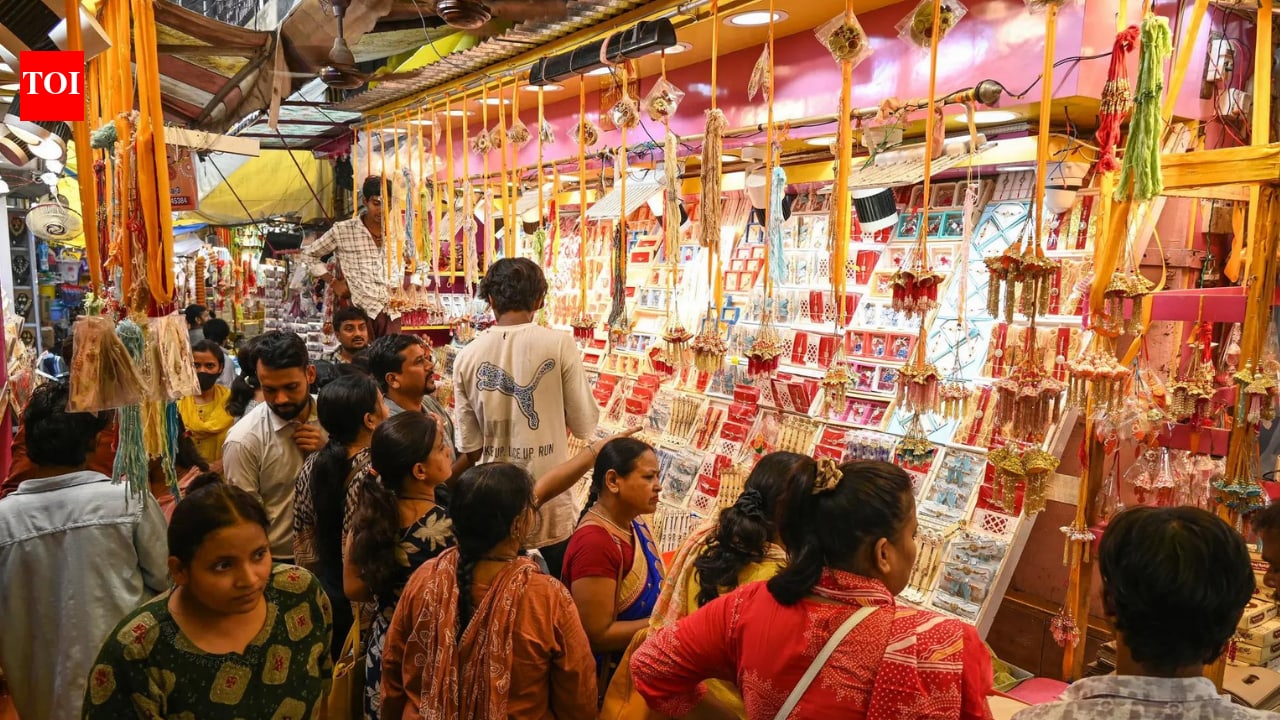
The festival of Raksha Bandhan has evolved from a historical symbol of unity into a massive Rs 25,000-crore commercial industry. While modern convenience and quick-commerce have driven significant growth, they have also created new challenges for traditional vendors.
The Evolution of Rakhi: From Symbolic Protest to Economic Powerhouse
Historical Roots: Tagore and the Thread of Unity
In August 1905, the festival of Raksha Bandhan transcended its traditional familial bounds to become a potent political instrument. Faced with the British partition of Bengal—a maneuver explicitly designed to fracture the region along communal lines—Rabindranath Tagore initiated a movement of solidarity. By encouraging citizens to tie threads on one another's wrists, Tagore transformed the act into a symbolic pledge of unity and mutual protection among Hindus and Muslims. This historical context established the 'thread' as a powerful cultural artifact, one that has now evolved into a cornerstone of India’s festive economy.
The Commercial Transformation
Over the last century, the cultural significance of the Rakhi thread has been augmented by a burgeoning commercial market. Today, the festival represents a staggering Rs 25,000-crore business, reflecting a profound shift in how the ritual is observed. What was once a localized, handmade exchange has scaled into a massive supply chain involving manufacturers, retailers, and logistical networks. This economic expansion highlights the intersection of tradition and modern consumerism, where the sentiment of the festival remains, but the scale of participation has grown exponentially.
The Rise of Quick-Commerce
Modern consumer behavior has fundamentally altered the distribution of these threads. With the advent of '10-minute delivery' services, the convenience factor has become a primary driver of sales. Consumers, accustomed to the speed of digital marketplaces, now expect instant access to a vast array of designs—ranging from personalized threads to those reflecting contemporary pop-culture trends. This shift has condensed the shopping window from weeks to minutes, placing immense pressure on the logistics sector to meet high-volume demand during the short festive window.
Market Dynamics and Disparities
However, this rapid digitization and corporate encroachment have not benefited all stakeholders equally. While online platforms thrive on efficiency and volume, traditional street vendors—who have historically been the backbone of the Rakhi trade—face significant obstacles. These small-scale sellers struggle to compete with the sheer inventory variety and aggressive pricing of e-commerce giants. The 'opportunity online' is simultaneously an 'obstacle offline,' creating a growing divide in the market ecosystem.
Future Trends and Cultural Continuity
Looking ahead, the Rakhi industry is likely to continue its path toward hyper-personalization. As consumer preferences shift toward unique, branded, and thematic threads, businesses will increasingly rely on data-driven trends to stock their inventory. Despite these changes, the core essence of the festival—a celebration of connection—remains resilient. The challenge for the future lies in balancing the efficiency of the modern retail revolution with the preservation of the traditional livelihoods that have kept this cultural thread alive for over a hundred and twenty years.