Over a year on, transplanted trees at Raman Thangal Lake in Sholinganallur stand dead
Source Entity
India Latest News: Top National Headlines Today & Breaking News | The Hindu
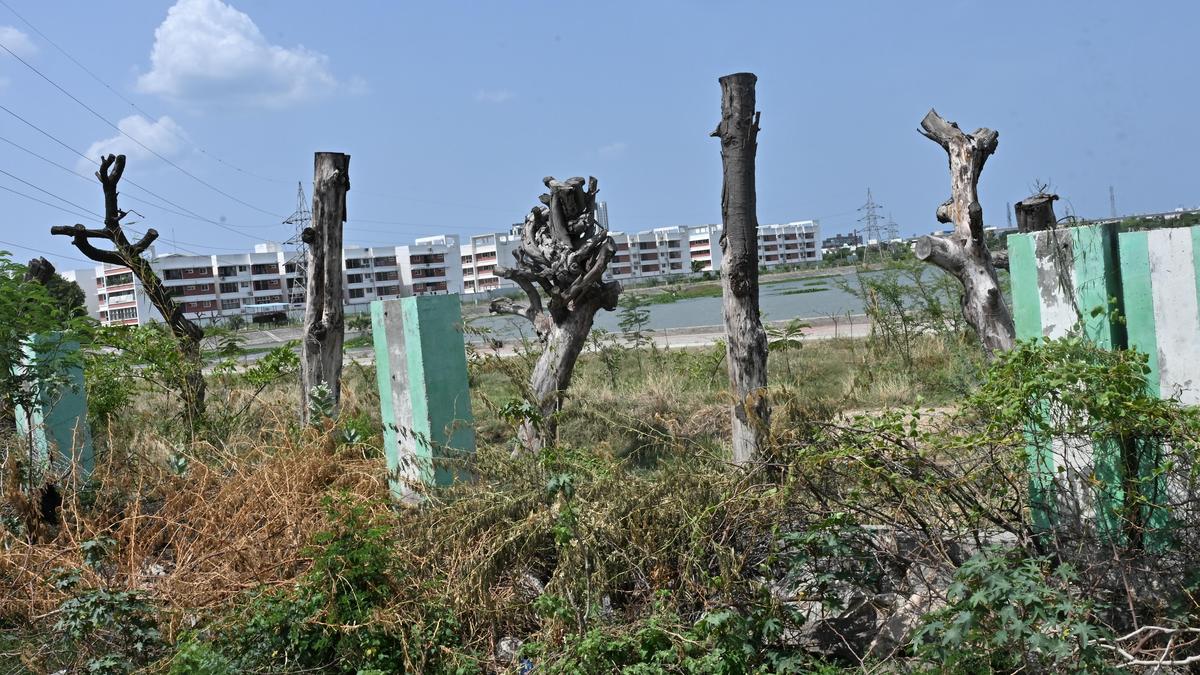
Morning walkers circle Raman Thangal Lake in Sholinganallur, but instead of the shade promised by rows of transplanted trees, they are greeted by a line of lifeless trunks. Over a year after nearly 9...
Ecological Failure at Raman Thangal Lake: A Case Study in Poor Urban Greening
The Raman Thangal Lake in Sholinganallur, intended to be a serene green lung for the local community, has instead become a stark symbol of environmental mismanagement. Over a year after an ambitious project to transplant nearly nine trees to the lake's perimeter, the initiative has ended in failure. Morning walkers, who once anticipated a canopy of shade to protect them from the harsh Chennai sun, are now greeted by a grim line of lifeless trunks. This event underscores a recurring issue in urban development where the optics of 'greening' are prioritized over the biological reality of plant survival.
The Gap Between Promise and Reality
The core of this issue lies in the discrepancy between the promise of immediate shade and the actual execution of the transplantation process. Transplanting mature trees is a complex biological operation that requires precise execution, including proper root-ball preservation and immediate post-transplant care. The fact that these trees stand dead over a year later suggests a systemic failure in the maintenance phase. Rather than fostering a sustainable ecosystem, the project resulted in a waste of biological resources and financial investment, leaving the lake's surroundings devoid of the intended ecological benefits.
The Science of Transplantation Failure
From an expert environmental perspective, the death of these trees likely stems from 'transplant shock.' When mature trees are moved, their fine root systems—responsible for water and nutrient absorption—are often severely damaged. In a coastal, high-temperature environment like Sholinganallur, the demand for transpiration is high. If the soil quality at Raman Thangal Lake was not optimized or if a rigorous irrigation schedule was not maintained during the critical first six months, the trees would have been unable to sustain their massive canopies, leading to the slow death observed by residents today.
Broader Implications for Urban Biodiversity
This failure has implications beyond the immediate loss of a few trees. Urban lakes like Raman Thangal serve as vital micro-habitats. The loss of these trees removes potential nesting sites for urban birds and reduces the local cooling effect, exacerbating the 'urban heat island' phenomenon in Sholinganallur. When urban forestry projects fail so visibly, it creates a sense of cynicism among the public and diminishes the perceived value of future environmental initiatives. The 'lifeless trunks' serve as a visual reminder of the fragility of urban nature when managed without scientific rigor.
Governance and the 'Plant and Forget' Culture
This incident highlights a problematic trend in urban governance often described as the 'plant and forget' culture. Many municipal projects focus on the high-visibility event of planting—the photo opportunity—while neglecting the long-term stewardship required for growth. For the trees at Raman Thangal Lake to have survived, there needed to be a dedicated monitoring system to track soil moisture, pest infestation, and nutrient levels. The current state of the site suggests that once the initial transplantation was complete, the project was effectively abandoned by the responsible authorities.
Moving Toward Sustainable Urban Forestry
To prevent such failures in the future, urban planning must shift from transplantation of mature trees to the cultivation of native saplings. Native species are naturally adapted to the local soil and climate of Chennai, offering a much higher survival rate and better support for local fauna. Furthermore, any future greening projects at Raman Thangal Lake should include a legally binding maintenance contract that holds contractors accountable for the survival rate of the plants over a multi-year period, rather than just the act of planting.
Conclusion
The death of the transplanted trees at Raman Thangal Lake is more than a local disappointment; it is a cautionary tale regarding the complexities of urban ecology. The transition from a 'lifeless line of trunks' back to a thriving green space will require a fundamental shift in how the city approaches its environmental goals—moving away from superficial gestures toward science-based, sustainable forestry.
Verification Required?