Smoke seen near Riyadh airport after air raid alerts in Saudi capital
Source Entity
BBC News
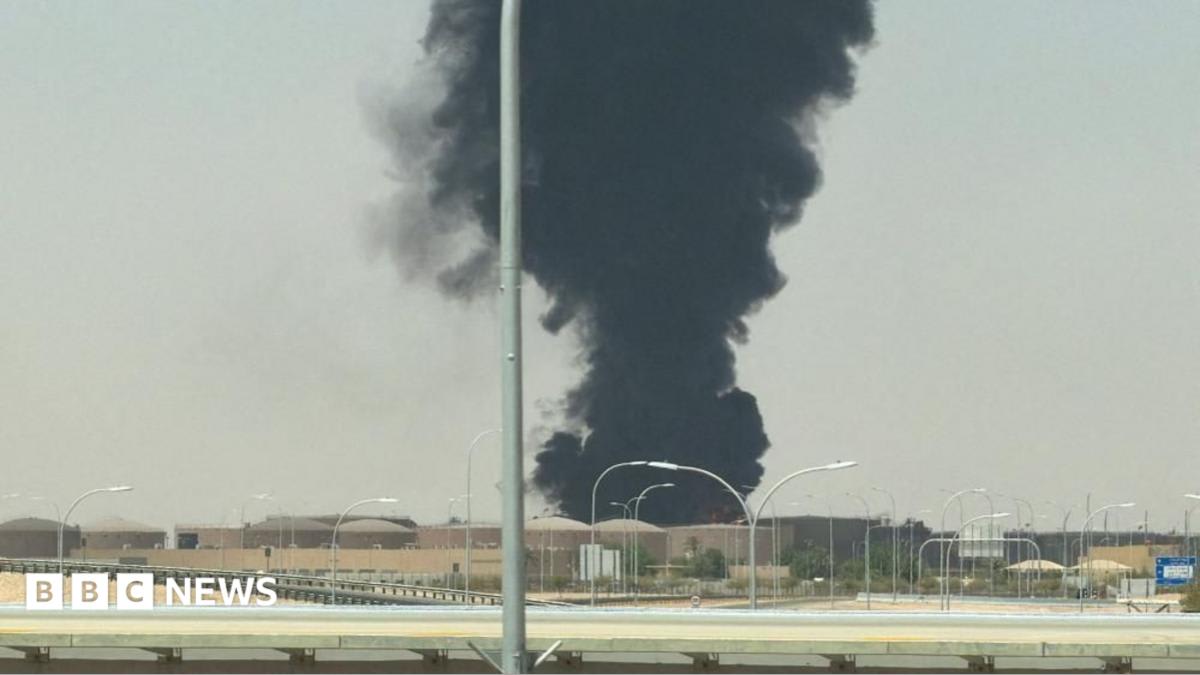
A strike near Riyadh's King Khalid International Airport caused significant fire at an Aramco fuel facility and widespread flight disruptions. The incident follows heightened regional tensions and Houthi-led military activity in the area.
Tensions Escalate: Riyadh Airport Incident Analysis
The Incident at King Khalid International Airport
The recent reports of fire and smoke near King Khalid International Airport in Riyadh mark a significant escalation in the ongoing regional conflict. Eyewitness accounts and visual evidence, including imagery of black smoke rising from an Aramco fuel storage facility, confirm that the airport vicinity was the site of a major security event. This incident forced a near-total disruption of aviation services, with flight-tracking data from Flightradar 24 indicating a maximum disruption index of 5, signaling severe delays and multiple cancellations.
Civil Defense and Public Response
The Saudi Civil Defence acted proactively, issuing emergency alerts via mobile devices to residents in Riyadh and Al-Kharj overnight. These alerts, which warned of potential danger, were followed by hours of uncertainty as residents reported hearing loud explosions that shook windows throughout the city. The eventual issuance of an all-clear on Saturday morning provided temporary relief, yet the psychological impact on the capital's population remains significant, as noted by local residents who described the event as a frightening departure from normalcy.
The Houthi Conflict Context
This event is deeply rooted in the broader, multi-year conflict involving Houthi rebels in Yemen. The timing of the strike coincides with an period of heightened military posturing, where the Houthis have claimed to be engaged in active countermeasures against Saudi-led operations. The complexity of the conflict is further underscored by Houthi claims regarding military actions in the Yemeni capital of Sanaa, suggesting a multi-front escalation that now directly threatens critical infrastructure within the Saudi heartland.
Infrastructure Vulnerability and Economic Impact
The targeting of an Aramco fuel storage depot near a major international transit hub highlights a shift toward attacking critical infrastructure. By disrupting the operations of King Khalid International Airport—a primary gateway to the Saudi capital—the actors involved have successfully combined physical damage with economic and logistical disruption. The reliance of the regional economy on stable energy and transportation hubs makes such sites high-value targets in asymmetrical warfare.
Future Implications and Regional Stability
Looking ahead, this incident serves as a bellwether for the stability of the Arabian Peninsula. If strikes on civilian-adjacent infrastructure become a recurring tactical choice, it will likely necessitate a significant shift in Saudi defensive strategies, potentially involving increased deployment of air defense systems and stricter airspace management. The ability of the Saudi government to maintain both public order and the continuity of international travel will be tested as they navigate these persistent security challenges in an increasingly volatile regional landscape.