An airport cooled by natural ventilation
Source Entity
Hacker News
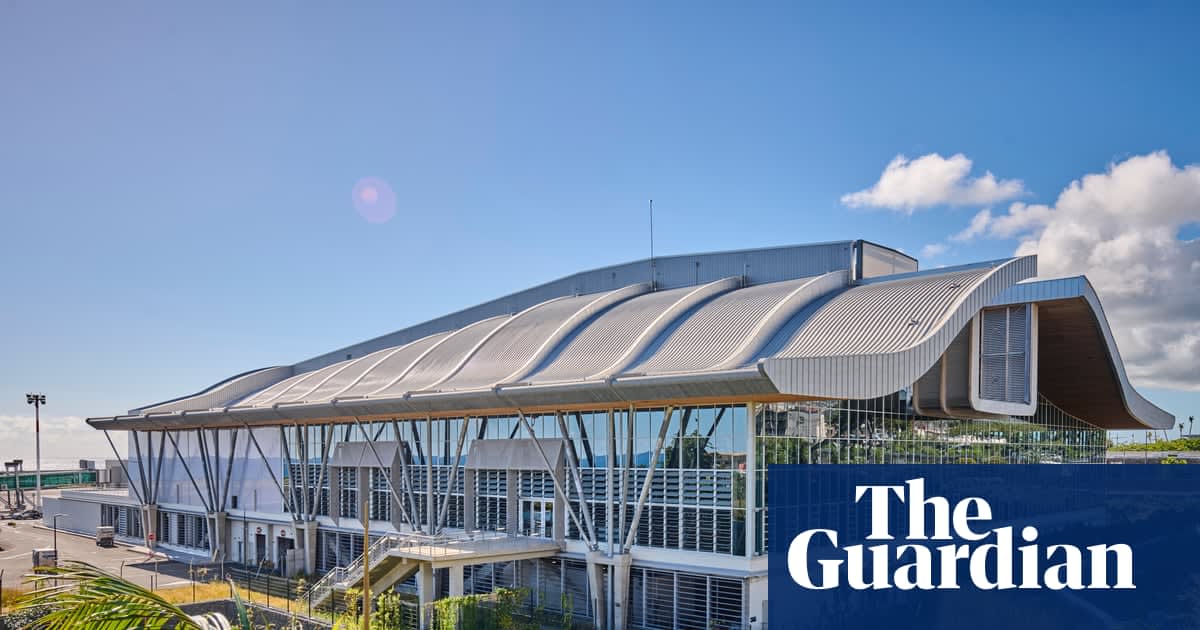
Roland Garros Airport in Réunion has successfully implemented a natural ventilation system to cool its new arrivals terminal. This design choice significantly reduces carbon emissions while maintaining comfort in a tropical climate.
Innovation in Terminal Design: The Roland Garros Approach
The arrivals terminal at Roland Garros Airport on Réunion island represents a significant departure from conventional architectural standards in tropical climates. By eschewing the traditional reliance on energy-intensive air conditioning, the facility utilizes natural ventilation to regulate internal temperatures. This design choice highlights a growing trend in sustainable infrastructure where geographical location is treated as an asset rather than a challenge to be overcome with mechanical cooling.
The Genesis of Sustainable Infrastructure
Initiated in 2016, the project was born out of a strategic mandate by airport management to drastically lower carbon dioxide emissions. Marc Delanoë, the lead of the airport’s environmental and energy team at the time, spearheaded the vision for the new arrivals terminal. By choosing to build the structure from scratch, the design team was able to integrate passive cooling techniques directly into the architectural DNA of the building, ensuring that environmental responsibility was not an afterthought, but a foundational requirement.
Harnessing the Tropical Breeze
Located in the French Indian Ocean territory just off the coast of Madagascar, the airport sits firmly within the tropical zone. Typically, such locations are dominated by climate control systems that consume vast amounts of electricity. However, the Roland Garros terminal leverages the natural tropical breeze to maintain a comfortable environment for travelers. The integration of floor-to-ceiling windows, which also provide sweeping views of the island's lush mountains, serves a dual purpose: aesthetic appeal and structural airflow management.
Broader Implications for Global Aviation
The move toward natural ventilation at Roland Garros serves as a case study for the global aviation industry, which is under increasing pressure to reduce its carbon footprint. As airports worldwide seek to reach net-zero goals, the success of this project demonstrates that passive design can be a viable alternative to mechanical systems. This transition is not merely about energy efficiency; it is about redefining the passenger experience to be more harmonious with the local climate.
Future Trends in Sustainable Design
Looking ahead, the success of the Roland Garros terminal suggests that future airport developments will likely prioritize passive design elements in their early planning stages. As renewable energy becomes more central to infrastructure policy, the ability to minimize reliance on power-hungry cooling systems will become a benchmark for sustainable engineering. This shift marks a promising evolution in how we conceive of large-scale public transit hubs in the 21st century.
Conclusion
The Roland Garros Airport project stands as a testament to the power of thoughtful, environmentally conscious design. By moving away from the 'icy chill' of traditional air conditioning, the airport has managed to combine architectural beauty with operational efficiency. This model of natural ventilation offers a scalable solution for other facilities operating in similar climates, proving that environmental stewardship can exist alongside high-volume international travel.