RSS activist seeks FIR against Karnataka Home Minister Priyank Kharge over arms seizure post
Source Entity
India Latest News: Top National Headlines Today & Breaking News | The Hindu
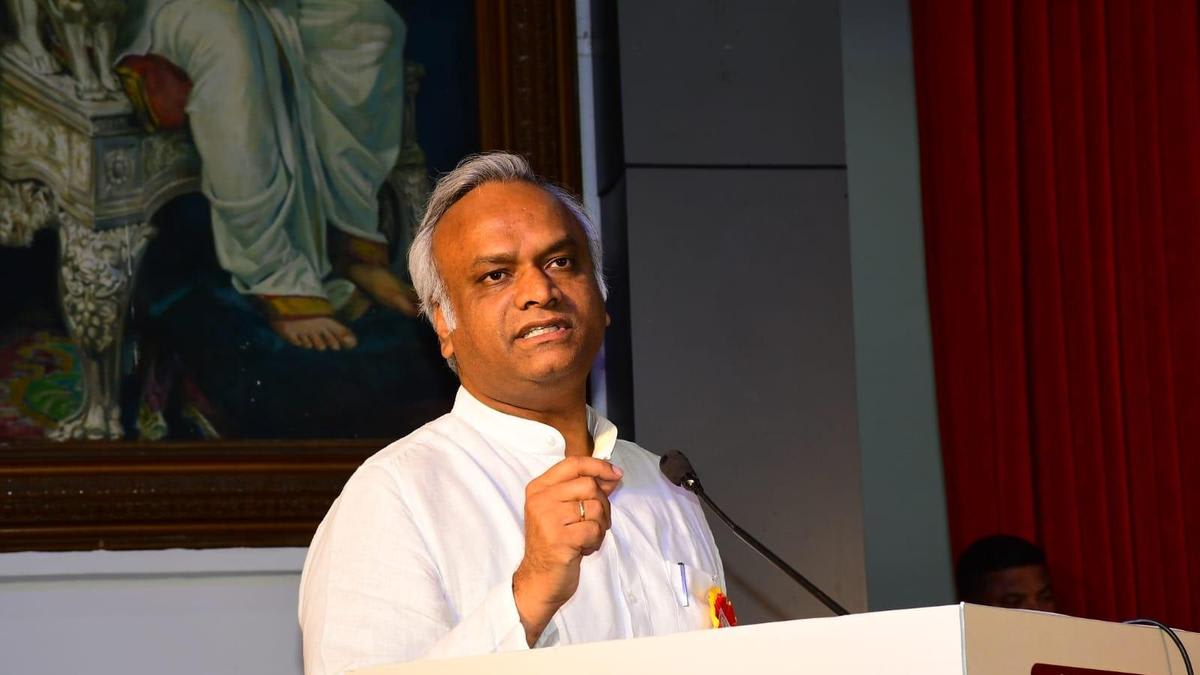
Karnataka Home Minister Priyank Kharge faces a police complaint from an RSS activist for allegedly linking the organization to a major arms seizure. The complainant claims the Minister's social media post spread misinformation and threatened communal harmony.
Legal Confrontation Over Alleged Misinformation
A significant political friction point has emerged in Karnataka, as Tejas A. Gowda, a Bengaluru-based Rashtriya Swayamsevak Sangh (RSS) activist, has formally lodged a complaint at the Banashankari police station against the state’s Home Minister, Priyank Kharge. The grievance stems from a social media post on the platform 'X', in which the Minister allegedly attempted to associate the RSS with a recent, large-scale seizure of 44,250 live cartridges in Bihar and Haryana. This incident highlights the increasingly volatile intersection of digital political discourse and legal accountability in India.
The Core Allegations
The complainant asserts that the Minister utilized his official platform to circulate misleading information, effectively casting aspersions on the RSS by suggesting a link to criminal arms trafficking. The complaint specifically highlights that such insinuations are not merely political rhetoric but are perceived by the complainant as a deliberate attempt to disturb social harmony. By allegedly utilizing an 'AI-generated' image or post to frame this narrative, the Minister has become the target of a request for an FIR, signaling a growing trend where public officials face legal scrutiny for their digital footprint.
Implications for Communal Harmony
The central concern raised by Mr. Gowda is the potential for such high-level accusations to trigger hostility between different segments of society. In the context of India’s diverse political landscape, linking a major nationalist organization to illegal ammunition hauls is a serious charge that can have cascading effects on public perception and communal stability. The complainant argues that the Minister’s statements were calculated to create a negative impression of the RSS, which, if unchecked, could lead to localized unrest or polarized public sentiment.
Digital Discourse and Accountability
This incident underscores the broader challenges of governing in an era of rapid social media proliferation. When a high-ranking official uses a digital platform to make provocative claims, the threshold for 'misinformation' becomes a critical legal battlefield. As the police investigate the validity of the complaint, the case serves as a litmus test for how law enforcement handles allegations of 'fake news' against elected representatives. The reliance on digital evidence—specifically the alleged use of AI-generated content—adds a modern technical complexity to traditional defamation and public order complaints.
Historical Context and Political Trends
Historically, the relationship between the Congress-led government in Karnataka and the RSS has been characterized by sharp ideological disagreement. This latest legal move is a manifestation of a broader pattern where political rivals utilize the legal system to challenge the narratives pushed by their opponents. By seeking an FIR, the complainant is attempting to shift the conflict from the court of public opinion to the judicial process, a strategy that is becoming increasingly common in the state’s polarized political environment.
Future Outlook
As the investigation at the Banashankari police station proceeds, the outcome will likely set a precedent for how public officials in Karnataka balance political critique with the responsibility of maintaining communal harmony. If the police proceed with an FIR, it could embolden similar legal challenges against other politicians. Conversely, a dismissal of the complaint may lead to further escalation in the political rhetoric between the ruling party and the opposition. Ultimately, this case emphasizes the urgent need for clearer guidelines on the verification of digital content by public figures to prevent the rapid spread of potentially inflammatory information.
Multiple Citing Sources
Verification Required?