RSS leader Sunil Ambekar flags demographic changes, calls for scrutiny of population policies
Source Entity
India Latest News: Top National Headlines Today & Breaking News | The Hindu
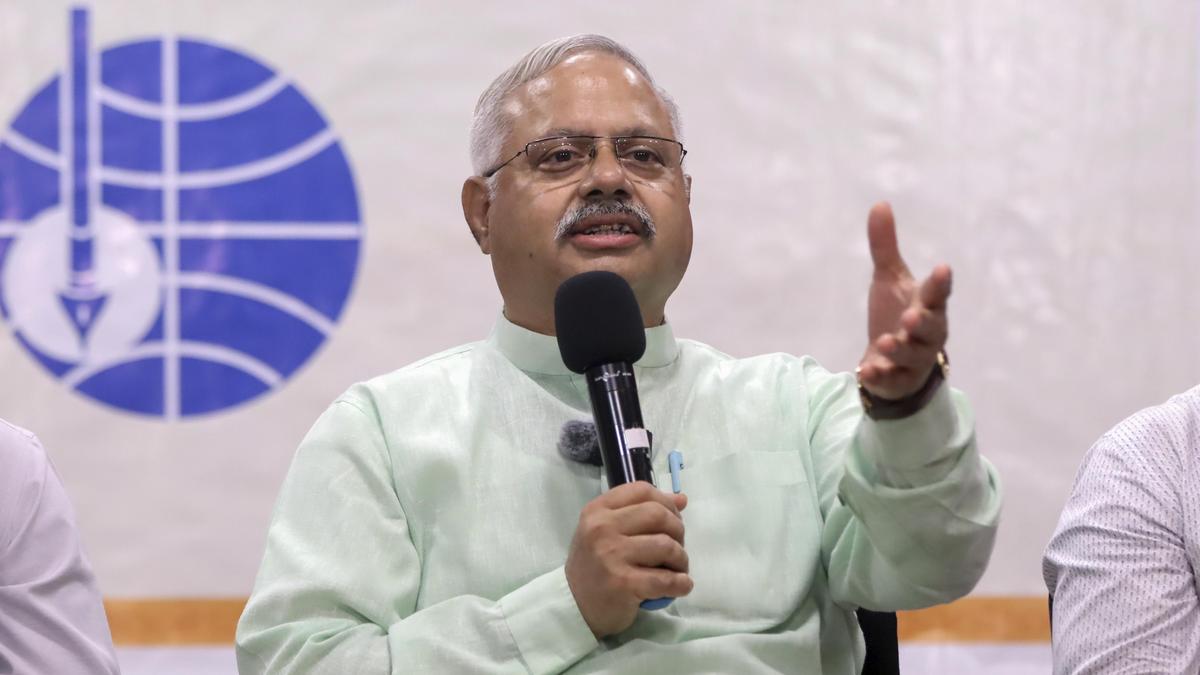
RSS leader Sunil Ambekar has called for a critical review of India's demographic imbalances, advocating for the removal of ideological biases. He argues that post-Independence marriage laws have created disparities that negatively impact the nation's demographic structure.
Addressing Demographic Shifts and Legislative Disparities
Rashtriya Swayamsevak Sangh (RSS) national publicity in-charge, Sunil Ambekar, recently addressed the sensitive topic of demographic imbalances in India. Speaking at the launch of the book Secularvaad aur Badalti Jansankhya ke Aankde (Secularism and Changing Population Figures) at the Indira Gandhi Centre for Arts, Ambekar emphasized the need to evaluate national population trends through an objective lens, free from the constraints of 'secular' or 'communal' labels.
The Historical Context of Marriage Laws
Ambekar’s central argument posits that the legislative framework established after 1947 created an uneven playing field. He highlighted that while post-Independence laws were designed to modernize societal structures, they simultaneously permitted specific communities to maintain multiple spouses, while effectively penalizing Hindus for the same practice. This legal bifurcation is, according to Ambekar, a foundational element contributing to the demographic disparities observed in modern India.
Critical Evaluation of Policy Formulation
During his address, the RSS leader suggested that the long-term population implications of these marriage laws were not adequately considered during their initial drafting. By asserting that the Constitution and subsequent legislation introduced a sharp divergence from pre-Independence social norms, Ambekar is calling for a retrospective audit of how these policies have influenced the country’s current demographic composition.
Beyond the Ideological Lens
Ambekar urged the public and policymakers to strip away traditional political rhetoric when discussing these figures. By advocating for the removal of the 'secular' and 'communal' lenses, he argues that the discourse has been stifled by identity politics, preventing a pragmatic assessment of how population growth and legal frameworks intersect to shape the future of the nation.
Broader Implications and Future Trends
This statement reflects a long-standing position within the RSS regarding the need for a Uniform Civil Code (UCC) and a standardized population policy. As India continues to navigate its complex social fabric, the call for scrutiny of these policies suggests a future trend where legislative reform regarding personal law will remain a central pillar of political debate. The focus on 'demographic imbalance' signals that this issue will likely remain at the forefront of the national agenda in the coming years.
Conclusion
The synthesis of Ambekar's remarks indicates a push for a structural reassessment of India’s demographic management. By questioning the historical impact of post-1947 marriage laws, the RSS is signaling a commitment to challenging existing legal paradigms in favor of a unified approach, arguing that objective data—not political ideology—should dictate the future of India's demographic stability.
Verification Required?