Russian foreign minister questions 'what will become of UK' and future of 'the Celts'
Source Entity
BBC News
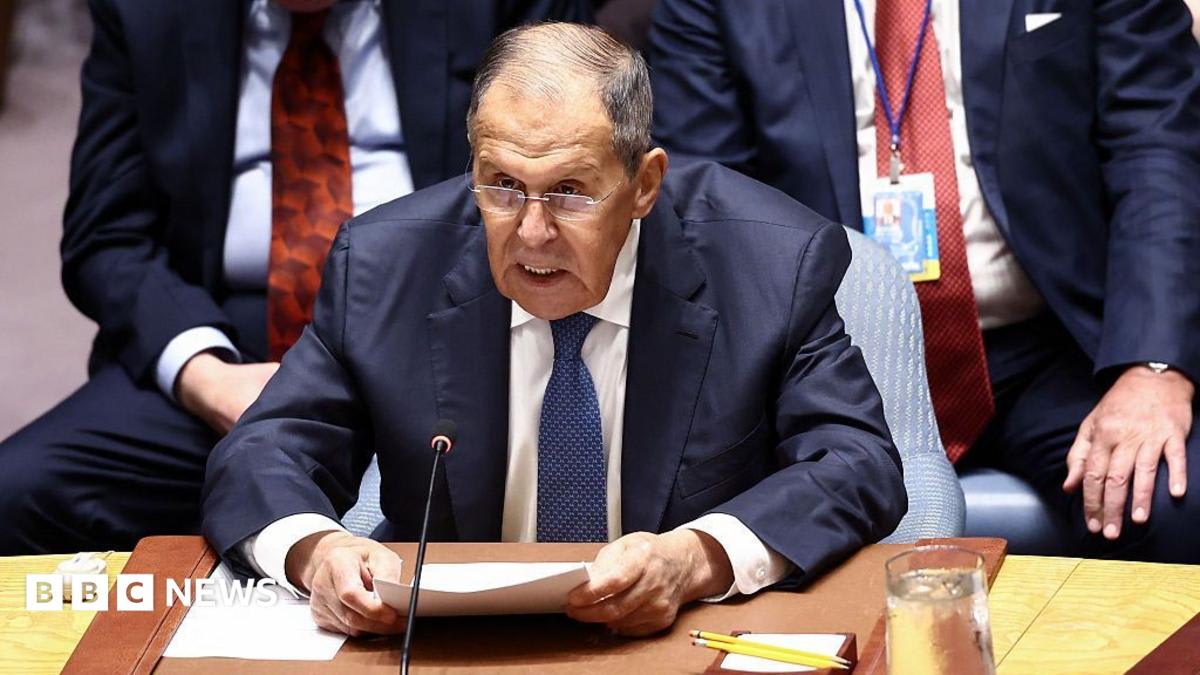
Russian Foreign Minister Sergey Lavrov has questioned the stability of the United Kingdom, citing potential independence movements among the Celts. The remarks have drawn sharp rebukes from Welsh political figures, who emphasize that internal constitutional matters are not for the Kremlin to influence.
The Kremlin's Commentary on British Sovereignty
Russian Foreign Minister Sergey Lavrov recently sparked diplomatic controversy by publicly questioning the future stability of the United Kingdom. During a youth conference, Lavrov posited that the nation faces an uncertain path, specifically highlighting the aspirations of "the Celts"—a reference to independence movements within Scotland, Wales, and Northern Ireland—to potentially hold referendums on their constitutional status. This rhetoric marks a notable shift in how Moscow publicly frames the internal political dynamics of Western powers.
The Context of Internal Tensions
Lavrov’s comments arrive at a sensitive time for British domestic politics. Just weeks prior, the first ministers of Wales, Scotland, and Northern Ireland issued a joint statement asserting that "Westminster's time is coming to an end." By signing an agreement challenging Westminster’s authority to "block democracy," these regional leaders signaled a growing appetite for greater autonomy or outright independence. Lavrov’s decision to amplify these internal grievances suggests a strategic effort by the Kremlin to exploit existing fractures within the UK’s political union.
Sovereignty and Political Blowback
In response to these remarks, Plaid Cymru, the Party of Wales, issued a firm rebuttal. The party underscored that the constitutional future of Wales is an exclusive matter for the Welsh people, explicitly stating that it is "not for the Kremlin to endorse, oppose or exploit." This reaction highlights the protective stance regional political parties take against external interference, ensuring that domestic debates over self-determination remain insulated from foreign geopolitical maneuvering.
Broader Geopolitical Implications
This incident is part of a larger pattern of Russian rhetoric aimed at destabilizing the perceived cohesion of Western nations. During the same conference, Lavrov also criticized the influence of the West within the United Nations, suggesting that international institutions are currently skewed by Western interests. By connecting the internal devolution of the UK to broader critiques of global governance, the Russian leadership seeks to project an image of a weakening Western order.
Future Trends in Diplomatic Relations
Moving forward, we can expect the Kremlin to continue utilizing domestic political tensions within NATO and EU countries as a narrative tool to deflect from its own international isolation. While the independence movements in the UK are grounded in long-standing democratic processes, the weaponization of these issues by foreign powers adds a layer of complexity to internal debates. The rejection of such rhetoric by parties like Plaid Cymru serves as a reminder that local political agency remains the primary driver of constitutional change, regardless of external commentary.
Conclusion
In summary, the exchange between the Russian Foreign Ministry and Welsh political representatives illustrates the intersection of local autonomy movements and global power dynamics. While the UK faces genuine internal discussions regarding its constitutional future, the attempt by international actors to co-opt these debates has been met with clear resistance. As the discourse continues, the distinction between legitimate democratic processes and foreign exploitation will remain a critical focal point in international relations.