Children killed while they slept as Russian missile kills 19 in block of flats
Source Entity
BBC News
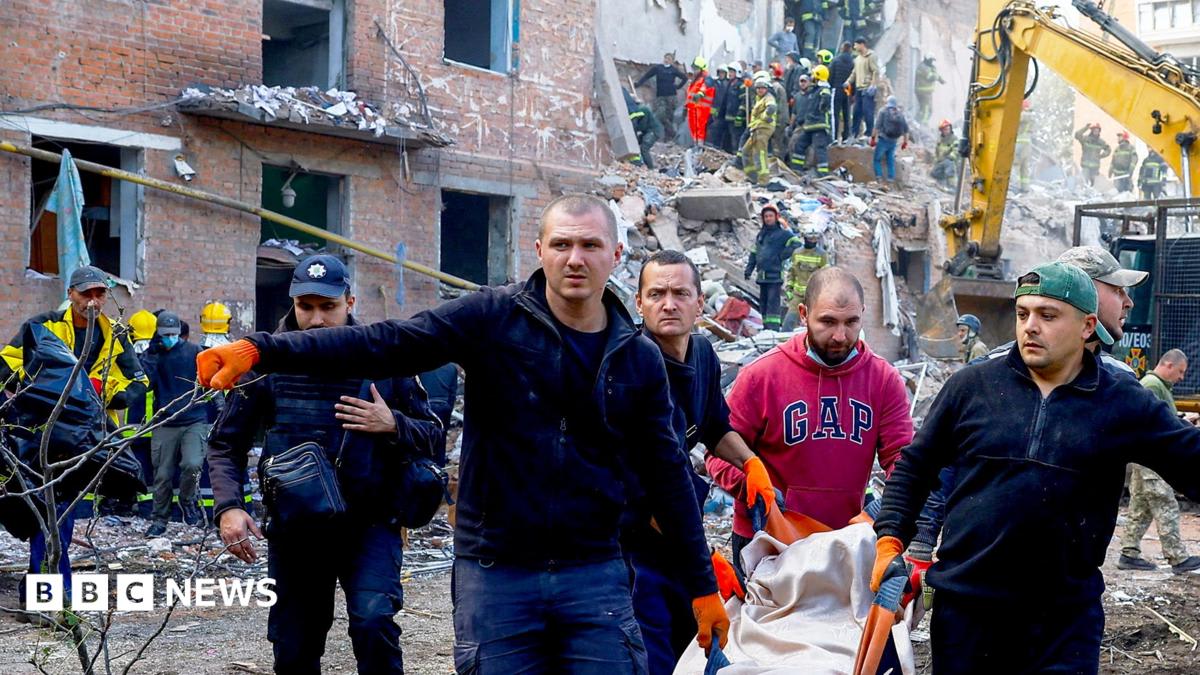
A devastating Russian missile strike on an apartment complex in Pryluky, Ukraine, has killed at least 19 people, including five young children. The attack, which destroyed 30 flats, has been condemned by President Zelensky as a targeted act of aggression coinciding with Vladimir Putin's birthday.
The Tragedy in Pryluky: A Dark Escalation in the Ukraine Conflict
The recent missile strike on an apartment block in the northern Ukrainian city of Pryluky represents a harrowing escalation in the ongoing conflict. With at least 19 people confirmed dead—including five children—the attack has drawn widespread international condemnation. The destruction of 30 residential flats, occurring while families were asleep, underscores the severe vulnerability of civilian populations in the path of modern aerial warfare.
The Human Cost of Conflict
Among the most tragic aspects of this incident is the age of the victims. Officials have confirmed that three of the deceased children were one-year-olds. The report of a young boy perishing alongside his mother and grandmother highlights the indiscriminate nature of the strike, which decimated a civilian dwelling rather than a military installation. This loss of life serves as a stark reminder of the devastating toll that the war continues to exact on the most vulnerable members of Ukrainian society.
Geopolitical Symbolism and Rhetoric
President Volodymyr Zelensky has characterized the strike as one of Russia's "most vile" actions, explicitly linking the timing of the attack to Vladimir Putin’s 74th birthday. By framing the assault as a "birthday gift," the Ukrainian leadership is highlighting the psychological and symbolic dimensions of the war. Such rhetoric emphasizes the perception that the Russian military leadership is increasingly willing to utilize civilian targets as tools of intimidation or political posturing.
Divergent Narratives and Military Strategy
While Ukrainian authorities have reported a death toll of 20 for the Pryluky site specifically, Moscow has maintained a policy of silence regarding this specific event. Instead, the Russian Defense Ministry issued a general statement acknowledging a "massive strike" directed at military industrial sites in Kyiv and other regions. This disconnect between reported civilian casualties and official Russian military narratives is a recurring feature of the conflict, complicating efforts at accountability and international mediation.
Broader Implications for the Frontline
Beyond the tragedy in Pryluky, the wider scope of Wednesday's attacks resulted in a total of 25 deaths across Ukraine, including casualties in the capital and Kremenchuk. This synchronized wave of strikes suggests a deliberate intensification of Russian military pressure. As the conflict persists, the targeting of residential infrastructure—whether intended or collateral—continues to displace families and destroy the urban fabric of the nation.
Future Trends and Humanitarian Concerns
Looking ahead, the pattern of strikes targeting energy and residential infrastructure suggests that the conflict is unlikely to de-escalate in the near term. The international community remains focused on the humanitarian fallout, as the destruction of housing creates further displacement crises. As both sides harden their positions, the protection of civilians in residential zones will likely remain a critical, yet unresolved, issue in the diplomatic and military efforts surrounding the war.