Sahil Wakode’s parents stage hunger strike at Azad Maidan, demand professor’s arrest
Source Entity
India Latest News: Top National Headlines Today & Breaking News | The Hindu
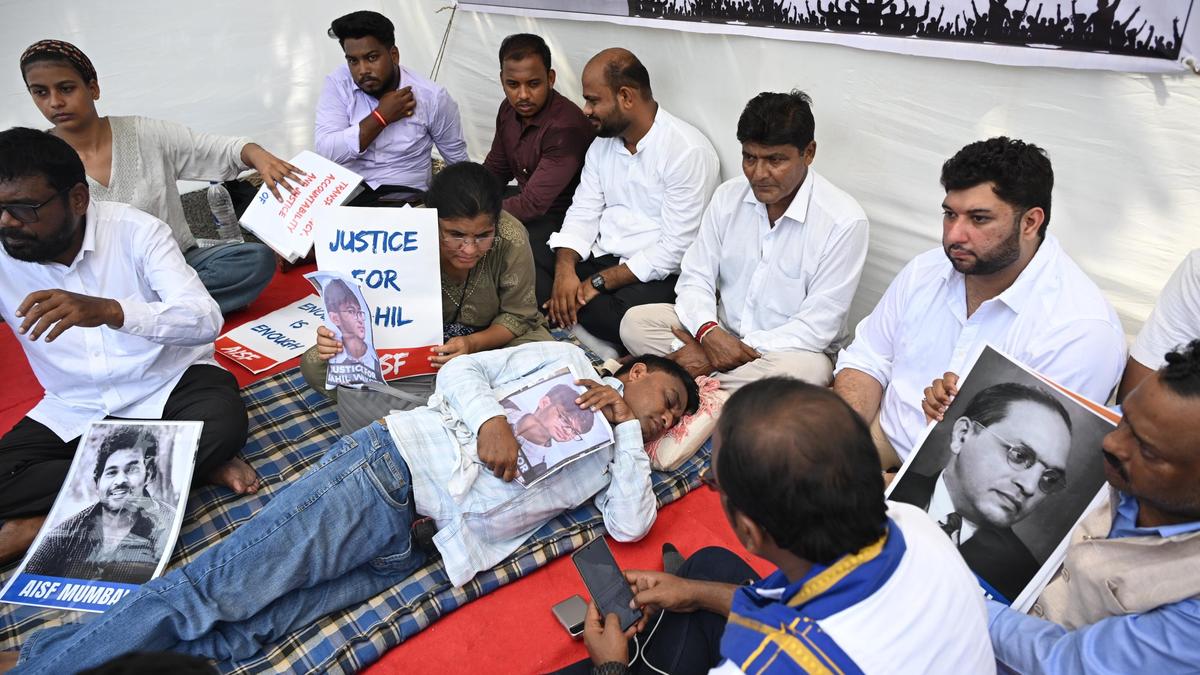
The parents of IIT Bombay student Sahil Wakode are staging a hunger strike at Azad Maidan, demanding the arrest of Professor Suryanarayana Doolla following their son's death. The family has criticized the institute's internal inquiry and noted a lack of government engagement regarding their protest.
Quest for Justice: The Wakode Family's Protest at Azad Maidan
On September 28 and 29, 2026, Ravindra and Sonali Wakode initiated a hunger strike at Azad Maidan in Mumbai, seeking accountability for the death of their son, Sahil Wakode. Sahil, a 22-year-old second-year student at the Indian Institute of Technology (IIT) Bombay, was discovered deceased in his hostel room on September 18, 2026. The tragedy occurred shortly after the student was reportedly caught utilizing his mobile phone to access ChatGPT during an examination.
Allegations Against Faculty and Institutional Inquiries
The core of the parents' agitation centers on the demand for the arrest of Professor Suryanarayana Doolla, who has been explicitly named in the First Information Report (FIR) filed in connection with the incident. Beyond the demand for legal action against the professor, the Wakode family has expressed profound dissatisfaction with IIT Bombay’s internal investigative process. Specifically, they have alleged that the committee appointed by the institute has failed to communicate with them, raising concerns regarding the transparency and inclusivity of the inquiry into their son’s final hours.
The Human Cost and Public Agitation
Ravindra and Sonali Wakode, who traveled from Yavatmal, Maharashtra, have spent consecutive days on a makeshift stage at Azad Maidan. Holding photographs of their son, their presence serves as a visceral reminder of the human cost associated with academic pressures and institutional management. Their lawyer, Nikhil Kamble, has been instrumental in navigating the legal requirements for their protest, including formal applications to the Azad Maidan police to continue their agitation as they wait for an official response from state authorities.
The Silence of the Government
A significant point of contention throughout this protest has been the perceived indifference of government officials. According to advocate Nikhil Kamble, no representative from the state government has reached out to the family since the beginning of their hunger strike. This lack of engagement has exacerbated the family's distress, leading them to extend their protest into a second day as they seek direct intervention to ensure that the investigation into Professor Doolla and the broader circumstances of Sahil’s death are handled with the necessary urgency and impartiality.
Broader Implications for Academic Institutions
This incident highlights a critical intersection between mental health, academic integrity policies, and faculty-student relations within premier Indian technical institutions. The use of generative AI tools like ChatGPT in academic settings remains a contentious issue, and the tragic outcome of this specific disciplinary event raises questions about how institutions handle student stress and academic misconduct. The Wakode family's ongoing struggle emphasizes the need for robust, empathetic, and transparent grievance redressal mechanisms within elite universities, ensuring that such tragedies are not only investigated thoroughly but also used to prevent future occurrences.
Verification Required?