Supreme Court acquits public servant in corruption case, cites 'impatience' of CBI in probe
Source Entity
India Latest News: Top National Headlines Today & Breaking News | The Hindu
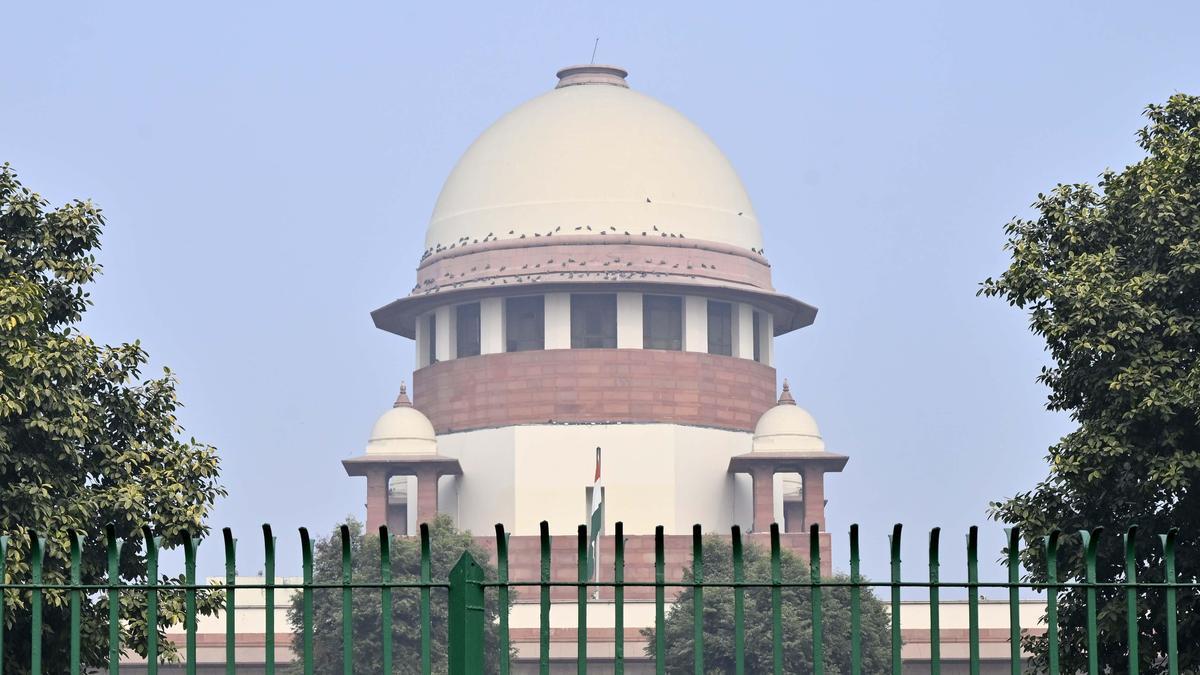
The Supreme Court has acquitted a former Railway Protection Force official in a two-decade-old corruption case. The bench criticized the CBI for investigative impatience and failure to prove that recovered funds were illicit bribes.
Supreme Court Rebukes CBI in Long-Standing Corruption Case
In a significant verdict delivered by a bench comprising Justices Prashant Kumar Mishra and NV Anjaria, the Supreme Court of India has overturned the conviction of a former public servant in a corruption case spanning over two decades. The appellant, who previously served as the Divisional Security Commissioner of the Railway Protection Force (RPF), had been convicted by a special trial court, a decision which was subsequently affirmed by the Kerala High Court in May 2024. The Supreme Court’s intervention marks a critical turning point, emphasizing the necessity of procedural rigor in anti-corruption investigations.
The Failure of Investigative Due Process
The core of the Supreme Court's ruling centers on the "serious lacuna and impatience" exhibited by the Central Bureau of Investigation (CBI) during its probe. The bench noted that the trap laid by the agency was not permitted to run its full course, a procedural oversight that fundamentally undermined the prosecution's case. By failing to complete the necessary steps of the sting operation, the CBI created a void in the evidence that could not be reconciled with the high burden of proof required in criminal jurisprudence.
Criminality Beyond Mere Transaction
A pivotal legal principle highlighted by the bench is that criminality under the Prevention of Corruption Act does not arise merely because money changes hands. The Supreme Court explicitly stated that the presumption of guilt does not elevate the prosecution's case to "gospel truth." This serves as a vital reminder to investigative agencies that the mere recovery of cash is insufficient to establish guilt without a clear, demonstrable link proving that such funds were intended as a bribe for the accused.
Challenging the Presumption of Guilt
The Court's rhetoric suggests a shift in how trial courts should weigh evidence in corruption cases. The bench underscored that the prosecution failed to prove that the recovered money was indeed meant for the public servant. By dismissing the conviction, the Court has signaled that the judiciary will not tolerate investigative shortcuts, especially when those shortcuts lead to a presumption of guilt that bypasses the fundamental requirement of proving the essential ingredients of an offense.
Broader Implications for Anti-Corruption Probes
This ruling carries significant weight for future corruption investigations in India. It reinforces the doctrine that the investigative process must be meticulous, impartial, and complete. When agencies like the CBI act with "impatience," they risk jeopardizing justice, leading to prolonged legal battles that span decades—as seen in this case—only to be overturned on the basis of investigative failure. The Supreme Court’s decision acts as a check on executive power, ensuring that the state's reach remains strictly bounded by the rule of law.
Conclusion
Ultimately, the acquittal of the former RPF official highlights the necessity of balancing the fight against corruption with the protection of individual rights. By highlighting the flaws in the CBI's methodology, the Supreme Court has set a clear precedent: the severity of the charge of corruption does not dispense with the necessity of a flawless, evidence-based investigation. This judgment will likely influence how trial courts approach future corruption trials, demanding greater scrutiny of the investigative process before upholding convictions.
Multiple Citing Sources
Verification Required?