SC’s 41-year appeal remark puts spotlight on U.P’s judicial backlog
Source Entity
Latest News: Today's Latest News Headlines from India & World | Hindustan Times | Hindustan Times
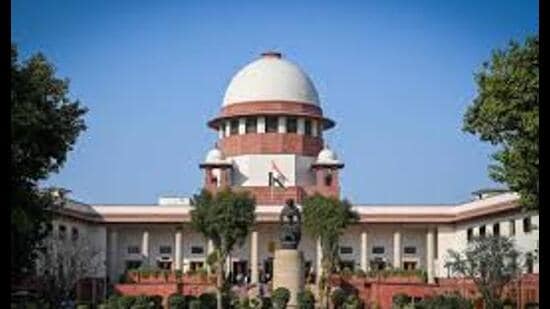
The Supreme Court of India has expressed deep concern over a 41-year delay in deciding a criminal appeal at the Allahabad High Court, describing the pendency as 'disturbing' and calling for innovative measures to address the systemic backlog in Uttar Pradesh's judiciary.
Judicial Crisis in Focus: The Supreme Court's Critique of Allahabad High Court
In a stark indictment of the efficiency of the Indian lower and high judiciary, the Supreme Court of India recently labeled a 41-year delay in deciding a criminal appeal as "disturbing." This specific case, which spent over four decades in limbo at the Allahabad High Court, has become a symbol of the systemic paralysis affecting the legal system in Uttar Pradesh. By calling for "innovative measures" to tackle the mounting pendency, the apex court is not merely addressing a single case of negligence but is highlighting a chronic institutional failure that undermines the fundamental right to a speedy trial.
The Scale of the Allahabad High Court Bottleneck
To understand the gravity of this delay, one must consider the scale of the Allahabad High Court, which is one of the largest high courts in the world in terms of judge strength and caseload. Serving the most populous state in India, Uttar Pradesh, the court faces an overwhelming influx of litigation. However, the sheer volume of cases does not excuse a four-decade delay. This incident underscores a critical gap between the judicial infrastructure and the actual demand for justice, where the sheer inertia of the system allows cases to slip through the cracks for generations.
The Human Cost: Justice Delayed is Justice Denied
From a legal and ethical standpoint, a 41-year delay in a criminal appeal is a catastrophic failure of the justice delivery system. In criminal jurisprudence, the stakes are inherently high, involving personal liberty and the presumption of innocence. When an appeal takes four decades, the very purpose of the judicial review is defeated; the appellant may have already served their sentence, passed away, or suffered irreparable social and psychological trauma. This scenario validates the legal maxim "justice delayed is justice denied," as the eventual verdict, regardless of the outcome, loses its restorative value after such an exorbitant timeframe.
Systemic Root Causes of Judicial Pendency
The mounting backlog in the Allahabad High Court is a result of several intersecting factors. Primarily, the judge-to-population ratio in India remains alarmingly low, leading to overburdened benches. Furthermore, the culture of frequent adjournments and archaic procedural hurdles often prolongs litigation. The lack of a streamlined case-management system means that older cases are sometimes overlooked in favor of newer, more high-profile filings, allowing legacy cases to languish for decades without a hearing.
Analyzing the Call for "Innovative Measures"
The Supreme Court's demand for "innovative measures" suggests that traditional methods of increasing judge strength are insufficient. Potential innovations could include the aggressive implementation of e-courts and AI-driven case scheduling to ensure that older cases are prioritized. Additionally, the expansion of Alternative Dispute Resolution (ADR) mechanisms and the creation of specialized fast-track benches for legacy appeals could mitigate the backlog. The apex court is essentially pushing for a digital and structural transformation of the High Court's administrative framework to prevent such "disturbing" lapses from recurring.
Conclusion and Future Implications
This intervention by the Supreme Court serves as a wake-up call for judicial administrations across India. By putting the spotlight on the Allahabad High Court, the SC is signaling that administrative inefficiency will no longer be viewed as an inevitable byproduct of a high caseload. Moving forward, the focus must shift from merely "managing" pendency to actively "clearing" it through systemic reform. If the judiciary fails to implement these innovative measures, the public's trust in the rule of law will continue to erode, further cementing the perception of a legal system that is inaccessible and unresponsive to the needs of the common citizen.
Verification Required?