Scientists solve 1840s space weather mystery
Source Entity
Jennifer Ouellette
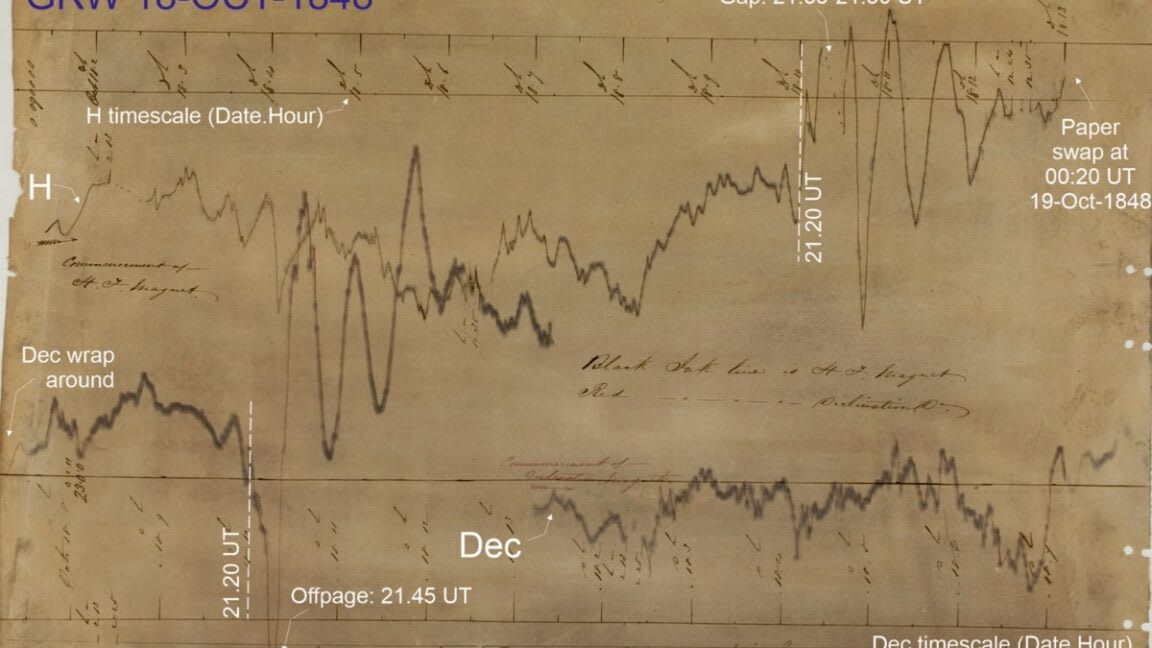
Researchers have identified a long-standing historical error regarding a 19th-century space weather event. A reported 1841 railway disruption caused by a geomagnetic storm was actually a typo for a later event, clarifying the timeline of early space weather observations.
Unraveling the 1841 Space Weather Mystery
For years, the scientific community has grappled with the timeline of early geomagnetic observations, specifically regarding a report published in the journal Nature in 1871. This anonymous account described a "very intense magnetic disturbance" that purportedly delayed rail travel in Exeter, England, in October 1841. If this date were accurate, it would have predated the famous Carrington Event of 1859, positioning the 1841 incident as the earliest documented case of a geomagnetic storm impacting technological infrastructure.
The Correction of a Historical Typo
Recent investigations published in the journal Space Weather have effectively debunked the 1841 timestamp. By meticulously analyzing historical records, scientists have concluded that the date was the result of a typographical error. The actual railway disruption, while undeniably caused by solar activity, occurred several years later. This discovery is vital for historical accuracy, as it prevents the misclassification of space weather data in the early industrial era.
Contextualizing Early Technological Vulnerability
While the Carrington Event of 1859 remains the gold standard for extreme space weather, the 1840s and 1850s were a period of rapid technological expansion. The transition from early telegraphy to more complex rail signaling systems created new vulnerabilities to geomagnetic currents. Understanding these early events helps researchers build a more comprehensive catalog of solar activity, which is essential for studying the long-term patterns of our star.
Modern Implications of Historical Data
Space weather is frequently perceived as a modern concern due to our heavy reliance on satellite networks, GPS, and global communications. However, the study of 19th-century disturbances reminds us that even primitive electrical systems were susceptible to the Sun's volatility. By correcting the historical record, scientists can better calibrate their models for predicting future solar storms and their potential impact on today's interconnected grid.
The Importance of Archival Accuracy
This correction highlights the necessity of cross-referencing historical anecdotes with contemporary scientific data. The reliance on anonymous accounts from the 19th century requires rigorous scrutiny, especially when these accounts are used to establish historical precedents. This case serves as a prime example of how modern scientific methodology can refine our understanding of the past, ensuring that our historical baseline for space weather remains robust and reliable.
Conclusion
In summary, the resolution of the 1841 mystery is more than just a footnote in history; it is a critical step in maintaining the integrity of space weather research. By identifying the typo, researchers have clarified the chronology of early geomagnetic impacts, allowing for a more accurate assessment of how solar events have influenced technology throughout the modern age.