Fruit flies remember their larval diet, which influences their longevity
Source Entity
Jacek Krywko
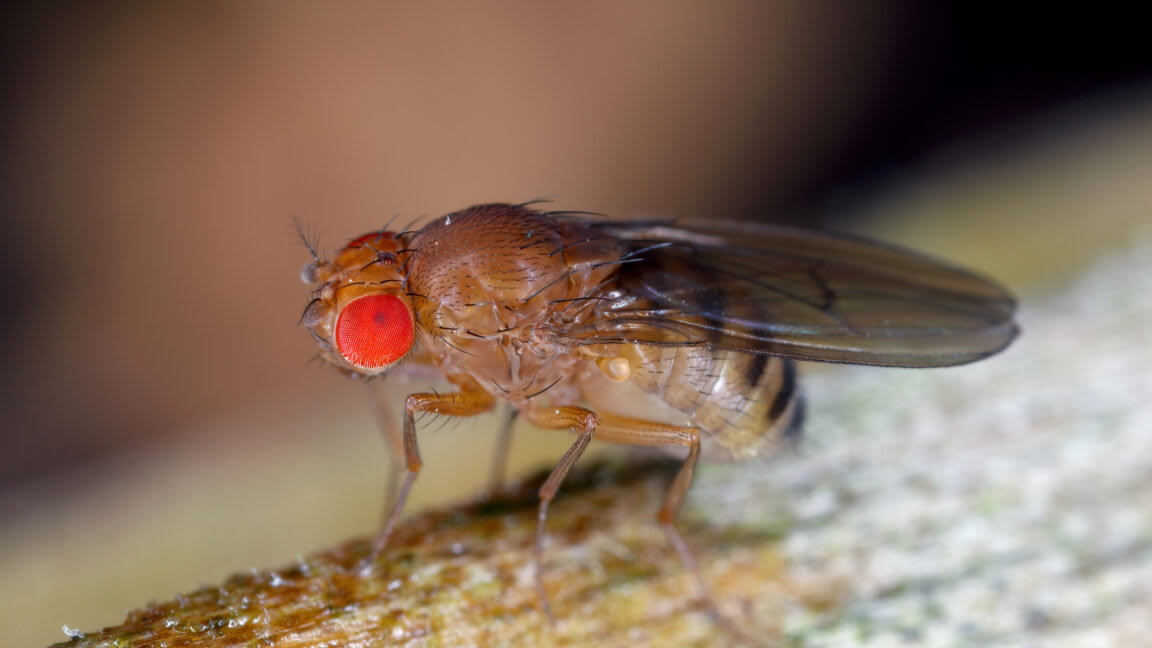
A new study reveals that fruit flies retain a biological memory of their larval diet, which significantly impacts their adult longevity. Researchers found that restricted protein intake during the larval stage alters protein production capabilities in adulthood.
The Biological Memory of Diet: Insights from Fruit Flies
Recent research published in Nature has provided a breakthrough in understanding the phenomenon of developmental programming, specifically how early-life nutrition dictates long-term health outcomes. By studying fruit flies (Drosophila melanogaster), a team led by Fumiaki Obata at the RIKEN Center for Biosystems Dynamics Research has identified that these organisms maintain a physiological record of their larval diet that persists well into adulthood, ultimately influencing their lifespan.
Historical Context of Dietary Restriction
The concept that early-life diet impacts longevity is not entirely new. Since the 1930s, scientists have observed that water fleas and rats subjected to restricted diets during their youth often exhibited extended lifespans. Over the decades, this phenomenon has been replicated in various model organisms, including mice and fruit flies. Despite these recurring observations, the underlying mechanism—the "how" behind a meal consumed in infancy affecting health months or even years later—had remained a significant mystery in the biological sciences.
The Mechanics of Larval Protein Restriction
To investigate this, the research team manipulated the larval environment of fruit flies by altering their primary protein source: yeast. While standard lab diets consist of a mixture of yeast and sugar, the researchers decreased the yeast concentration from eight percent to one or two percent. This specific reduction in protein intake during the maggot stage serves as the primary variable for the observed physiological shifts, suggesting that protein availability during development is a critical checkpoint for adult biological function.
Implications for Protein Synthesis
The study suggests that the restriction of protein during the larval stage limits the organism's ability to produce necessary proteins once they reach adulthood. This indicates that early-life nutrient availability acts as a metabolic "tuner" for the fly’s adult physiology. When protein is scarce during the developmental phase, the fly appears to calibrate its metabolic processes in a way that creates a lasting biological impact, which is directly linked to the duration of its life.
Future Trends in Longevity Research
This discovery marks a significant step forward in the field of epigenetics and metabolic memory. By identifying a specific protein that carries this dietary record into adulthood, researchers are closer to understanding the molecular pathways that govern aging. Future studies will likely focus on whether these findings can be extrapolated to more complex organisms, potentially offering insights into how early-life nutritional interventions could be used to optimize health spans in humans and other species.
Conclusion
The research led by Fumiaki Obata highlights the profound importance of early-life nutrition in shaping long-term health. By proving that fruit flies carry a molecular record of their larval diet, the study provides a concrete mechanism for understanding how past environmental conditions dictate future vitality. As we continue to decode these biological memories, we gain a deeper appreciation for the long-reaching consequences of our earliest nutritional experiences.