Second excavation phase at Kashmir Buddhist site starts today
Source Entity
NASEER GANAI
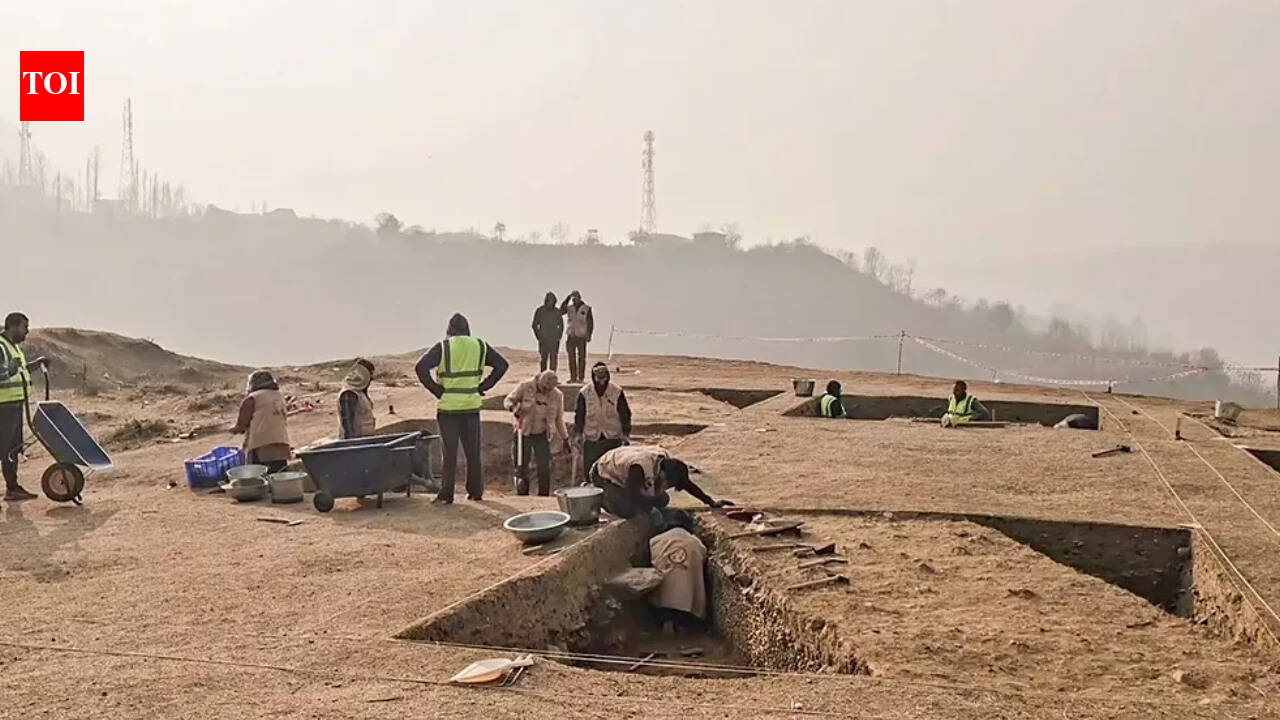
The second phase of archaeological excavations at the 2,000-year-old Buddhist site in Zehanpora, Baramulla, begins this Saturday. This project aims to further uncover the historical significance of the region's ancient Buddhist civilization.
Archaeological Expansion at Zehanpora
The initiation of the second phase of excavations at the Zehanpora Buddhist site in Baramulla, scheduled for this Saturday, marks a significant milestone in the preservation and exploration of Kashmir’s ancient heritage. Following the initial discovery of this 2,000-year-old site, this new phase of systematic digging promises to provide deeper insights into the cultural and religious landscape of the region during antiquity.
Discovery and Historical Context
The site was first brought to light by Professor Mohamad Ajmal Shah of the University of Kashmir, whose research confirmed the existence of a Buddhist civilization dating back two millennia. The discovery underscores the historical depth of the Kashmir valley, suggesting that the region served as a vital hub for Buddhist scholarship and practice, connecting various parts of Central and South Asia through ancient trade and cultural routes.
Government Recognition and Promotion
The prominence of the Zehanpora site grew significantly after Prime Minister Narendra Modi highlighted its importance during his 'Mann Ki Baat' radio program on December 28. This high-level recognition has not only brought national attention to the site but has also signaled a shift toward prioritizing the documentation and protection of archaeological assets in Jammu and Kashmir. The inauguration of this second phase by J&K Chief Secretary Atal Dullo reinforces the administrative commitment to this historical endeavor.
Scientific and Cultural Implications
Archaeological excavations are critical for bridging the gaps in our understanding of pre-Islamic Kashmiri history. By uncovering artifacts, structural remains, and potential inscriptions, researchers hope to map the evolution of Buddhist monastic life in Baramulla. This work is essential for regional heritage tourism, as it allows for the potential reconstruction of a narrative that integrates ancient spiritual history with modern cultural identity.
Future Trends and Preservation
As the excavation proceeds, the focus will likely shift toward the stabilization and preservation of the unearthed structures. The collaboration between academic institutions like the University of Kashmir and state administrative bodies sets a precedent for how heritage sites should be managed. Future efforts will likely focus on creating a sustainable framework to protect these finds while ensuring they are accessible for educational and research purposes, potentially turning Zehanpora into a key historical landmark in Northern India.